
No help for me, thanks

The child who wasn’t comforted still lives inside the adult who doesn’t ask for help.”
Author Unknown

Why is my go-to emotional reaction to inquiries about my upbringing initially negative? If asked, I don’t answer in the negative; I have adopted a Go with your second reflex policy of late. My second reflex/answer would be to say, “I don’t remember needing anything.” The real answer would probably be, “Pretty messed up.” As I read this, that’s unfair. My parents did everything they could to give me a happy childhood. What was messed up was me.
That’s a tough one to share. It seems foolish to write about this. Still, I have been thinking a lot about Childhood Trauma lately. After all, I exhibit multiple traits of a person suffering from Childhood Trauma.
The problem is that I don’t remember experiencing Trauma as a child. Yet I exhibit the following:
Avoidance of relationships: I avoid or bail out of relationships to avoid getting hurt. I do want a relationship. However, I am very battle-scarred. I will run from a person if I so much as think they will hurt me.
People-Pleasing. I am so guilty of this. I engage in behaviors that make other people happy to avoid the emotional pain of not being appreciated.
Perfectionism: I set super-high standards for myself. I rarely meet them and then denigrate myself as a failure.
Constant comparison to others: Comparing yourself to others will almost always lead or contribute low self-esteem. I am never so low that I can’t find someone doing so much better to make me go lower.

5 out of 5, that’s problematic. And begs further exploration. A far-fetched option is that something traumatic occurred that I’ve suppressed way, way down, and it’s starting to surface. That’s unlikely. I have vivid memories of my childhood. While there are many events that still haunt me, they fall more into the category of learning experiences, not Trauma. Yes, they were difficult to process and probably left some scars, but they were necessary. My generation, unlike today’s, learned lessons the hard way. Saying the wrong thing to the wrong person often resulted in a punch in the face. Getting rejected at a School Dance stung a lot. Betrayal by the hand of a friend comes to mind as well. And can I ever forget the disappointed look on my Dad’s face when I acted beneath his standards?
Again, learning experiences. Rites of passage, perhaps. So why did I jump at the above quote, inspiring a blog entry?
The term “Doesn’t ask for help.”

I don’t ask for help, even among my friends. Today, I met with some dear friends, Masons, for our weekly coffee. Between 4 and 6 of us turn out to talk. The rules are no rules. Talk about anything, but if you need to unburden yourself of something, your problems become our problems. We unburden without fear of reprisal or lack of confidentiality, and we listen unconditionally. It is our own little therapy group.
It is an honor for someone to feel comfortable enough to share their innermost conflicts with you. To seek your counsel is a higher honor. I am proud to tell you that many Brothers have sought out my listening/counsel over the years. It is a true blessing among Masons. But I am never the one to unburden myself. I just don’t do that, except in very rare occasions.
I have to ask myself why.
The answer isn’t elusive. I really didn’t have anyone to talk to about my multiple problems growing up.

I learned at a young age to handle everything internally. It began out of a fear of asking a stupid question of my parents. I have always had an unreasonable fear of asking the wrong questions. It may be out of fear of appearing dumb, perhaps I feared mockery. Maybe I felt that I should know it already. I was a very mixed-up child. If I had asked those questions, it is very possible that I would be in a different place today. If this segment reeks of uncertainty, there is a very good reason. Uncertainty is THE word to describe my entire childhood. I have always, including now, been uncertain about myself.
The worries about seeming dumb, ill-informed, or just plain wrong are still there. Not always but enough. I still battle uncertainty about my intellect, competency, reputation, character, and even who the Hell I am. This is partially due to my not asking for help.

As I said, I remember having a happy Childhood. By that, I mean that even though we were not wealthy by any standard, I don’t remember wanting for anything. I never went hungry. I went to camp. I had friends. I played sports. I had an amazing Dog (my best friend) from my earliest memory. My Mom and Dad really tried.
Dad worked a lot, but until he climbed the seniority ladder in his Union, he was laid off most summers. He would work part-time jobs, and our house was always under construction. He was there, but sometimes only in body. It may have only been my impression, but I found my Dad hard to talk to about personal things. I feared him judging me to be weak of character. Toxic masculinity was a thing then. Asking for help almost always resulted in him questioning why I couldn’t “figure it out” myself. As he aged, he became more accessible. As I’m going through right now, he was reviewing his choices in hopes of having achieved a fulfilled life.

My Mom was a very different story. She worked full-time but was home at a reasonable hour each day. She was, and is, a friend as well as a mother. But, and this is a big one, she was very hands-off. As parents who had difficult parents often do, she overcompensated for her own Mother’s overbearing, suffocating parenting style. Consequently, she went the other way and left me to do my thing. I regret going down this road, but I have to point out that she didn’t see the signs. I did everything but scream for help at one point. She didn’t see it.

It got worse when my parents adopted an 8-year-old. I was 13 and well into an adolescent crisis. Puberty, as well as dealing with being bullied among other embarrassments, had me in a spiral. During this critical time, a young girl with a lot of problems was introduced into our family. She had a horrific past and needed much extra attention. This was not what I needed at that moment. My options were to vie for attention or keep to myself. My parents were lost in the transition of adoption. My new sibling required so, so much. My parents just didn’t have much time or attention left for me. So I kept everything to myself, tried to figure things out on my own, and not ask for help.

It is slowly becoming clear to me that the era in discussion may have been traumatic. During my most formative years, when I needed guidance the most, it was just me. I developed what would become a lifelong habit. Not wanting to bother anyone. This is my toxic trait. There is a long line of brothers who would gladly be there for me if I asked. I’m not going to take them up on it because it’s just not who I am. I am the guy who needs more help than anyone can give. But I will never ask for it. I’ll just deal with it in my own way.

All because I wasn’t comforted as a child. Yet I blame nobody but myself. Mom, Dad, it’s not your fault.

I wish I read these sentences earlier in life

  • You won’t always get closure; learn to move on without it.
  • Discipline will take you places motivation never could.
  • Not everyone you lose is a loss; some exits are a blessing.
  • If it costs you your peace, it’s too expensive.
  • You become unstoppable the moment you stop seeking approval.
  • Your future needs you more than your past ever will.

I would like to credit for this intro, but I saw it on a FB Meme. Sometimes you hit gold just reading the musings of others. Sometimes it’s all garbage. But if you try hard enough you can find something thought-provoking if you open yourself to the opportunity.

You won’t always get closure; learn to move on without it. This one, Ugh. I wish I had a dollar for every minute I sat stewing about a conversation, an argument, or a break-up. Closure is essential for the overthinker. It is critical for the anxiety sufferer. If an overthinker says he loves you, then believe them. They’ve thought of every reason not to. Adversely, if you dump an anxiety-ridden over-thinker without a reason, they will invent every possible reason. These reasons may be logical or completely unfounded. Still, they persist. When the simple goddamn truth would have been enough. Hurt, anger, betrayal, they can all be overcome. Lack of answers sends me spiraling. I have had a string of recent break-ups/unexplained endings that devastated me. As I am known to do, I blamed myself for everything. I constantly asked myself what I did/said and replayed countless scenarios on a loop. When a simple “I don’t like you because you _______ would have been fine. As I said, anger subsides. Not getting closure may be easy for some. Not for me. It is enough of a reason to stop dating altogether. It hits me hard.
I really need to stop insisting on closure.

Discipline will take you places motivation never could. It is timely that I came across this today, as I have recently committed to being more disciplined. I am not motivated. I want to be, I try to be but I’m not. Because I don’t practice good habits. I don’t create schedules for myself. I don’t manage my time well. I promised to work on being more disciplined. By creating good habits, I will find motivation to achieve my goals. I haven’t made major changes yet to my routine, but I am making solid baby steps. I feel very driven, dare I say motivated, to achieve this. I’m confident that I will. But the above sentence is as true as can be.

Not everyone you lose is a loss; some exits are a blessing. This one doesn’t need much elaboration. It’s perfect as it is. It does tie in with the first sentence nicely, though. I spent much time commiserating about the lack of closure. Now, I realize those who failed to provide closure are welcome departures from my life. I am a caring, considerate person. I have no place in my life for someone who treats me poorly.

If it costs you your peace, it’s too expensive. My peace is everything to me. Even now, at this advanced stage of my life, I am not at peace. But I am working at it as hard as I am able every day. To be at peace is my life’s goal. When I see the word expensive, I realize it pertains to the cost of peace. I know the cost can be monetary as well as emotional. Example: I love my motorcycle. Riding it is one of the only sources of true joy I have. But it’s very expensive. The payment is causing me distress. It’s bordering on costing me some of that peace. Another example, my efforts in Freemasonry provide me with peace. Over-scheduling myself in those efforts is stressing me out. The more commitments I make, the more I worry about fulfilling them.

You become unstoppable the moment you stop seeking approval. I have always cared way too much about what other people think of me. It stems from me always seeking the approval and validation of a father with whom I had a complicated relationship. I am confident in what I bring to the table. I am able and qualified. Yet, I am terribly concerned about what people think of me. There is a caveat. I’m not so concerned about being liked. I want to be respected and considered a man of good character.
I have made great strides in this area of late. I have become more confident, and surprisingly, a lot more bold and assertive. I am close to being comfortable enough with myself that I may be able to rise above my inner “People-pleaser”. Once I can do that, I will not need, nor desire, the affirmation of others.

Your future needs you more than your past ever will. I wholeheartedly agree with this sentiment. It’s particularly poignant to a person who spends as much time ruminating over past deeds or misdeeds as I. I may never move completely past this, but I am committed to doing my best. Dwelling on the past wastes a massive amount of time. It also poses a massive threat to my mental health. I have plenty of goals. I will never accomplish them if I continue to focus on what cannot be changed. This one may be the most important of all.

The epiphany

If you have read me before, you might know about my struggle with faith. I have grappled with the traditional essence of a loving God for most of my life. I have approached the subject academically. I have immersed myself in Church, feeling like a stranger but nonetheless open to the experience. I have talked to so many people of faith, trying to capture what they have. I wanted it, I really did. That cocksure faith eluded me. The faith in an afterlife, the trust in an all-loving and forgiving deity. The belief that, despite the dumpster fires of life raging all around them, something is waiting for them. I learned to stop deriding and acquired respect for people of faith. But still, it eluded me personally.
I was so adamant in my non-belief that I insisted on a Justice of the Peace marry my wife and me. I raised my children without faith. We never denied them the opportunity but didn’t encourage church attendance. My children knew me as a borderline Atheist. I stopped short of that moniker. Nobody can say for sure that there is nothing up/out there.
That reluctance to commit human arrogance would eventually cause me to acknowledge something. Someone? A supreme being? It was simple. If you can’t say that there isn’t something, then you must be willing to acknowledge that there is. Maybe.

That is where I stood for some time. With a healthy respect for those with faith, I forced myself to be open to the experience. I looked for God everywhere, but not in a building. I came to call my process “Kayaking.”
“Religion is sitting in a church thinking about kayaking. Spirituality is sitting in a kayak thinking about God.
For me, God was the laugh of a child. It was a deer grazing in my backyard. God was a sunset or the smell after a rain.

Earlier this week I needed to get away from the negativity around me. Talking heads on the news expounded toxic tirades on politics. My friends on Social Media being bad to each other over our President. It was too much for me and I made the unusual decision to watch a Christian movie on Amazon. I enjoyed the wholesomeness. It was refreshing. The next night I watched another movie in the same category. I worked out with dumbbells in my room as I watched. It wasn’t long before I sat on the edge of my bed and focused on the message of the movie. Out of nowhere, I began to sob. Head-in-hands, funeral-like sobbing.

I have been reflecting on that powerful yet confusing moment for a few days. I could chalk it up to the subject matter. Those movies are full of themes of loss, personal tragedy, and redemption. But it was more than that. Something broke loose inside me. Dare I say something tried to get out. I don’t know what it is but I feel like I have had a spiritual awakening. Once I come to grips with it, it is an unexpected occurrence to this perennial Kayaker, I have promised myself to welcome it. I will work as hard as I can to ensure that the experience is not lost on me.

I still don’t know what this epiphany means in the big picture. But I have to recognize that almost nothing in my life has ever brought me to my knees. But this did. It deserves some self-reflection.

Legacy?

I was recently asked how do I want to be remembered? What an incredibly timely and often thought-about topic.

See, I am all about Legacy. I live my life every day in such a way that should I not wake up the next day, I hope that I will be remembered fondly. I leave each person in my life in such a way that should it be the last time we see each other, that memory would be good and not a regret.

Having said that, I am not living to die. If you knew my medical history, and how truly close I have come (several times) to dying from a chronic illness and related episodes, then it would make more sense. But I, more than most people, really don’t have a lot of time left and I can justify such a mentality. I want to build a legacy, and perhaps most importantly, I want to do it by changing the world, my world, one charitable of kind transaction at a time.

Let’s get this out of the way right away. I don’t want to be remembered in a lofty way. I don’t care for people to be in awe of honors, accolades, and accumulated wealth. I have earned very few honors, I hate accolades, and I am poor and expect to be until that day comes. 

Here’s what I want. I hope that when I die, my son will honor my request to give me a casual service and an open bar. At that bar, I most desire that a glass would be raised to my character. I hope that my friends and acquaintances will remember me as a good guy, a charitable soul and that I made a difference to somebody. Then I want people to share stories of the weirdest/funniest/most awkward/stupid/embarrassing thing that I did or said in front of them.

See, I haven’t had much luck laughing at myself in my life. But I have no problem with others doing it for me. As long as their memories of me make them smile.

A childhood playing in the dirt

I was recently asked what games or toys I enjoyed as a child.

I was never a big “game” person. I think my reluctance to play group games as a kid, looking back now, was the first manifestation of my now very well-known anxiety and sense of inadequacy. I haven’t changed much since then with regards to my aversion to games. When faced with playing any game, card games or board games, my first reaction is to be afraid that I won’t understand the rules. I would also be afraid of not being good at it, which is irrational to the Nth degree because you can’t be good at something without doing it a few times. Mostly, I was afraid of embarrassing myself, a fear that manifests itself in almost all aspects of my daily life. I’ve learned to play a few games, Texas Hold ‘Em comes to mind, with some skill and lack of anxiety but I struggle with more complex games and will tend to opt out when it gets complicated. Board games terrify me, with the possible exception of Monopoly and Trivial Pursuit.

When it comes to games, with the exception of sports, I have issues.

Toys, on the other hand, were a big part of my childhood. As a boy, I loved my action figures and Matchbox cars. The 6 Million dollar man, Stretch Armstrong and GI Joe were never far from me. In any weather other than rain or snow, I could be found outside playing under the big Pine tree in my yard. I had tracks and tunnels and paths as well as construction sites going for my various Tonka trucks. I wasn’t a solitary child;I had some neighborhood friends but I wasn’t overly popular, and I found out at a young age that I was very capable of amusing myself. It would reveal itself to be a valuable trait during my mostly friendless, mixed up phase of Middle and High School. 

I loved my matchbox cars. I would play in the dirt for hours with them, my blue plastic storage case open beside me. I would only have out what I needed for the game of the day, the other cars stayed nestled in their individual spot until I needed them. THe muscle cars only came out on dry days. The pick-ups came out on rainy days, and the heavy equipment made their debut when it was muddy. I created elaborate scenarios up to and including massive accidents. After all, my toy First Responder vehicles needed to be used also. I could play for hours outside, when called inside I would set up on my bedroom floor and if the mood was right, I would set up long sections of the famous Orange track and it then became Race Day.

They say that if you are lucky you will get a job doing something that you love as a child. My love of cars and trucks and heavy equipment may not have led me directly to my dream job, but I got there eventually. When I ended up in the auction business, my natural enthusiasm for all wheeled things great and small served me very well.

While I was once a lone child playing in the dirt with fake cars, I evolved into a face in a crowd of hundreds, surrounded by row after row of real cars; of which I knew an absurd about, from model years to chronic mechanical issues. If I was lucky, I would be called to attend a Classic Car Auction, at which I was surrounded by real-life versions of the very Matchbox cars I used to push around in the dirt.

I still love cars and I suspect that I always will.

My favorite furball

One of my earliest memories was of the day we went to adopt who would become my best friend in the world. Not to put too fine a point on it, but there were times when he was my only friend. He was very hairy, didn’t say much, and smelled awful when he was wet. But he was a great listener. I suppose that’s par for the course for a Brittany Springer Spaniel.

I don’t remember everything about the day but the important details come to mind. I think I was 4 years old. I remember it was a very long drive. I also remember a long dirt driveway and the dust our big Ford truck kicked up. I remember there were many dogs running off-leash inside a fenced-in area, which is my true idea of what heaven must look like. I remember my Mother calling it the “Daisy Hill Puppy Farm”, an homage to The Peanuts, and the origin story of my favorite cartoon character Snoopy. Incidentally, Snoopy was introduced to the world 3 months before I was born.

I was playing with the dogs. Even to this day, if I’m in a room withI’m not even sure I knew why we were there, it was a regular occurrence to get in the car and just go somewhere. My Dad knew so many people, I stopped asking questions and got in the car when he said “Let’s go for a ride”. So up until the moment when they came over to me with a beautiful brown and white Spaniel with kind eyes, I wasn’t aware that we were leaving with a dog. It was all a big surprise.

We gave him the name Friskie. I think there was a dog food of that name. It was a fine name for him. He immediately became my friend, my ear and shoulder, and my companion. Wherever I went on foot, he would be right next to me. When I wasn’t home, he would be perched in his favorite spot, on top of the concrete stairs at the front door. Most days, when I came home from school, I would find him there, tail thumping excitedly on the concrete, his full attention on me. It makes me sad to think of the times, and they were often, that I would walk by him without acknowledging him as I dealt with whatever childhood and then teen angst that was bothering me. He always forgave me and got some good head scratches in return. If only I had known back then that while my life had many aspects to it, Friskie only had one. My family.

Not long after we adopted him, I learned why (as well as a 5-year-old can know about purebreds) a valuable Hunting Dog with a documented pedigree (papers) was at a shelter and not by the side of a hunter. As a pup, for some reason, he became afraid of loud noises. He was gun-shy. This rendered him useless as a Bird Dog (Brittany Springer Spaniels are class A bird dogs) and he was placed for adoption.  I do not know if my parents knew this when they adopted him, I would like to believe the shelter told them, but even if they did there could have been no way to be prepared for the first Thunderstorm or Fireworks. It was heartbreaking, no other word can come close, to see the terrified look in his eyes. The friendly sparkle in his eyes was replaced by abject terror and he was inconsolable. Many a 4th of July and weather event was spent holding him down with blankets and consoling him. One of the biggest arguments my dad ever had with a neighbor was over his use of a miniature Cannon on the 4th. My father asked him nicely to stop and the neighbor said “The hell with you, it’s just a dog” and thus ensued a feud that would span years.

Except for his crippling fear of loud noises, he was as good a family pet as anyone could ever hope for. He was loyal, playful, loving, and a part of the family in every possible way. He was also smart. Very smart. He picked up on verbal cues, knew an impressive amount of commands, as well as intuitive when it was required of him to be a support system. If you were down, he was lying next to you. If you pushed him away, he would sit before you and put his head on your lap. As a messed-up kid, and then teenager, our routine was that he would lie on his side and I would lay my head on him. I spent many hours with my Friskie pillow and I will always love him for that.

That, and one other small incident.

I lived on a busy street that led to the Middle and High School. Cars and School buses raced up and down it all day. Mostly on the way down. There was no fence on the edge of my yard. Friskie never went far and knew what cars were. As for me, I also knew what a fast-moving Chevy would do to me. 

And then one day I didn’t. 

The neighbor kid across the street called for me to come over. Friskie was across the street, sitting and watching me. The neighbor kid’s dog was trying to get Friskie to play with him but his eyes were on me. For some reason, I stepped off the curb to walk across the street. Unaware of the School Bus coming down the hill and bearing down on me. As I stepped off the curb Friskie bolted towards me. He barely escaped being hit by a car but he never flinched. Three-quarters of the way across the road he launched himself mid-air and tackled me, knocking me back into my yard. The bus missed us by no more than 2 feet. I was too shaken up to move, but several cars stopped to make sure I was ok. And every one of them patted my amazing best friend on his head and told him what an amazing boy he was. 

He was just that. He was an amazing boy. I was fortunate enough to have him with us until I was a Junior in High School. Even as he slowed down, a stroke had taken a lot from his mobility, he had that twinkle in his eye and he remained a wonderful pillow when I was sad. 

I will never forget the Summer day when I drove to the family camp in NH to meet up with the family. When I pulled into the campsite, Mom and Dad were sitting on the edge of the deck waiting for me. I got out of my car, greeted them, and immediately asked where the good boy who normally sat next to them waiting for me was. Their faces said it all. I sat down in silence and cried, one of the few times that I have done that. I was happy that he wasn’t suffering, he had had another stroke, I was just sad for me. I didn’t get to say goodbye to the best friend I ever had. 40 years later, I still cannot think about that day without a tear forming. 

He is buried in a plot of land owned by the Animal Hospital that put him down. I drive by it once in a while. Sometimes my destination demands it. Other times I drive by it on purpose. Every time, the memories of my Good Boy come to me. I suppose that as long as I live, I will continue to do so.

Where are the shovels?

Helicopter parenting has reached a new level.

The other day I read a fascinating, yet disturbing study. According to a survey conducted by Intelligent, an online magazine focused on student life, 19% of Gen Z job seekers have brought their parents to job interviews.
While I can certainly understand that jobseekers may feel nervous or anxious during interviews, bringing parents to job interviews is generally perceived as unprofessional and, dare I say, immature. It may reflect poorly on the jobseeker’s preparedness and independence.
Isn’t it important for job seekers to demonstrate their ability to work independently and make decisions on their own? A job is a rite of passage, and every job you take, and the hopefully increased responsibilities earned through accumulated experience makes you a stronger and more capable employer. While I can only speak for myself, I know that starting a new job can be overwhelming and even terrifying, but employers know that and it is all a test of your resolve and dedication to growing professionally. Everything is a test. Bringing Mommy to the interview is not going to help you pass it.

Not shockingly, 39% of employers admitted going above and beyond to not hire recent college graduates for roles they are qualified for in favor of older workers, a new survey found.
The survey uncovered many reasons why older applicants are preferred — in addition to Gen Z jobseekers bringing mom and dad to interviews.
One in five employers say that recent college graduates are “unprepared” for interviews — and are often unprofessional.
Fifty-three percent of employers surveyed said that recent college graduates struggle with eye contact.
50% said they ask for unreasonable compensation.
47% said they don’t dress appropriately for interviews.
21% said they refuse to turn their cameras on for virtual interviews.
Additionally, 61% said they are frequently late to work.
59% claimed they often miss deadlines.
53% noted that they are frequently late to meetings.

Diane M. Gayeski, a professor of strategic communications at Ithaca College, suggested that these behaviors aren’t entirely their fault — a lot of it is circumstantial. Personally, I do give some leeway to the COVID epidemic and the impact it had on Education and socialization in general. But it started much farther back. I need to look no further than my own childhood compared to how I raised my own kids.
I am Gen X. We were named that because they didn’t know what to call us. We defied all definition. We were tough, resourceful and resilient. We were latchkey kids. Some of us raised ourselves. We were always outside.We knew how to fight, and how to deal with it when we lost. We learned to stand up for ourselves because nobody else would. We were taught that lessons came from Black eyes, skinned knees and hurt feelings. We learned how to work. That having a job sucked but if you wanted money you had better have one. Our parents prepared us for life. They told us that life is tough, cruel, merciless, and unfair but to go and make the most of it. And we did. Our parents were there for us, but they were not our friends.
Fast forward to today. Years of “Participation trophies”, and countless campaigns designed to not make anyone feel bad, combined with Parents who somehow are afraid to discipline their children and instead want to be their friends. Parents schedule and plan “Play-dates” instead of letting their kids learn how to make friends.
If I could pick one thing that has derailed today’s youth to the point of no return; parents refuse to let their kids fail at anything. Nothing teaches you more than failure does. The lessons and accompanying wisdom gained can only come from disappointment, embarrassment, and heartbreak. It can’t be presumed, imitated, intimated, or faked. In order to rise strong from the ashes, you must first crash to the ground. I understand that it is happening out of love, but no matter how you slice it, sheltering children from the world will only make them reluctant and unprepared to enter it.

The study further found the following, all of which demonstrate the damage done by not teaching our kids old-fashioned concepts such as promptness, dressing well, making eye contact and having a firm handshake, and of possessing strong communication skills. Think they’re outdated, old-fashioned and irrelevant? Not to employers. Here are the employer observations on Gen Z attitudes.

Fifty-eight percent said Gen Z jobseekers get offended too easily and are unprepared for the workforce in general.
63% said they are entitled.
57% believed they lack professionalism.
55% said they don’t respond well to constructive feedback.
52% claimed they have poor communication skills.
Of those surveyed, 47% admitted that they had fired a recent college graduate.
46% even said they are willing to hire an older employee who is overqualified for the job just to avoid working with someone younger.
The list of reasons these hiring professionals gave for avoiding Gen Z hires is a long one.

Here is one great example of the difference between Gen X and today. If you live in an area that sees snow in the Winter, ask yourself how many kids do you see with shovels during a snowstorm hustling to make money off of their neighbors? If not, substitute pushing a lawnmower?
Almost none.
The ability to recognize opportunity, financial or otherwise is critical. Being willing to work for it is increasingly rare. It isn’t about money, it’s about being resourceful and the independence that earning your own money gives you. I don’t believe our youth understands the difference between expecting and taking vs earning. It is part of becoming an adult, in an age of perpetual childhood.

My first job

When I was in High School everyone I knew had a job. With rare exceptions, parents of Gen-X kids like myself tended to respond to requests for money with the well-worn phrase, “Get a job.” Now, I can only speak for my little corner of the world, a small Middle-to lower-middle-class town in Eastern Massachusetts. Still, my understanding was that when it came to giving money to your kids it wasn’t about whether it was affordable to the parent. It was about teaching valuable lessons, primarily the value of money and the sense of accomplishment that comes with a paycheck in exchange for honest work.

I, like many of my friends, received an allowance from my parents. It was a mere pittance, enough for a young man to be able to afford to go to the local store and get a candy bar and a soda a few times a week. Looking back, it was laughable how little it was, even when adjusted for today’s value. But it was something. Looking back, I can immediately recognize that one thing a meager allowance taught me was how to budget. As much as I may have learned about budgeting. I can’t say I practiced it very well. I could never live on my allowance.

Fortunately, what I lacked in money management skills, I compensated with a work ethic. I had an amazing role model in my father in many aspects; honesty, accountability, eye contact and a firm handshake, and to always be kind and respectful. But there was one area where Dad simply excelled, to the point in which I was in awe of him, and that was his unfaltering work ethic. One of my earliest memories is of waking up at 4 AM to relieve myself, only to find Dad shaving for work. He left the house at 4:30 every day and in the winter months (he delivered home heating oil) he wouldn’t be home until 6 or 7 most nights. He would come in, exhausted and cold, to a hot dinner waiting for him, the biggest piece of steak or chicken reserved for him. He would shove it down and then begin working on the house, which was under construction from my earliest memory. He would go to bed after me. On the weekends, whatever chores needed to be done he would tackle as soon as he got up. The man didn’t know how to procrastinate.

I did. But I learned how to overcome that because I could not, once I was old enough to be of use, sit and watch the man I admired most in the world, work his ass off to provide for me and not help. So I learned how to cut grass. I worked out by chopping firewood. I shoveled the driveway. I even held the flashlight as he toiled under the hood of his always broken-down truck. Beyond the pleasure of just being around him, holding the flashlight proved to enhance my vocabulary because the expletives FLEW when I didn’t point it in the right area or dropped a wrench.

One day, when I was 11, we were in Sears Roebuck. We were in the tool section and I was waiting for Dad to select another tool that he already had several of. It was his process. A shiny new socket set made him happy and who was I to stand in his way? As we were leaving the store we walked by a beautiful 10-speed bike on display. At the time, the 10-speed bike was all the rage and I wanted one. I showed my Dad the price tag. 94 Dollars. He smiled and motioned for me to go. In the car, he finally spoke.

“I could buy that bike for you, but I don’t want to.” I asked him why.

“Because you’ll like and appreciate it more if you buy it.”

“With what?”, I asked him.

“Your earnings. Go out and knock on some doors. Half of our neighborhood is elderly, I guarantee that they would pay you to mow their lawns and shovel their driveways and whatnot. Buy it with money earned and you will appreciate that bike and take care of it and you’ll have it forever. Not leave it out in the rain like your friends do. It’s different when you earn it, Bill.”

I will never, ever forget that moment.

He offered our lawnmower for me to use, and I would pay the gas. I jumped at the opportunity.

In the 70’s the sight of young people dragging snow shovels down streets in the wake of big storms was a common sight. Kids were industrious, even competitive and fought to earn and keep customers. Some customers were loyal regulars, others would give the work to whoever rang the bell first. I was one of the only kids in my neighborhood that was willing to work. Don’t think I didn’t take advantage of that. I had a slew of loyal neighbors that were waiting to give me money. It wasn’t much money by today’s standards but it was consistent and, as my father had suggested, it felt like a treasure because I had earned it.

Approximately 4 months later my Dad asked me how much money I had. Now, I hadn’t saved everything I had earned. It was a new experience to me to have money so I bought a few things, went out for subs with my friends, etc. But I had saved $80.00. I showed it to him.

“Get your shoes on, and fold that money into a neat roll. We’re going out.”

“Where are we going?”, I asked as I climbed into his truck.

“You’ll see”, he said.

As it turned out, we were going to Sears and Roebuck. I followed him to the Sporting Goods section. He asked the clerk for the assembled bike on display, amazingly it was the same one, and told him that we would be purchasing it. He turned to me with open hand and motioned for me to hand over the money I had in my pocket. The clerk gave him the total and my Dad reached into his pocket and plucked the differential out of a roll of bills. Not wanting to spoil the moment, I didn’t say anything. We walked the bike out of the store, he carefully placed it in the back, and we drove out of the parking lot. Finally, I said,”Thanks Dad, you didn’t have to do that.”

“Sure I did”, he said. I pointed you in the right direction but you did the work. I could have waited until you had all of it but it was never about the money. It’s about appreciating what you have and every time you ride that bike you’ll think about the sweat and back-breaking work you did to buy it.”

I had that bike for 10 years. I sold it in near-perfect condition at a yard sale.

I would go on to earn enough to buy 10 bikes as I became the neighborhood odd jobs kid. Even when other kids caught on to what I was doing, many of my regulars turned them away. They got what I didn’t want. This would continue until I got my first “real job” bagging groceries at a local supermarket.

Interestingly, I now run a small side business that consists mostly of locals who loyally retain my services and feel compelled to recommend me to whoever they meet.

On Service

In 1985 I joined ROTC in college. It was an impulsive decision and to this day I can’t list my reasons for doing so in proper order. The world was relatively peaceful in Reagan’s America and we weren’t in a particularly Nationalistic phase. I think I was inspired by a good friend that I had seen positive changes in due to ROTC and wanted them as well. I had seen him acquire a purpose in his step, a determination in his gaze, and a confidence I had never seen in him. I think I wanted that. So in August 1985 I was off to Fort Knox, Kentucky.

I liked it and I didn’t. I enjoyed the physical aspect of it and cruised through that aspect of the training. I didn’t like the prospect of being an Officer. I was uncomfortable with my ability to lead and make decisions that may cost lives of my fellow soldiers. I was also a free thinker and rejected the simplicity of calling every target “Ivan”. 8 weeks later, I stepped off the plane at Logan Airport 25 pounds lighter, with a more purposeful step and 2 weeks to make the decision to continue. I would choose not to and I will always regret it.

I am the son and grandson of Veterans. My grandfather served as a SeaBee in the Navy in WWII and exemplified in every way the Greatest Generation. He returned home, made no conversation or complaints about the war, and began to rebuild a life. My father was called to Vietnam but when I was born he was restationed stateside. I beam with pride when I think of either of them. In addition, I have many friends who served, and some are still on active duty. I met some of them while living in an apartment complex 10 years ago. There was a group of 5 soldiers and their families, and I became close to them, despite being much older. I heard their stories, from the ones that were comfortable talking about it, and I shared more than one moment of tears and frustrations over drinks as they recalled experiences they endured as part of their jobs. I heard some things that I will never forget, nor will I minimize the importance of being trusted to hear them.

When the US entered WWII men and women flocked to the recruiting station to enlist. Young men lied about their age to fight for a righteous cause they believed in. Those at home all pitched in. People bought war bonds and curbed their own lifestyle to preserve resources for the war effort. Rosie the Riveter went to work in the factories. When the soldiers returned home, they were greeted as heroes. This country will never have a generation like that ever again.

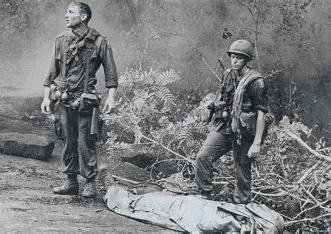
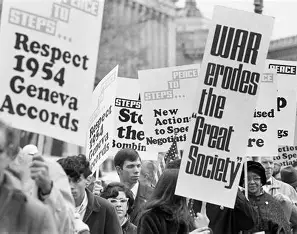
In Vietnam, the cause was less righteous and appealing to people, and, while there were still many civic-minded young people, not enough volunteered, and a “draft” was created. The draft deeply divided this country and a generational culture war divided society. In stark contrast to the WWII generation, the unpopularity of the war extended to a terrible and unjust treatment of the soldiers returning home. After fighting with valor and a deep love of country, instead of being called heroes, they were spit upon and called “baby killers”. This in no way eased the return to society for a generation of soldiers who had seen a new, horrific side of warfare. It was a shameful time for this country.

Veterans of recent conflicts in Iraq and Afghanistan are facing the most critical lack of support ever. This is not to say that the good citizens of the USA don’t overtly support them proudly in spirit. The lack of support lies in benefits and resources both medically and in mental health. The Iraq/Afghanistan era veteran engaged in warfare unlike any other generation. There was no clear and defined enemy. Once Saddam’s Revolutionary Guard was defeated the war became borderless and the enemy unclear. In Afghanistan, brutal terrain and tribal loyalties and betrayals further complicated warfare. Traditional warfare, already out the window after Vietnam, was taken to an entirely new level as our soldiers were forced to deal with roadside bombs, mothers sacrificing babies to kill soldiers, vague and restrictive rules of engagement, a lack of equipment and recruits, and extended tours. These brave men and women have been subjected to evils that most reasonable people would have difficulty believing even exist only to return to society and be expected to be able to put everything they have seen aside and just function. Very few of us, perhaps only one who has been in that situation. I only know what I hear.

I hear of a hatred for the people that they were fighting and for those that they were supposed to be protected. A hatred that never subsides and will never go away.
I hear of resentment of officers who put soldiers in danger to advance their careers.
I hear of rules of engagement that are vague, ineffective and subject to constant change.
I hear of seeing comrades mutilated or decimated in a “red mist” right in front of them.
I hear of sleepless nights, drug and alcohol abuse and decimated families due to inability to compartmentalize and handle haunting memories.
I hear of a convoluted, overwhelmed and inefficient VA.

Veterans deal with all of this with as much dignity as they are able to muster every day. They don’t expect us to understand but they would appreciate our appreciation and respect. They still love their country and believe in something that a dwindling number of Americans subscribe to, the concept of Service.

I didn’t have that sense of service when I joined. I want to regret that but there’s nothing I can do about it. I now have a respect, dedication and commitment to service as I serve any way I can. In my Masonic endeavors, by volunteering, by helping strangers, and by always thanking a Veteran. To them, military service is not a career. It is a calling, a duty, a responsibility with a job description. They write a blank check to their country that may include up to their very life and they do it with pride.

Don’t pretend that you understand what they’ve seen and done in the name of service. Just appreciate that they were willing to do it. Remember that regardless of whether you agree with the assignment, the American soldier doesn’t question the orders, they do what they were trained for and do what they can to get themselves and their comrades home.

I cannot begin to say how much I appreciate that.