The C word

For Wendy      

Nothing can prepare you for it. The C word. The word that people dare not say except in hushed tones. They whisper, “He/she has cancer …”, as if the word itself carried a carcinogen.
I was 31 years old. Young, strong, foolhardy and blessed (cursed?) with a sense of immortality. But one day, after a grueling workout, I was in pain and made a Dr. Appt. 2 hours later my doctor clearly enunciated the word to my wife and I. I had Cancer. Like anyone else, anytime, I wasn’t prepared.

Little did I know that I would soon be the target of the whispers.

My friends, my coworkers, my family all treated me differently. They tiptoed around me. I would catch them looking away when I caught their gaze as they gossiped. I hated it. When people talk about you as if you’re already dead, how do you make them understand that you’re not?

Let me tell you, Wendy.
You have already done it.
You went on Social Media and defiantly shook your fist, full of your flaming red hair, and called The Bastard out. THAT was your first step towards recovery. The power of positivity is often the tool that determines outcomes. Defiance, well that just stacks the deck.
Don’t lament the hair. It isn’t your identity and hopefully it is only temporary. Your red hair may have served as a fair warning to the unlucky soul that might underestimate you. But without it, you’re the same person only more determined.

You are going to find the strength within to get through this. The strength is already there, it’s abundantly evident to anyone who knows you. If you are able to channel the energy that you have used in your marriage, your personal life, your business ventures, and the kindnesses that you routinely bestow upon everyone else into your recovery…then you got this. At this difficult time, you will become the person you need to be to fight this fight. While those of us who love you will genuinely do anything for you that you need, only you can beat this.
Believe it. Will it. Force it. Find it. It’s in there. It’s been waiting for the moment to reveal how fierce you can be. Let it out.  
Don’t let the Bastard Win.

Raining fire

I’ll never forget it as long as I live. The images flooded the news as I woke on the morning of December 22,1988. They said it was a tragedy. Pan Am Flight 103, a 747 named The Clipper of the Seas, fell from 31,000 feet onto the peaceful Scottish Village of Lockerbie. Fire rained down on entire neighborhoods, killing 11 townspeople, a tragic addendum to the 259 that fell to their death. The debris would cover over 850 square miles. When the FBI, as part of an international coalition of law enforcement, determined that a bomb was the cause of the tragedy, it became the largest crime scene in history.

The news had warned us not to jump to conclusions about Terrorism. I immediately believed that it was. After all, I had been paying attention to the aftermath of the 1983 Marine Barracks bombing, responsible for the deaths of 214 US Marines and 48 French soldiers in Lebanon. I had paid attention to the banter between Ronald Reagan and Moammar Gaddafi (sp). I remembered the night “The Gipper” lit up the city of Tripoli, causing the Libyan leader to never sleep in the same bed again for the rest of his miserable, corrupt life. I knew that US Soldiers and citizens were targets, even valuable fodder for Islamists.

I was beyond outraged at the incident. Terrorism enrages me as a concept. I hate, and I stand by that word, anyone who believes that the slaughter of innocents is acceptable in the advancement of a political or religious agenda. To me, such people are lower than the gunk that slugs wipe off their feet. It sickened me. Unfortunately, my following of the case, as often happens when new, equally or more disturbing news stories happen, led me to lose my fervor.

I am so grateful that Netflix has released The Bombing of Flight 103. I was hesitant to watch it for concerns over getting too worked up. As I said, it was a formative event in my life. I pressed on, and despite the resurfacing of dormant emotions, I was deeply impressed by the layers of the story previously unknown to me.
First, the investigation.
Given the technology at the time, joint investigation teams from 21 countries (21 countries lost citizens in the disaster) were able, through good old-fashioned Police Work, to track a single radio bomb to a single luggage container, the airport in which it was loaded (there were layovers), and eventually the men who did it, along with every detail of their plan. Over 11 years, investigators tirelessly put together a case that would provide a semblance of justice for the beleaguered families of the victims, who had been treated poorly all around. The airline responsible was less than accountable and not suitably cooperative, as well as miserly in their proposed financial settlements. Also, there was widespread dissatisfaction with the lack of communication and the slow pace of the investigative agencies. I could go into more detail, but I’d rather you give it a watch.

The bright spot for me about the series, despite the attention to detail and historical accuracy, was the people of Lockerbie. Lockerbie, Scotland, is a very small town, essentially a village. Nothing had ever occurred there on the scale of the Pan Am crash. Yet when the fireball engulfed an entire neighborhood, they quickly moved from shock to action. They immediately gathered together and searched as far and wide as possible, tasked with the gruesome task of finding survivors. It would soon become apparent that there were none. With this grim reality at the forefront, teams of volunteers fanned out to recover remains and collect anything that, per authorities, “wasn’t growing”. The extent to which they collected potential evidence was only outdone by the sensitivity and respect paid to the deceased. One woman is known to have stayed with a body, still strapped in his seat, overnight and most of the next day so that the body would not be alone. Because she wouldn’t have wanted that for one of their own.
In addition, the people of Lockerbie volunteered to bag and tag all evidence so it could be categorized and, hopefully, identified. What was supposed to be a few weeks’ project evolved into over 6 months. The locals remained vigilant. Most of the clues that led to piecing together the attack came from their efforts. In addition to their attention to detail, I was impressed at the care and respect they showed for the victims’ families. They cleaned items such as books. They laundered certain items in some cases. They even added dried bouquets of local flowers that grew in the fields that had come to be littered with victims. To this end, one of the many family members who would come to visit the quiet village of Lockerbie regularly would report that they came to view the crash site as a place of beauty and peace, not a grim reminder of destruction and death.

The deeply respectful, tireless volunteers of Lockerbie are the lesson of this tragedy. Their kindness and selflessness perfectly offset the crime itself, even though it does little to soften the blow. In the face of hatred, biases, and willful devastation at the hands of soulless animals, the people of Lockerbie answered with love, compassion, and unconditional kindness.

While I will never get the image of the Clipper Maid of the Seas’ decapitated cockpit lying helplessly in a field in Scotland, I am at least now somewhat comforted by where it landed.

Bedside manner and the birth of a blog

Here’s the scene. A renowned oncologist has a stage 4 Melanoma patient as a guest at one of his lectures. She stands before the class. A veritable sea of solemn faces sits behind the life-sucking glow of the laptops before them. The Dr. wants the students to ask his patient the hard questions. In the hopes of improving their future “bedside manner.”
The questions commence. The students are unenthusiastic. They speak in clinical terms. Their faces offer no glimpse of empathy, sympathy, or understanding. They view her with the same enthusiasm as a cadaver. After the third emotionless, flat question the patient turns on them. She challenges their affect. She challenges their humanity. She implores them to see a person, not a patient. In response to her impassioned words, a student flatly asked her how she’s feeling. She then goes off on them as the Dr. watches on in silent agreement.
“How am I feeling?” How are we feeling?” “We’re dying, that’s how we feel!”
“And another thing”, she implored. “When you talk to us try to stop looking so fucking terrified!”
End scene.

The Big C. My kind of show.
Due to my medical history, I cannot help but be very aware of death. I’m not obsessed morbidly. I don’t plan to go anytime soon. Nor, and most important, am I afraid of it. It’s quite simple, actually. I spent so much time sick that it was always there in front of me. So I got to know it.
There are positive takeaways from being mindful of death. It changes how you live, for starters. Facing your own mortality opens the door between “someday I will die” and “when I die”. Suddenly, it becomes a part of your thought process. I think about it from every angle, and I’ve made peace with almost all scenarios. I live with a legacy mindset, always conscious of how I will be remembered. I’m at peace with all of it.
With the exception of a Cancer diagnosis.

That is the appeal of The Big C. It is a brave, unflinching, and honest look at life while facing death. It has it all. Bucket lists, difficult conversations, clinical trials, and experimental medications. Emotions range wildly as we watch Cathy Jamison, played by the always delightful Laura Linney, endure the highs of small victories and the crushing depths of disappointments and setbacks. At the center of it all, she is simply trying to live a normal life, with some mortality-related improvements. I believe it beautifully portrays a loving family dealing with loss. They are slightly dysfunctional and are coping with losing a mother and wife. The true beauty is that the show gives equal treatment to the concerns of both the survivors and the patient.
For the sake of this post, I want to shift focus to the medical aspect. In particular, the challenges of maintaining patient dignity in treatment. That is why I led the story as I did.

I’m very familiar with the patient/Doctor dynamic. In particular, I am very in tune with tone-deaf doctors and Nurses. My experiences have been mostly positive. However, many patients feel like a number or a statistic. They don’t feel like people because Bedside manner isn’t stressed as it once was. How do I know? I was told this by one of my own Doctors.

While hospitalized in 2016 for excessive water retention due to a failed transplant, I was approached by my Nephrologist. He said,
“Bill, you’re going to be here for a few days. If you have the energy, would you do a favor for me?”
“Sure, I’ve got nothing else to do.”
He went on to explain that he had a team of students. By his assessment, they had poor bedside manner. He made quotation fingers as he said “Bedside manner”, so I pressed. He explained that they were very bright and gifted clinically. Still, he was very concerned about their lack of empathy when dealing with patients. I admired that he cared about this, but I was not surprised. After all, he was very good with me.
I asked him what he wanted from me. He explained that he wanted me to tell them my story. Which he knew all about, of course. He said I should not volunteer everything. He wanted me to let them “pull it out of me” due to my natural tendency to overshare. In return, he would give me a certificate for helping out. I was glad to do it.
2 hours later, my hospital bed was surrounded by Medical students. I made it hard on them. I made them pull out of me the things not on their chart. The challenges of being sick for years on end. The financial, marital, parental, and occupational challenges of Chronic illness. I told them as only I could. One of them was in tears at the end, and others were visibly shaken.
My Doctor would later tell me that I was the perfect choice for such a lesson.

Soon after, I was visited by friends. They immediately noticed the new Certificate of Appreciation on my table and asked about it. I shared the story. One of them said, “Brother, you need to start documenting this shit. Write a book, man.” I mentioned that I used to have a blog, maybe it was time to start a new one? The name of it hit me instantly.
Superman can’t find a phone booth. The meaning was simple. I had fight left in me, but I was too weak to find the strength to change into my bullet-proof costume.

This is the same blog, just renamed because eventually I did indeed find my Phone Booth.

People over patients. Bedside manner is everything.


Winter Nostalgia: Childhood Memories and Change

Stopping by Woods on a Snowy Evening

By Robert Frost

Whose woods these are I think I know.   

His house is in the village though;   

He will not see me stopping here   

To watch his woods fill up with snow.   

My little horse must think it queer   

To stop without a farmhouse near   

Between the woods and frozen lake   

The darkest evening of the year.   

He gives his harness bells a shake   

To ask if there is some mistake.   

The only other sound’s the sweep   

Of easy wind and downy flake.   

The woods are lovely, dark and deep,   

But I have promises to keep,   

And miles to go before I sleep,   

And miles to go before I sleep.

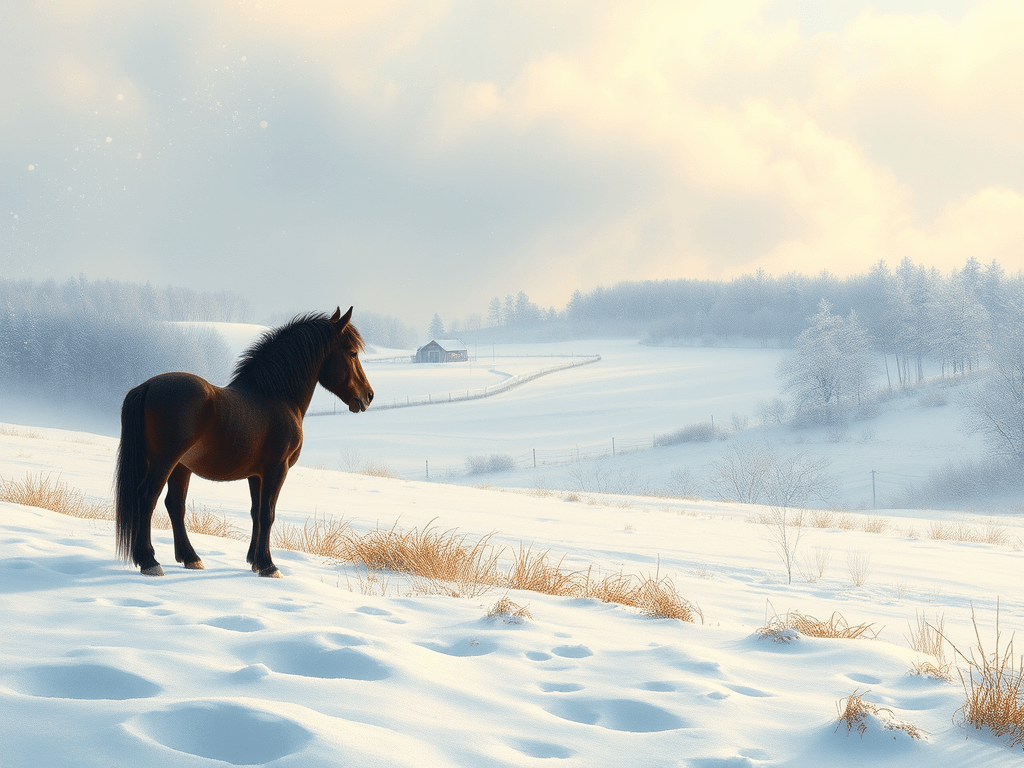
Snow drifts as far as the eye can see. Entire windblown fields are smooth, perfectly white and devoid of any tracks, human or otherwise. The wind beats the side of my apartment building and the smell of wood stoves fills the air. The rumble of plows interrupts the serenity. Soon, the landscape, as fresh as off the pages of a Robert Frost poem, will change. It will be tarnished brown by the taint of people again. We’re getting a “real” winter in New England. By “real”, I mean this is how every winter used to be when I was a kid.

For whatever reason, Winters aren’t what they used to be. Yes, I know this sounds like the musings of an old man, one who starts with, “Back in my day”. But I’m only 60, and there is no question that winters are not what they were. With rare exception, Winters for the last 20 or so years in New England have been hit or miss. Snowfall levels, despite some large storms each year, have consistently fallen. Despite some periods of extreme cold, average temperatures have risen consistently. Here in NH, snow amounts vary. They increase the farther North you go. However, even the Granite State doesn’t get what it used to. Massachusetts can go entire winters without any significant snowfall.

I hate snow now. I’m old, and I get cold easily. Shoveling kills my back. I hate driving in it. It just makes me want to go to Florida with the snowbirds. The years have changed my love of winter. As a kid, I loved it.

The first thing I think of when I think of snow as a kid was the Snow Day. They were a treat. In the late 60’s and early 70’s, canceling school was not what it is today. Today, the mere threat of a storm will close schools. Then, the school system did everything they could not to. Snow coming? Maybe we’ll let them out early. Snowed overnight? Better put the chains on the tires and wear your boots. My school was on a hill. If the Bus feasibly climbed that hill, then school was on.
One of the most nerve-wracking experiences then was waking up to snow. We waited patiently for the local TV channel or the radio station to call off school. Even when surrounding towns closed, often my town didn’t. Sometimes I would get up and wait with my Mother for the announcement. Other times, I would listen to the radio with fingers crossed. More often than not, I would end up going to school in the snow. Trudging up the hill to school was a nightmare. I would fall constantly in the really bad stuff. The insult was added to injury. The kids on the bus mocked me as the bus struggled up the steep hill to school.
I was bullied, did I mention that?

The days when school was called? That was the best feeling ever. I would go back to bed for a while. Alternatively, I would get up and watch some daytime TV on one of the 5 available channels. Then, I would load up on sugary cereal. If the snow had stopped already, I would shovel our driveway. Our driveway was very wide and long. Looking back, it was a hell of a big job. My young body could take it, but I would be sore after. But I had no time for pain. There was money to be made.

I had several neighbors that were loyal to me. One thing you don’t see after a snow storm today is kids with shovels over their shoulders. They used to knock on doors. When I was a kid, I had competition for my driveways. So, I had to be prompt. I also had to demand loyalty from my customers. These were the same people whose lawns I mowed in the summer and whose leaves I raked in the fall. I took good care of my neighbors. I was actually quite enterprising in those days. I would revel in making $ 6, maybe $ 10, a driveway!
The shoveling would sometimes take all day. But if I was done early, there was sledding and tobogganing to do. My hometown had several great hills within walking distance. My friends and I would try to hit them all. Looking back, what I wouldn’t do for the energy that I once had! Going downhill at breakneck speed is thrilling. Walking back up that hill several times took quite a toll on us. Despite being tired, we kept going. Fitness was stressed back then, we didn’t sit in front of screens all day. We were outside doing things. We only stopped for candy cigarettes, PB&Js, and hot chocolate in the winter. In the summer, we drank water from the hose.
Many kids today won’t understand being outside all of the time. Our parents knew that by being outside, we would not only be active, but bonds were created. Good habits were formed. An appreciation of Nature was obtained. As a child, I fondly remember the ethereal silence of the woods after a fresh snowfall. It was only interrupted by a falling branch or the movement of wildlife. I remember those rare moments when I felt warm despite the harsh cold. I felt incredibly at peace with the space around me. The sweat under my jacket was warm and comforting. The world was at peace. The blanket of snow had somehow muted the ugliness of the world. It was just for a moment.

I sometimes experience that same peace when I shovel. I find myself looking around. I am keenly aware of how uncomfortable the weather has made my old body. Yet, I marvel at the tranquility of a major snowfall and find peace in it. I wish that I loved winter as I used to. My youthful enthusiasm has been replaced by cynicism. I forget about the beauty and dread the cleanup. I fret over upcoming heating bills instead of appreciating one of New England’s most beautiful seasons.

I think of going to Florida, where it’s everything I hate: hot, flat, and full of bugs. I don’t think I can ever leave New England, the land of the true 4 seasons. Instead of running from winter, maybe it’s time to embrace it. I’m confronting everything else in my life right now, maybe I can challenge my hatred of winter. After all, isn’t the dark of winter metaphorical to the approach of death? By challenging the cold, and in particular my disdain for it, maybe I’m challenging my aging mindset.
Cynicism and Faith: A Journey of Belief

I was recently asked if I believed in Miracles. 20 years ago, I would have answered this question with a flat, fast NO. Now, after several incidents that defy logical explanation, it’s a firm and steadfast maybe.

A miracle is a powerful thing that defies the physical world and all of the laws of probability. There’s a reason that it requires a panel of very stodgy and high-ranking Catholics to classify anything as a miracle. In that light nothing I’ve witnessed in my life fits the mold.

Perhaps it’s the religious implication of the word. Miracles are largely attributed to a Divine entity. I believe in a higher power, but in the most undefined of ways. I struggle with the notion of an interactive deity. Instead, I chalk belief in such things as miracles up to the human need to explain the unexplainable.

I’m a cynic. I question everything.

I was always uncomfortable owning that. Being a cynic is often mistaken for being challenging or disagreeable. It may be aligned with my trust issues. My favorite saying is, “Trust but verify.” My distrust of people is surely related to my need for proof in matters of belief. Despite having Faith, Hope, and Charity on my right forearm, faith is very elusive to me. The tattoo merely represents hope. With Faith being the struggle that it is, Deity is a constant challenge. Consequently, miracles don’t exist in my world.

Did I mention that I am a fair cynic? I admit to being a quasi-believer at best. I also don’t presume that everything needs an answer. I’ve already admitted my belief. I think that religion is man’s way of explaining what his mind cannot grasp. Prayer plays a particular role in this. I’m not of the same school. I am okay with not knowing the answers to the great mysteries in life. I will continue to question the very meaning of life until my last breath. I will be okay if I never truly understand. I am insignificant, a grain of sand on an eternal beach. I am perfectly content with the possibility that I am not expected to know. Maybe I am supposed to trust the process, as everyone is so fond of saying these days.

As an aside, I constantly question the larger questions in life. I do this not to dismiss the notion of a God, but to come to peace with it. I want, more than anything, to believe. I’m just not there. In the spirit of an inquisitive being, I seek to be wrong. Almost everyone else will retreat to be right in their own minds.

If anyone should believe in miracles, it is me. I have come out on the other side of tragedy and death more than a few times. I have been in a coma, had sepsis, severe accidents, and chronic disease. More than once, I entered a hospital that most thought I wouldn’t leave without a toe tag. I’m still here. Maybe it’s a miracle. But I don’t think I’m important enough, in the grand scheme of things, to warrant one. My life is good and well-intentioned. But the ripples of my actions don’t cross even a duck pond. Instead, I look at my continued presence as the result of good Karma. Everything is energy, after all, and I know I put out good energy into the world. My reward was getting to stick around a little longer.

Living Life Beyond Complaints: A Stoic Perspective

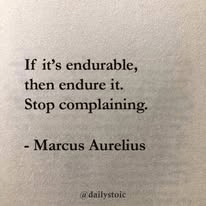
Marcus Aurelius Antoninus, Roman Emperor and Stoic, wrote the above quote over 1800 years ago. Who knew that “Suck it up, buttercup” was a thing so long ago? Are we to surmise that the great Toga-clad Roman society was no more free from complainers than we are today? I suppose this oversimplification fails to do the quote justice. It’s not about complaining, it’s about strength. Marcus Aurelius, as a Stoic Philosopher, believed that the quality of life is determined by how well you face adversity. In short, not everything requires action or a response.

Still, it is refreshing that, as early as 180 A,D complaining was a thing. It tells me it’s not a lovely side effect of a population growing less resilient.

I’m particularly familiar with this quote because I live it. To be clear, I am not special, nor do I want a cookie for having a challenging life. I don’t know anyone whose life isn’t. We all have problems, and it’s not a contest. One may view another’s issues as insignificant compared to one’s own. Still, that does not change the fact that everyone’s problems matter a lot to them. People need to understand this. Some choose to talk about it. Others keep it to themselves, comfortable in the age-old notion that nobody really cares. Or out of not wanting to burden others. And then others, well, they complain.
Not me.

As a person who has consistently dealt with setback after setback, I don’t talk much about my challenges. I was reluctantly “the sick guy” for a long time. Whenever I encountered anyone I knew, there was an inevitable, “How are you feeling?” coming. Please don’t take this as unappreciative. Good words are not guaranteed from everyone. Take them when you can. I simply struggled with the fact that my illness was the most definable aspect of my persona.
The most positive trait I can offer is that I am not a complainer.
I would rather be known as the opposite of a complainer.
Content. Stoic. Strong. Positive. Optimistic.

Have you ever heard someone refer to another as a survivor? “Oh, he/she’s been through so much. What a survivor. I can’t stand that. We are one of 2 things. We are alive, or we are not. Being present enough to be called a survivor means that you are alive. Logic thereby dictates that you have survived. My attitude is that while above the dirt, go out and live while you can.
Life is to be endured.

The mistake we make is to expect life to be fair or happy. The Declaration of Independence offers us the right to pursue happiness, but there is no guarantee of it. Yet many think that happiness itself is guaranteed, and any other outcome is thereby a disappointment. My attitude is that life is a series of obstacles, challenges, disappointments, and pivotal moments. Mixed in with everything entailed in surviving, we have moments of happiness. Brief periods of joy. Those are to be looked forward to because they justify the struggle. Strong people find something to be happy about. Others complain. They fail to recognize that the very breath they use to complain is something for which they should be grateful.

The choice is simple. Endure in silence, or find something in your particular situation to be grateful for. I’m facing another health challenge after only 4 years of relatively good health (my second longest streak). I’m sure that I could find many things to complain about. But I never will. Not only do people not care, but they also don’t like it. They appreciate someone who makes the best out of their situation.

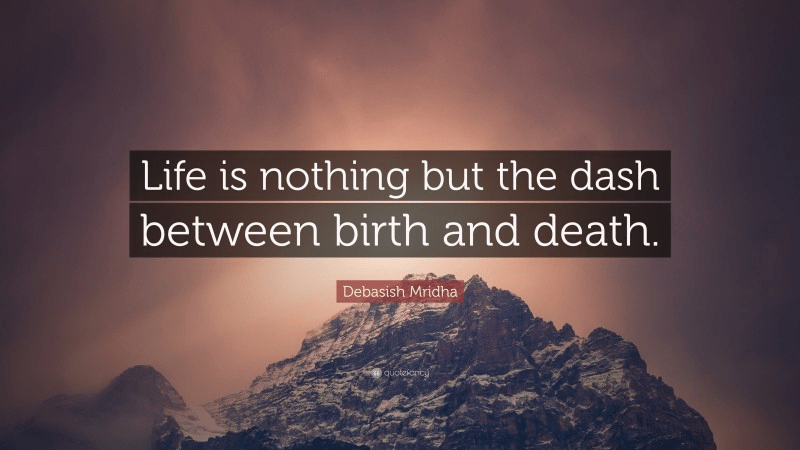
I have a great life. To focus on what I can’t control is just the wrong way to live. Instead, concentrate on what I have in front of me and what lies ahead. Your stone will someday display a date of birth and a date of expiration. The dash, well, that’s everything in between. Live for that.

A sobering reminder

I wrote this 6 years ago. I scan my previous writings for perspective on what my life is now compared to before. This was written in a very dark time in my life. At the height of my illness, I was lacking purpose. I truly struggled with the return on investment of continuing on. Everything felt hopeless. I remembered a conversation with my youngest. She told me that I was her favorite person in the world. That memory got me through it.
It really is amazing how much things can change. And how things can get better when you feel that all hope is lost.

I’m currently dealing with a tragic suicide within my circle. So many have been devastated by it. An entire extended family, as well as an enormous circle of friends, have had their lives forever altered. Instead of love and companionship, they now crave answers and understanding.
Talk to someone, folks. The poem below is real. That is how close I came. And why I didn’t do it.


When you were young

your favorite line

was “Dad, you don’t know”

well did you know?

there was a night

not long ago

I sat on the edge of my bed

or was it the universe?

one in the chamber

cursed glass of whiskey

liquid false courage

in the other hand

disgusted with yesterday

bored with today

uninterested in tomorrow

desperately seeking a reason

to carry on

I’d lost my joy

and the will to seek it

where once was strength

a cavernous

anguished

aching gash

Where was the zeal?

I’m missing the real

existing but not living

tears of pain roll

down my unshaven cheek

one, just one

fucking reason I seek

to not end it all

the safety off

just drunk enough

sick enough

to call Bullshit

on this timed-out
worn-out
overplayed phase
I call my life

then I think of you

my precious child

your first steps

the sun in your hair

your infinite

infectious smile

golden and pure soul

my heart yearns

stomach turns

my mind scolds me

at the thought of hurting you

if I was to shed

this mortal shell

in the throes of my selfish pain

I would crush you

my dear child

I had forgotten 

in a selfless moment

your love

ceaseless adoration

and your words

that I am

your favorite

person in the world

I couldn’t pull it

the beckoning trigger

for I had vowed to myself 

in a lighter hour

I would never

cause you

a life of pain

in the name

of ending mine

The stranger isn’t always danger

While walking by, I say, “How are you?”

Your look tells me you don’t know what to do

I don’t blame you, I’m scared too

I’m on the lookout for the drop of the next shoe

But consider this, my skeptical stranger

I might be the good guy who poses no danger

I wish I had a badge, some kind of a label

That says “I wouldn’t hurt you, I’m simply not able.”

But a simple greeting knocks you way off track

Once I’m past you there’s no getting it back

“Your loss”, I will say, under my breath

I will continue to do this until the day of my death

Someone has to start a chain of good will

It takes little effort and no special skill

Let’s offset the anger, the hatred and division

With kindness and empathy embark on a mission

Effective immediately, as early as today

Let’s change our thinking and find a new way

To talk and discuss, with respect to each other

Not yell, argue and fight with our brother

This challenge is doable, but not for the weak

Can you halt and taste your words before you speak?

We need to do something, the situation is dire

If cooler heads don’t prevail…well here comes the fire

It’s really quite simple, the words easy to say

Ready, here we go…” Have a nice day!”

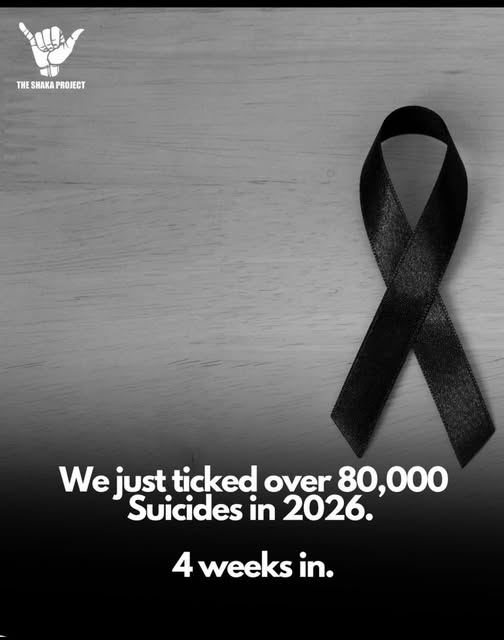
80K in 30 days

Screenshot

Suicide is a National tragedy. 80,000 suicides in 4 weeks. Why isn’t mental health a priority?

I’m very close to the subject of suicide. My Masonic Riding Association Chapter dedicates its charitable activities to Suicide prevention through fundraisers such as charity rides. The president of our Chapter lost his son to it.
I have lost many friends over the years to it. There have been so many funerals. More than I care to count. It’s always the same. Nearly all in attendance were thinking the same things. They asked, “How did we not see this coming?” and “What could have been done to prevent it?” You wish for that one last chance to remind someone that they matter, and what they are going through will pass. Instead, your only option is to stand over their mortal shell and say the things that you wished you had said when they were alive. Then the realization sets in, your words are unheard now, and mean nothing anymore. It’s just too late.

I have struggled with thoughts of suicide as well. Greatly. It started when I was on dialysis several years ago. I struggled through some very dark, sleepless nights in which my thoughts attacked me. Feelings of despair, worthlessness, frustration, and exhaustion washed over me, standing guard so as to not allow any conflicting voices of hopefulness intervene. I was convinced that life was not worth living. That I was of no use, in fact a burden to everyone. I didn’t feel needed, wanted, or useful. I was sick, broke, isolated from my support network, and generally feeling that there was no reason to keep fighting. It was such a confusing time for me. I managed to get through each day. But I always knew that I had another battle in store later that night. The one thing that kept me from actually doing it was knowing what it would do to the people who love me.
Eventually, those nightly battles ended. For a while, I believed that they were gone for good. I chalked them up to a phase. I was wrong. I have battled suicidal ideations many times since. Recently, I am sad to report.

Never again, after the events of last week.

A close family friend hung herself last week in a house full of people who loved her. 12 people to be exact. Not to mention the throngs of others who have just found out. She was a mother of 5, a Grandmother of 5, a devoted wife, and a friend to all. She listened with ease, cared without end, and loved everyone in her life. She was my ex-wife’s best friend in the entire world. Now my ex, as well as her enormous family and network of friends, are left holding a giant bag of unanswered questions.

My ex became friends with Lisa when our children were very young. That friendship evolved to include Lisa and her husband. It also included her sister and his husband, along with the third brother and his family. We would congregate as 8 adults and 14 children. Restaurants were fun. I say that sarcastically, but they actually were fun. The adults were as silly and fun-loving as the kids were. For years, we spent almost every occasion with them. Summer days were spent at the pool and lakes. Weekend nights were full of raucous laughter and the joyful sounds of children. I am hard-pressed to think of many nice family days that weren’t spent with their families. Until our divorce, when I wasn’t much a part of things. Unfortunately, the memory of Lisa is a bit tarnished for me. Her friendship with my ex became problematic for me late in our marriage. I felt that the friendship was too much, a bit excessive, and I pushed back some. But I need to be clear, I had no issue with Lisa, only with the situation itself. Even after stating that, I feel awful now. I don’t know if I ever told her that my problem wasn’t with her. I am only comforted by the fact that Lisa probably didn’t hold grudges against me. She just wasn’t like that. I could have learned a lot about forgiveness from her.

The funeral is Friday. It is going to be a very hard day for all involved. The family is one of the closest families I’ve ever known. They love hard and play hard, it logically follows that they grieve hard as well. I anticipate one touching, tearful eulogy after another, each more difficult to process than the last. I plan on providing a shoulder for my ex, if she’ll take it from me. I hope she will because it is the only thing that I have to offer. It won’t be enough, but it will at least be something that I can do for her. She is devastated; there is no other word. I feel just awful for her. She will carry this with her forever. Her mental health, while never great, will be forever affected. For that I am deeply sad.

Seeing the damage done to the living, I now believe that suicide is a terribly selfish act. No one should ever have to go through what Lisa’s family is going through right now. The good memories will prevail. However, the present moment is full of whys, what-ifs, if I had only knowns, and what are we going to do’s. For context, she became a grandmother again just last month. A child that will never know how awesome her Grammy really was.
I can never do that to my family. No amount of pain or despair is worth doing such a thing to them.

Mental health is a crisis of unchecked proportions. See, Lisa was unwell. Despite her ability to help others without limit, she was unable to help herself. Her family was unable to help. My ex, who loved Lisa as much as her family did, was unable to do anything to help.

How many families must endure this pain before we realize we have a problem? I am aware that I am doing a small something by engaging in charities dedicated to this. But the irony that I have thought about ending my life in the same family-crushing manner is not lost on me.

We need to have a national conversation. NOW. https://projectsemicolon.com/

Support the Semi-Colon.

MINSKY: The Journey of an Unfulfilled Android

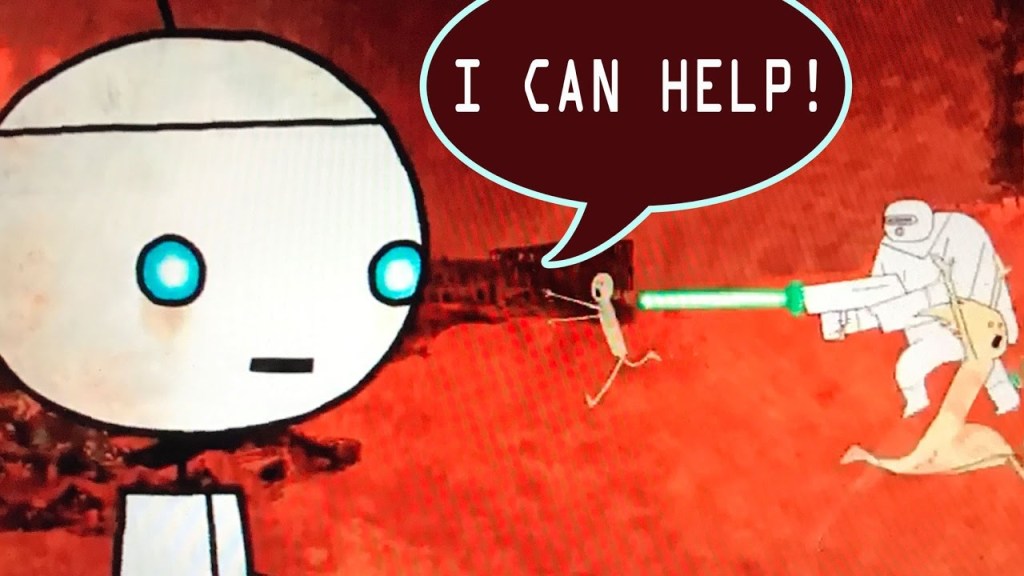
This is my retelling of Fargo, Season 3, Episode 3, in which the backstory of a dead character is examined. Unit MNSKY, or MINSKY, is the creation of a once-promising Science Fiction writer. His career abruptly ended after a publisher took advantage of him. The book, The Planet WYH, was a promising entry in what would be a successful series. It was relegated to obscurity in a box in the floor. The daughter found it after his death and read it. The producers of the show made a bold and brilliant choice. They told the story of MINSKY, the dutiful Robot, through an animated sequence. It is summarized above.
I am so glad they did.

My name is MINSKY, also known as Unit MNSKY. I am a small robot. I exist only in the memories of the readers of my long-forgotten author,and within the pages of a book, carefully tucked away in this tin box under the floorboards of an old house. Forgotten is my story. I’m out of service. My massive quantities of data have been mined, my metal harvested, my work complete.

My spaceship crashed here on planet WYH 2 million years ago. My pilot and friend died soon after impact. I stood over his fading lifeforce, only able to offer my one sentence, “I can help.” As I would painfully discover, I can’t help. All I have are good intentions. In this new world, I hope that is enough. My mission is to walk the earth. I aim to document all that I see.
Alone, I witnessed the creation of matter, the birth of life, the rise and fall of civilizations, and so much more.
As I walked, slowly and deliberately, the path of discovery, I was a mere spectator to the wonders before me. Water creatures left the surf to breathe air and walk. Giant creatures battled for dominance in a world that extinguished them, without acknowledgment for their conquest, with a single asteroid. I wandered through centuries of Ice and barren terrain. I saw villages morph into cities, cities become countries . I witnessed rises and descents, hopeful building of civilizations, and the wanton destruction that followed. I was witness to the creation of remarkable, benevolent scientific inventions that advanced civilization, as well as the destruction of entire civilizations at the hands of terrible weapons created by the same beings. I wandered for almost 2 million years as a mere spectator. The only time beings interacted with me was when I was an unwilling participant. See, I had to stop every century to recharge. While doing so, I was quite vulnerable. Some creatures took the opportunity to attempt to harm me. Once, one of my upper body appendages was torn off as I sat helplessly. I wasn’t offered assistance or kindness; I was taunted and berated. As an Android, I don’t experience emotions such as sadness. But I know what it is; my database prepared me for all things. My intelligence tells me that what I experienced was cruelty, a base emotion displayed by the non-evolved. Cruelty’s antithesis, kindness, was rarely offered and seemed to be in short supply.
That’s not to say that I am not programmed to offer simulated versions of “emotions”, despite being a rational Android. I occasionally extended an appendage, in its literal sense, to beings I encountered in my travels. If I saw someone struggling, I offered an “I can help”. Only to be reminded that, other than being able to enunciate the words, I am unable to act on them. One being was angry at me, upon my failing to help, calling me “useless” and “worthless”. It pleases me that as an Android I am not susceptible to verbal attacks. Besides, I am only an observer here to document and gather intelligence. A one-armed Android tasked with wandering for eternity until my mission is deemed complete.

One day, as I emerged from my recharge slumber, I experienced my first contact with extraterrestrial life since the crash landing as I found myself before several very distinguished members of the Federation of United Planets. After being recognized as the oldest sentient being in the universe I was commended for my longevity and thanked for the massive amounts of information I recorded. I was then told that it was time for me to shut myself down. I nodded in agreement, reached for my head appendage, opened it, located the switch, and shut myself down. My service was done.
I had wandered 2.38 million years. In that vast amount of elapsed time, I had observed and reported as programmed. I had done nothing else.


I traveled, but I did not enjoy.
I observed without the benefit of awe or curiosity.
I wanted to help, but I wasn’t able to.
I recorded my observations, but I didn’t learn from them.
I was done with my mission, but I hadn’t accomplished anything.
I was able to enunciate my desire to help, but I wasn’t able to help.
I existed, but I did not live.
I didn’t retire; I was shut down.
I have no legacy, just an off switch.
I had a long experience, but I didn’t have a life.
I am a sympathetic character, but I have no understanding of what that means.


Jesus, how sad is that?

I love this episode and animated short so much. The art is minimalist yet enthralling. It is both simplistic and maddeningly beautiful. It is poignant yet heartbreaking. It beautifully saddened me. I find myself affected, which is not an easy feat. MINSKY’s journey parallels so many aspects of life that it morphs into an existential meditation on the tragedy of an unfulfilled life.

Life as an observer will never be fulfilling. If you feel like you were put here for a reason, go and pursue it. If you feel like you have a job to do on this planet, take action. Don’t end up like MINSKY.