
The Quiet Strength of Resilience in Tough Times

Resilience isn’t dramatic.
It’s choosing life repeatedly,
even when joy feels borrowed,
And tomorrow feels unsure.

Anonymous

I saw this the other day while doom scrolling FB reels. There are a lot of gems of wisdom, tailored to your particular crisis on social media. In my case, the FB algorithm stepped it up to Yoda mode. Who am I to fight it?
I watch those reels because no matter the topic at hand. I never fail to glean some wisdom or useful nuggets that inspire me. By inspire me, I mean it gives me some general validation. It affirms the troubled traits bothering me at that moment.
This week’s troubling trait is Resilience. I’ve been thinking about it constantly.

If you have been reading, you know that I have been faced with yet another health challenge. Upon initial diagnosis, I was very concerned. The surgery is extensive and is followed by a long recovery. I wasn’t sure that I was up for it. While it goes against every fiber of my being, I thought my good run may be over. Consistent with the theme of “going against every fiber of my being”, I also did something I rarely do. I shared my dilemma with my close friends. I rarely share my struggles. I grew up figuring out shit all on my own. Upon hearing the news of my upcoming surgery, my friends were amazing, as to be expected. They were supportive in offering help in any way, and many shoulders were offered to lean on. I appreciated such offers.
The true takeaway was how many people commented on my past resilience, encouraging me to take inspiration from that. Then it occurred to me that that is what I am known for. I’m the guy known for never giving up and rewriting the narrative. Where was that guy?

Why wasn’t my initial reaction what it was when I’ve faced a health challenge before? I had to meditate on that for a few days. I had more questions than answers. That is why the above quote grabbed me so.
Here’s what I came up with. The choice to fight isn’t always out of vim and vigor or enthusiastic tenacity. Sometimes it is merely a choice. Not dramatic but instead pragmatic. The choice is, of course, living or ending it. A choice I have contemplated so very often of late.

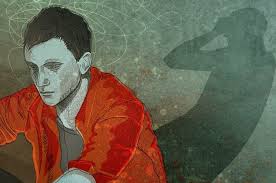
I am not suicidal. I am merely dancing with the notion of being done. “Done” is a common topic of thought for many people in my situation. What situation is that?
Older. Plagued by physical maladies. Not financially secure. Finding myself not needed as I once was, and unwilling to insert myself into situations in order to change it. Having maximized my usefulness and in need of a purpose. Life has become a chore, and hope for it changing fades with each passing year. The ensuing tragedy of feeling this way is that suicide becomes less about being incapable of dealing with life. And instead, it becomes more about how willing you are to continue dealing.

Resilience isn’t dramatic. No, it’s a character trait. One that fades over time.
It’s choosing life repeatedly. Yes, because the alternative is less desirable. Not to mention the damage it does to those you leave behind.
Even when joy feels borrowed. There are moments when the only happy moments in my life are vicarious.
And tomorrow feels unsure. What makes me choose life is the hope that my future will be brighter, despite all indications to the contrary.

So I will fight this in my usual manner. I will reclaim my tenacity and beat this latest challenge. Not because I have a particular desire to achieve another victory over a medical foe. I want to stick around for a while to see what happens. I’ve been to enough parties to know that if you leave too soon, you will miss the good stuff. That will have to be a good enough reason to fight this battle. Being an enthusiastic participant in my own life is something I need to get back to as it is. I miss that guy.
That guy has been conspicuously absent for too long.

How do I overcome this stretch of existing and get back to my love of living?

the Prayer list comment

I stared numbly at the woman behind the plastic shield as she worked. She was older, late sixties at least. I sensed a quiet dignity and kindness about her. Realizing where I was and what I had just learned, it occurred to me that the kindness she possessed is a fine quality in her position. She handed me a stack of papers under the sneeze shield. As I reached for them, she touched my hand.
“You’re on my prayer list, William. I wish you the best.”
I had already suspected that I was on the cusp of another battle; her furrowed brow confirmed it. I looked at her name badge. As I stood up, I said, “Thank you, Theresa, you are very good at your job.”
She was indeed very good at her job. I’m unsure how I would present myself. I would struggle with dealing with a man who has just been informed that he is facing open-heart surgery.
I thought about the unusual, or usual, depending on your perspective, feeling I got from Theresa. Does she put all of her patients on her prayer list? Did she see something on that screen that inspired her gesture. After all, it’s her job to see patients with conditions such as mine. Is she empathetic to all of them equally? I would think that even the kindest of souls would become accustomed to the routine of sadness after a while. It should wear off. What inspired her to make an additional gesture of kindness towards me? Or is it just in my head? That certainly is a possibility. I pondered it as I walked in the cold wind to my car.

Severe Aortic Stenosis. Apparently, the quirky little heart murmur I’ve tolerated for many years has upgraded. I need surgery soon. There are 2 options, one very painful with a long recovery, and one less invasive with a shorter recovery period. I may not be eligible for the less invasive surgery. The kicker of it all…I have to wait until Tuesday to find out the next steps.

Actually, the real kicker is that this is only one of my worries. My Aortic Stenonis was diagnosed during a testing work-up for a Prostate biopsy. They discovered the heart issue on Monday. I met with the Cardiologist Wednesday. I had the biopsy on Thursday. Now I must wait at least a week to find if I have Prostate cancer. This has been a truly trying week.

I’m doing my homework. I’m trying to keep myself calm. I am versed on outcomes, recovery times, and everything I can think of. I know I can handle this.

But still, that comment…

Dinner with My Dad: A Reflection on Life Lessons

I recently came across a writing prompt that interested me.
“If you could have dinner with anyone past or present, who would you choose?”

To pick just one person that I would want to have dinner with, alive or dead, is a challenge. Most people might choose a celebrity, a poet, a musician, or a politician. I can surmise that this is the point of the exercise for them. How would I begin to pick the one person whose contribution, ideas, heroic deed, etc. inspired me to select them over any other? Another question, would it be considered trite or a wasted opportunity to choose a family member, such as my Dad?

Well, I am picking my Dad.

Dinner with my Dad would be a very particular scenario. It would be a recreation of a lunch I once had with him when I was 23 years old. I can remember only one time as a young man when he and I ever went out as just guys. We had a beer. It was special in many ways. Obviously, spending time with my dad was special in its own right. But it was also one of the first times he stopped being in “dad mode.” He was just a regular guy. As an aside, I call this the dad hat. It’s my nickname for Dad’s tendency to act based on his perception of ‘Dad’ as a role. This happens rather than him acting as a person. I admired his dedication to it. Often, though, I wished he could have just been a friend when I needed it. That day, he was just that.

I remember that I was really struggling with some heavy shit that day. He was very helpful in listening intently. He only offered advice when asked. Of all of the conversations that day, I fondly remember him saying his famous line to me. He truly believed in that line. One that I never came around to until after he died. He said, “ Bill, believe it or not, everything will work out.”

Today, if I were to sit across from him at the same restaurant, I would struggle. I wouldn’t know what to tell him first. I mean, where do I even begin? He has been gone 12 years now, and I have spent so much time talking to his headstone. I would tell him that I miss him more than words can describe. I would tell him that the world makes less sense without him around. That men like him are a dying breed. I would apologize for so many things. I would save the best for last. I survived some mind-blowing shit. I would tell him that sitting across from him is a miracle in itself. I have come around to his trademark saying. Everything, in fact, will, does, and did work out. That in no way means that my life is what I wanted it to be. It means that I understand, and that it worked out a helluva lot better than it could have.

I realize that I have described a very one-sided conversation. It’s because I have so much to tell him. I want to honor him. I will tell him how much he was right about. I have come to value his simple yet poignant take on the complexities of life. I remember the quiet disappointment in his eyes as he dispensed valuable wisdom to deaf ears. It would mean everything to me to set the record straight. I want to see the satisfied, redeemed, look on his face. A humble man, who, like his dedicated son, only wants to know that he made a difference by sharing the wisdom accrued over a too-short, hard-scrabble life.

Finally, the check would come. He would try to pay, as expected. But I would insist. It would be one more payment towards the inequity of all that he gave me, which would be frittered away. He would insist on paying the tip. At that moment, I would remind him that he has also given enough tips in his time on earth. All of this is a feeble effort. I want to show him that his generosity of spirit and wisdom are not lost on me after all. He never knew just how much his sage advice has guided me through life. It has helped me face the most difficult challenges posthumously.

Finally, we will walk out to the parking lot and walk towards the setting sun. I extend my right arm and place it on his shoulder as we walk. I say, tears welling up despite my strict no-cry policy, “I love you Dad. Thank you for everything you didn’t know you gave me.”

Suddenly, my arm was resting in the air. The persistent force of gravity pulled my arm to my side again. It is a calm evening, still and warm. I realize that he is gone, back to where he came. Disappointed at the sudden conclusion of our visit, I walk to my car. A brisk breeze breaks the stillness, blowing my trademark scally cap off my head. I laugh, pick it up and smile broadly. He never liked scally caps. He was a ball cap guy.

200 miles

To survive is to be alive, long after the reason to live has died.
Author unknown

I was thinking recently about Hugh Glass. In 1823, Hugh Glass survived a Grizzly Bear attack. Then he crawled over 200 miles before he finally reached help in South Dakota. It took him weeks. He was the inspiration for the movie The Revenant. Upon reading it, I asked myself if I was capable of such a feat. The answer required little contemplation. No.
I was troubled by what I came up with.

The story of Hugh Glass caused me to explore something I think about frequently, the Will to Live. Late at night, when the demons come, my thoughts turn dark. I debate some horrible shit when I go down the Rabbit hole. When I was sick and on Dialysis, I did my best work. I thought about suicide most seriously. While in this state, I had no regard for anything at all. My life, except for the support of my family and friends, had little to no meaning. The only thing that kept me from doing it was the thought of what it would do to my family. I had ceased to live a purposeful life. I was merely existing. Surviving through my greatest trait. Stubbornness.
I was “surviving to be alive, long after the reason to live had died.”

The above phrase is attributed to the concept developed by German philosopher Arthur Schoppenhaur, supported and furthered by Viktor Frankl. It reflects the concept of an irrational, blind, incessant impulse without knowledge that drives instinctive behaviors. It further suggests that even when life feels meaningless, the act of surviving itself is a form of survival.
Viktor Frankl brilliantly explored this concept through the context of Holocaust survivors in Nazi Germany in Man’s search for Meaning. He observed that survivors often find hope and purpose in their experiences, which can lead to personal growth and resilience.

It’s a powerful thing to ponder. Sadly, I know many people who ponder it as well. I hear them say such things as, “I have no future”, or
“What’s the point?”
“There’s nothing left for me here”,
“I just don’t want to do it anymore.”
Wait, that last one was mine.
It pains me to remember. At the height of my illness, in the darkest of the dark nights, my mind journeyed to hidden places. I can still recall the state I was in. Awash in despair, devoid of interest in the future, desperate for sleep. In those moments, relief was all I could think about. Curled in the fetal position, cocooned in a blanket, I often found myself muttering to noone in particular, “I just don’t want to do it anymore.”
More than once, I said it while sitting on the edge of my bed, .38 Special balanced on my right thigh.
Those were dark days indeed.

My situation has improved since then. I received the gift of an organ transplant 4 years ago. I have made great strides in reclaiming my health, recovering my finances, and rebuilding my life. I have wonderful relationships with family and friends. I am an active Mason, and it is hugely important to me and an integral part of my life. I have a fulfilling social life. I say YES to almost every opportunity now. Having stared down my own mortality, I live like there is no tomorrow. I have a great life.
Still, incredulously, I sometimes go down the Rabbit Hole. I have learned a lot about myself recently, and I am aware that I suffer from depression. It’s not constant or consistent. I just have my moments.
Despite all of the good in my life, my dark half renders me helpless when the darkness comes. I take the negatives in my life and give them more status than they deserve. I find myself emphasizing the significant but manageable negatives in my life to the point of crisis. I then find myself overwhelmed, distraught, and looking for a way out. Which is, of course, just ending it already.
The terror is palpable. As is the frustration when I come out of it. Fortunately.

Here it is. I don’t want to die. I like my life. I may even love it; it depends largely on the day. I am living a purposeful life. The negatives of my life are manageable. Sure, I wish I were better off financially. But good things always happen to me, so why worry about it? I really do desire to have a female companion on this journey. But who knows if I’ll meet her tomorrow? And amazingly, I am doing fine without one. I have a lot to be grateful for, and I am living a blessed life.

So, back to the above quote, and the man who crawled 200 miles to survive, and the question of whether I was capable of such a feat.
I have changed my answer to a firm, resolute MAYBE. What I do know with certainty is that I would never just lie down and die. I would try. My mental health would determine how hard I tried. It would, consequently, decide how many miles I would be able to crawl. If it happens to me on a day when I feel good about myself. A day when I am at peace with who I am. Or a day that I am not consumed by self-deprecating and self-sabotaging behaviors. A day in which I feel in harmony with my resilience. A day when I knowingly wield the sword of inner strength that allowed me overcome two life-threatening diseases. This strength has also helped me face many transformational obstacles.
On those days, 201.
When the darkness comes? I would have leaned against the nearest tree. I would have sighed with relief. I welcomed the inevitable with one last “I can’t do it anymore.”

My mission in life going ahead must be to vanquish the “me” that would give up that easily. But that’s the thing about the darkness. It comes whether I want it to or not. The key for me is to always focus on the purposeful aspects of my life. I want to stay on track with my hope to die a good man. I aim to be a man who left the world a little better than he found it. At the very least, I hope not to make it worse off. I have to learn to consistently look at the good in my life.

Then, and only then, will I end the dichotomy of Living with Meaning vs. merely existing.