
The veneer of civilization


Then you see kids, good kids from good families. Back home, these kids would help little old ladies across the street. They would also go to Bible study. Yet, they do these horrible things. They’re in the country for a little bit, and it’s like the veneer of civilization peels right off of them.”

The quote above is from a Vietnam Veteran. He was interviewed for the 10-part documentary The Vietnam War by Ken Burns. He was talking about “acts of war”. In particular, the acts of savagery committed by some American soldiers while serving in Vietnam.

At an average of 90 minutes per episode, completing the series was challenging. But I did, and I have a lot of takeaways. There are hours of battle footage, commentary, and interviews. All the players are involved, including politicians and soldiers from South and North Vietnam, and the enemy. It covers all of the geopolitics involved in Cold War Southeast Asia. Per usual, Burns provides an honest, balanced and unflinching look at one of the darkest chapters in recent history.
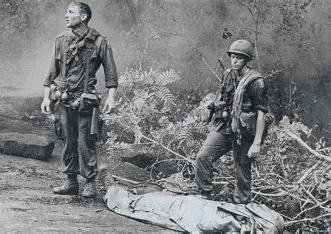
The veterans interviewed did the unusual. They talked openly about their experience. They ranged from the reluctant draftee to the hardened veteran. There was also the wide-eyed, eager recruit seeking the honor and glory his father achieved. Finally, there was the everyday guy from Anytown, USA, who felt the call of Patriotism. They all went to the same place, but all came back very different. It wasn’t like the last war, their Dad’s war. And glory was not in the cards.
A lot of men did and saw things that would haunt them. When villages were razed, livestock slaughtered, suspected enemies gunned down, and food supplies destroyed, part of following orders, a lot of soldiers found their moral compass in danger. Some made “deals with the devil” to rationalize their acts. One soldier said, “I will never kill another human, but there’s no limit to how many Vietcong I will waste.” If they are no longer people, then it becomes easier. They are the enemy; they do not matter.
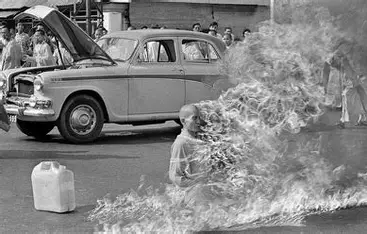
Then some stretched the thin red line even further. Rapes, mass killings of civilians, and excess brutality sometimes occurred. As it says above, it was as if the veneer of civilization had worn off of them.”

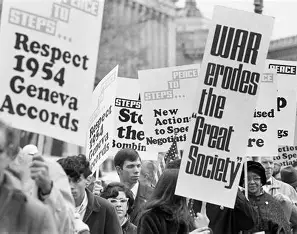
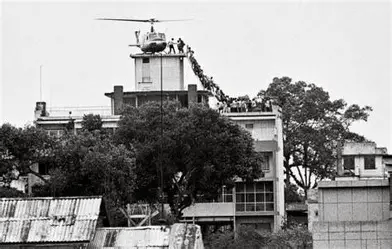
At home, the war had changed people as well. The escalating campaign was enormously controversial. Young people broke ranks with their parents’ beliefs. Students took to the streets and challenged authority figures. Peaceful protest morphed into violence as frustration with a growing conflict grew. Pictures of bombing campaigns and burned children were finding their way into American living rooms, and people were outraged. Some activists decided that violence was justified, and riots and bombings occurred. It culminated when the National Guard opened fire on a crowd at Kent State and killed four. One veteran lamented, “It has gotten so bad we are killing our own at home”. Even after the Saigon airlift of ’73, this country was divided and forever damaged.
When the soldiers returned, there was no ticker tape parade. The hostility towards the war had been directed towards those who had been charged with fighting it. The brave men and women who fought the unpopular war returned from planes and boats. They were unjustly called “baby killers” and were spit upon. These people are still owed the Welcome Home they deserved. But as I have said. Everyone and everything had changed.

What are the rules of civilization? Are they inherent? Are we born to act rationally and be decent to each other? Is it the job of parents to instill the concept of society in us? Is the veneer of civilization so thin that it can be easily worn down? Can we easily descend into barbarism and savagery?

You may not know what it was like to see the political climate of the late 60’s and early 70’s. It isn’t too late. You can still see it. Just turn on your TV. Because it’s still happening, only the target of the outrage is different. Riots, Nazi flags, death threats, mass shootings, shouting, fighting, people just being ugly to each other. So I have to ask; if the veneer of civilization is but a thin covering, what’s underneath?

The Fall of Rome

Hell is empty, and all the Devils are here“.
William Shakespeare

I’ll say this, Ole Billy Shakespeare had no idea how prescient a statement it was. We don’t need to do a deep dive into religion or philosophy to understand evil. It is everywhere we look and walks among us. Our very civilization is collapsing around us.

I don’t know if I’m more angry or sad at the state of the world, especially in our country.
We used to be a nation of laws and ideas. We established this country on Western Christian-Judaeo values. Those values permeated the ideas behind the vision the founding fathers had for the United States. The founders envisioned a Utopian society; one free from religious persecution, outdated monarchies, stifled thought, and oppression. To support this, they created the fairest legal system in the world.
Yet we are bordering on being a lawless nation. Violent crime is more prevalent, as well as increasingly savage, every day. Theft, from looting and shoplifting to embezzling and large-scale financial scams are constant. I can safely say that when we think we have seen the most shocking acts ever, it can be topped. And it will be.

If we studied history, we would understand that mankind has always been savage. Humans have consistently engaged in slaughter. We need look no further than the Middle Ages. The torture methods from the period show that man has always had the capacity to inflict unimaginable pain on others. Seemingly with pleasure.
But we are supposed to have evolved since then. Particularly in the Western World, where we profess to have decency, morality, and compassion. We even tried to engineer such values through our Declaration of Independence. The Constitution also acknowledges inalienable human rights granted by God. To enforce these ideas, we created the best legal system in the world.
But a declining value system makes such laws merely academic.

I am not the biggest fan of religion in its broadest sense. However, I believe strict adherence to morality is crucial. It needs to be supported by those who keep it at the forefront of their actions and behaviors. This is the glue that keeps society together. People largely played by those rules, and we policed ourselves. Is it a coincidence? As the number of people who claim to be of faith declines, the crime rate goes up.
I don’t believe so.

The world I grew up in had a clear definition of right and wrong. The rules by which today’s society functions are Grey at best. I was also raised to be tolerant and accepting of others, particularly regarding their beliefs. In matters of Politics and Religion, it was to each his own. Today, we vilify, mock, taunt, seek to destroy, and even kill those with whom we disagree. It is a sad state of affairs.

There is a term that I picked up on not long ago that, once I heard it, I never forgot. The veneer of civilization. The term “veneer of civilization” refers to a thin layer of societal norms. These norms and moral codes protect and maintain order in society. It suggests that while civilization provides a framework for behavior, it is fragile. The veneer theory was coined by Frans de Waal. It critiques the idea that human morality is merely a cultural overlay. That morality is not ingrained directly in human nature.

If we are to understand Frans de Waal, adherence to a moral code is a learned behavior. It is not a dominant or durable trait. So, for the sake of conversation, despite humankind’s predilection for savage and inhumane behavior, let’s say that we have been able to maintain that veneer to date. I would offer that it’s thin and stretched to its limit. We are at a period in time in which every great mind throughout history had postulated that society would be advanced in both technology, thinking, and behavior.
Yet here we are.
Killings as a political tool (not a new concept).
Shouting and berating vs. respectful dialogue.
Violence as a means to an end and not as a last resort.
Disinformation, including outright lies, is blindly accepted as truth.
Soundbites accepted as reality vs. research and education.
Selfish, self-absorbed behavior vs. a community mindset.
Overly sexualized, offensive behavior with no regard for children or decency in general.

I could go on, but I won’t. I am getting a headache just thinking about all of it. I’m not angry about what I see all around me. I’m disgusted and sad. Can we come back from the precipice, or will we fall off the edge? At what point will we recognize that civilized behavior is essential to maintain a society that is comfortable going out in public, without fear of meaningless, random violence?

Or is it the Grand Plan that all of this break down? Without being political, we know that there is an element of society, traditionally known as leftists. Leftists have always had an agenda of anarchy. Of a New World Order in which the system as we know it collapses. By this mindset, a centralized government is targeted for destruction. As is a strong moral system driven by religious and philosophical doctrine. Additionally, a robust and fair legal system and a strong economy are under threat. We have fended these forces off to date, through institutions of education and religious belief. We emphasized education as an alternative to “lower” behavior, and we taught religion as a system of values to govern our thoughts and actions.
Is it really a surprise that education is now indoctrination and religion is declining in popularity and influence? I think not.

Behavior is all that separates us from the lower animals. As humans, we are blessed with the abilities of reason, rationality, and empathy. We also profess to have humanity, a most unique aspect of Homo Sapiens. So are we losing our ability to apply and utilize these gifts, or are we choosing to ignore them?

We had better figure out the answer to this soon. Or we as a society will follow the example of Rome. It was a society that achieved greatness in every way. However, they lost the interest and motivation to maintain their achievements. Consequently, they watched as it slowly burned to the ash heap of history.

On Service

In 1985 I joined ROTC in college. It was an impulsive decision and to this day I can’t list my reasons for doing so in proper order. The world was relatively peaceful in Reagan’s America and we weren’t in a particularly Nationalistic phase. I think I was inspired by a good friend that I had seen positive changes in due to ROTC and wanted them as well. I had seen him acquire a purpose in his step, a determination in his gaze, and a confidence I had never seen in him. I think I wanted that. So in August 1985 I was off to Fort Knox, Kentucky.

I liked it and I didn’t. I enjoyed the physical aspect of it and cruised through that aspect of the training. I didn’t like the prospect of being an Officer. I was uncomfortable with my ability to lead and make decisions that may cost lives of my fellow soldiers. I was also a free thinker and rejected the simplicity of calling every target “Ivan”. 8 weeks later, I stepped off the plane at Logan Airport 25 pounds lighter, with a more purposeful step and 2 weeks to make the decision to continue. I would choose not to and I will always regret it.

I am the son and grandson of Veterans. My grandfather served as a SeaBee in the Navy in WWII and exemplified in every way the Greatest Generation. He returned home, made no conversation or complaints about the war, and began to rebuild a life. My father was called to Vietnam but when I was born he was restationed stateside. I beam with pride when I think of either of them. In addition, I have many friends who served, and some are still on active duty. I met some of them while living in an apartment complex 10 years ago. There was a group of 5 soldiers and their families, and I became close to them, despite being much older. I heard their stories, from the ones that were comfortable talking about it, and I shared more than one moment of tears and frustrations over drinks as they recalled experiences they endured as part of their jobs. I heard some things that I will never forget, nor will I minimize the importance of being trusted to hear them.

When the US entered WWII men and women flocked to the recruiting station to enlist. Young men lied about their age to fight for a righteous cause they believed in. Those at home all pitched in. People bought war bonds and curbed their own lifestyle to preserve resources for the war effort. Rosie the Riveter went to work in the factories. When the soldiers returned home, they were greeted as heroes. This country will never have a generation like that ever again.

In Vietnam, the cause was less righteous and appealing to people, and, while there were still many civic-minded young people, not enough volunteered, and a “draft” was created. The draft deeply divided this country and a generational culture war divided society. In stark contrast to the WWII generation, the unpopularity of the war extended to a terrible and unjust treatment of the soldiers returning home. After fighting with valor and a deep love of country, instead of being called heroes, they were spit upon and called “baby killers”. This in no way eased the return to society for a generation of soldiers who had seen a new, horrific side of warfare. It was a shameful time for this country.

Veterans of recent conflicts in Iraq and Afghanistan are facing the most critical lack of support ever. This is not to say that the good citizens of the USA don’t overtly support them proudly in spirit. The lack of support lies in benefits and resources both medically and in mental health. The Iraq/Afghanistan era veteran engaged in warfare unlike any other generation. There was no clear and defined enemy. Once Saddam’s Revolutionary Guard was defeated the war became borderless and the enemy unclear. In Afghanistan, brutal terrain and tribal loyalties and betrayals further complicated warfare. Traditional warfare, already out the window after Vietnam, was taken to an entirely new level as our soldiers were forced to deal with roadside bombs, mothers sacrificing babies to kill soldiers, vague and restrictive rules of engagement, a lack of equipment and recruits, and extended tours. These brave men and women have been subjected to evils that most reasonable people would have difficulty believing even exist only to return to society and be expected to be able to put everything they have seen aside and just function. Very few of us, perhaps only one who has been in that situation. I only know what I hear.

I hear of a hatred for the people that they were fighting and for those that they were supposed to be protected. A hatred that never subsides and will never go away.
I hear of resentment of officers who put soldiers in danger to advance their careers.
I hear of rules of engagement that are vague, ineffective and subject to constant change.
I hear of seeing comrades mutilated or decimated in a “red mist” right in front of them.
I hear of sleepless nights, drug and alcohol abuse and decimated families due to inability to compartmentalize and handle haunting memories.
I hear of a convoluted, overwhelmed and inefficient VA.

Veterans deal with all of this with as much dignity as they are able to muster every day. They don’t expect us to understand but they would appreciate our appreciation and respect. They still love their country and believe in something that a dwindling number of Americans subscribe to, the concept of Service.

I didn’t have that sense of service when I joined. I want to regret that but there’s nothing I can do about it. I now have a respect, dedication and commitment to service as I serve any way I can. In my Masonic endeavors, by volunteering, by helping strangers, and by always thanking a Veteran. To them, military service is not a career. It is a calling, a duty, a responsibility with a job description. They write a blank check to their country that may include up to their very life and they do it with pride.

Don’t pretend that you understand what they’ve seen and done in the name of service. Just appreciate that they were willing to do it. Remember that regardless of whether you agree with the assignment, the American soldier doesn’t question the orders, they do what they were trained for and do what they can to get themselves and their comrades home.

I cannot begin to say how much I appreciate that.

Nostalgia

Every once in a while, Netflix gets it right and they actually add a movie that I want to watch. Imagine my joy when I stumbled across one of my all-time favorite movies, George Lucas’s 1973 hit American Graffiti.

Where do I begin? The cast?
Ron Howard, six months before he would debut as Richie Cunningham on Happy Days. Cindy Williams 3 years before she became the infamous Shirley on Laverne and Shirley. Richard Dreyfuss. Mackenzie Phillips, Suzanne Somers, and Harrison Ford were all in their first big role. Add to the mix Wolfman Jack and you have a heluva cast.

The cars?
John Milner’s chopped ’32 Ford Standard coupe. Bob Falfa’s (Ford) badass ’55 Chevy Belair. The mysterious ’56 Silver Thunderbird with the porthole windows driven by Somers. Steve Bolander’s (Howard) cherry ’58 Impala. Oh man, for a Detroit muscle buff such as myself, it is a veritable wet dream.

The story?
It is 1965 Modesto California. It is a typical Saturday night and the locals are blowing off steam. Typical of the time, looking “cool” was the law of the land and, given the puritanical nature of the time, there was not much else to do except ride around in cars, go to arcades and sock hops, and create a harmless ruckus while driving around. We are introduced to the players; the too-old-to-be-hanging-out-with-teenagers guy with the hot car who is always being challenged to race. The local young people that have menial 9-5’s and live for the weekend. Gangs, car clubs, and packs of teenage girls defying Daddy for a few hours. Add to the mix that this is no typical Saturday night for a small group of teens, for it is the eve of them leaving for college the next morning. Relationships are called into question(should we see other people?), feet are getting cold as one promising student is thinking of not going. They are all grappling with change and fear of what the future will hold. I won’t ruin the ending for you other than the inevitable drag race ends up altering the plans of two of them.

It is a wonderful character study about fear and uncertainty. Of the familiar and the question of whether it is better to be comfortable or to try something new. All against the backdrop of 1960’s America.

And there it is, that is what I love about the movie. The era.

I was born in 1965. A mere 3 years earlier my mom and dad were likely in a similar scene. My dad was a car fanatic and he belonged to a club. He was an amateur stock car driver. He was also a bit of a hellion with that fast Lincoln of his. Cruising the strip, bantering with other drivers with my mom under his arm is totally conceivable. My mom telling him to slow down, not get a ticket or into an accident, and to have her home before her father “grounds her” is also very believable. They lived the movie. The two of them could have been dropped into the set of that movie and nobody would have blinked. The guy in the white tee shirt with the Camels rolled into the sleeve? That was my dad. The girl in the Pencil dress and sensible shoes? That was my mom.

I often fantasize about being a teenager back then. While they may have thought that they were pushing the envelope, we now know that their version is pale compared to today. It can almost be considered tame and wholesome. But they didn’t know that.

They also didn’t know what would happen just a few short years later. Vietnam would escalate. Draft cards were coming. Parents and authority figures, particularly parents, became the enemy as generations clashed. People would be forced to tune in or drop out. EVERYTHING would change soon for the innocent, harmless locals.

But there is always the movie. A reminder of a better time. A more innocent time. A time that ceased to exist not long after. Oh yeah, did I mention the CARS?

life imitates life…

It just happened one day recently. I think that I was trying to come up with a new Password for some website because I had entered the wrong one too many times. Boom. I realized that I don’t have much of an imagination. I don’t suppose I ever did. I was very into recreating things but I didn’t step much farther out of my comfort zone. I was probably most expressive when I was playing with my Matchbox cars, which I spent most of my time doing. Even with mountains of Trademark Orange track and a huge box of cars to work with in my room, I didn’t build empires. I stuck to what I knew. And outdoors, under my beloved pine tree, I limited my construction endeavors mostly to what I already knew. I built roads with Tonka Trucks, I used my car hauler, I used real mud in my Concrete mixers, and I pushed them around. Like they were real. I think Calvin and Hobbes used more imagination in one strip about playing in the dirt than I did in my entire life.

Despite not being an imaginative kid, I wasn’t without my skills. For example, at a very early age my mother identified me as a people watcher. Or “rude staring”, in my mother’s words. If someone or something caught my attention I was fixated on it.  I never meant to be rude, I just liked to take it all in. And I had a terrible habit of speaking without a filter. It has been both a curse and a blessing, depending on who was on the other side of it.

My Grandmother was a constant presence at my house when I was little. I really enjoyed having her over and she kept my mother company. There is so much to say about her, and I will as the story progresses, but for the sake of this entry let’s focus on one critical factor about her.
She was a terrible driver. The worst. Even at a young age I was reticent about being in the car with her. She had a heavy foot, a reluctance to brake, and Stop Signs were, well, they were for other people.  I suppose my Matchbox stories were a good example of it even at an early age.


One day she came in the house, her mouth going a million miles per hour as she told my mother about the incident she had with the “dang Po-lice” on the way over. Through the histrionics and across the many rooms of the first floor of my house I could hear her tell my mother her tale of injustice and overreach. The officer had the nerve to give her a speeding ticket. That day was one of the few times that I didn’t run into the kitchen to greet my Grandmother, it just seemed safer and smarter to stay in my room with my Matchbox cars. History and my limited experience at a young age suggested that I let her come to me this time.
Apparently I had dug through my big box of cars and had found a clunky red sedan that looked like the boat of a car Grandma drove, a big ol’ Lincoln that the front end arrived ten minutes before the rest of you did. I had also found one of my old beat up police cars. The stage was set for some hilarity. I began to act out the scenario I had heard playing out in the kitchen. Red car, pulled over by police car. I simulated an argument between the two parties, culminated by the officer telling the driver to get out of the car. I was having a blast when I looked up at the door to my room, occupied by my Grandmother. She had come to at last to say hello and there I was acting out her earlier humiliation.
When she realized what I was doing she wasn’t amused. My mother was of course amused enough for the both of them.
It was then that I realized how selective my Grandmother’s sense of humor really was.

The parents

I was a happy kid. All kids are happy I suppose. Until the world sinks its teeth into our asses and fuck us all up. I was a product of the late 60’s and early 70’s when all of society was in turmoil. The highly unpopular Vietnam conflict raged both overseas and at home. The youth of America had stood up and defied convention, rejected the status quo and had asked hard and polarizing questions. We were divided as a nation and it wasn’t only on the Capitol Mall, it had metastasized into every community and neighborhood. Mine was no exception. We had neighborhood boys go off to fight, some at the urge of their fathers and some in defiance of. I watched the news, I didn’t get much of it but I saw more explosions and violence than in any of my Saturday morning cartoons. I can’t say that it affected me either way, but I knew it was there.

Vietnam was a formative event in my life and is essential to my story. In fact, my birth kept my father out of it. Don’t get me wrong, he had his shit packed and was ready to fight but my premature birth kept him home. As the story goes, my pregnant mom was living with her parents while Dad was stationed in Texas. My Grandmother was very careful about the evening news. The non-stop stream of violence was unsavory to her and she tried to protect my Mother from it. Despite my Grandmother’s effort to censure, my mother saw a newscast about our escalation in Vietnam and that our “Advisory” troops would soon double. It was said what bases would be sending troops. Fort Sam Houston was among them… Boom…Labor. I arrived.
My Dad never properly thanked me.
The cultural turmoil that occurred on the Living Room Idiot Box had permeated our lives also. Dad was a good “If you don’t like America then get the fuck out” American. Mom had peace signs on her Bell-Bottoms. Archie Bunker held tremendous sway with my Dad, Mom left the room when he was on, always muttering “idiot” under her breath. “Conversations” about the state of the country happened all around me. With them, when friends were over, even with family. I learned early on that people argue, shit can get loud, and how to block my ears.

When he wasn’t yelling, I worshipped my Dad. The dead mystique is a funny thing. Because he’s gone I tend to forget about the yelling. It wasn’t ok. I hated it. Mom hated it. But we forgave it because underneath it all he was a very good man. I was at his side like a loyal lapdog. He emitted strength and toughness. He was manly and I obviously had a penchant for that. I loved how hard he worked. Before I had ever heard the words “work ethic” I had dubbed him the king of it. It was so much more than how many hours he was out of the house; it was the times that he worked on our house, the times that he helped a neighbor or a friend with yard work or building something for someone. I learned at a young age that a man helps people, often as the right thing to do and not just for money.
Towards the end of his life my father, weakened and nearly destroyed by Parkinson’s, grasped my hand and asked me if it bothered me that he was out of the house so much. I told him the truth, I never had anything but respect for him for it. It saddens me that he had to ask me that. But I’m glad he did. It was just another moment that I found myself looking at him with unmitigated respect and admiration.

Especially when I learned about his childhood.

The good old days

It all starts with the childhood right? If my B.S. in Psychology taught me anything, it is that a Shrink would think that all Fucked Up Shitheads (from now on will be known as FUS) are the product of hating or wanting to fuck your mother. They would be wrong. I was the product of a loving home. I had honest and hard working parents. To my knowledge I never needed for anything.

My town was lower middle class at best. If I had to guess, we were on the lower-middle end of it. My parents bought our house when I was 3 and from that moment Dad spent every spare minute working on it. The man left the house at 5AM, got home at 6 or 7. Mom kept his dinner warm. I would sit and watch him eat, careful to point out that we had left the biggest piece of steak for him. Sometimes he was talkative, other times he was quiet as he ate. If he was in a bad mood he would still give me a wink to let me know it wasn’t me. When he was finished he put his plate in the sink and went to pound nails or cut some boards. God bless him, he was the hardest working man I have ever met. Ever.

Mom walked the tightrope between Gloria Steinem Feminism and the good housewife brilliantly. She wore her hair down to her waist (see Cher), opened her own doors and, once I was old enough, got her own job. But around Dad she was a traditional housewife. Don’t hate on that term, that’s what they called themselves back then. By traditional housewife I guess I mean that she cared for me, cared for the house and inexplicably took care of him as part of her marital duties. She did it because it had to be done and she wasn’t offended by traditional Gender roles. She had limits. If he got too “traditional” she would give it back. She was a very positive female influence.

We were a very social family. We were the house that all the ladies in the neighborhood would come to for coffee and conversation. They’d stop by with their kids in tow, looking for a cup of sugar and would stay for coffee and whatever baked goods Mom was able to whip up. It was great for me, my friends were hand delivered. I didn’t even have to leave the house. When there weren’t pop-in play dates, it was my Grandmother.

My mom and her mother had a great relationship. They were very close and spent a lot of time together. Because they were both married to workaholics, their time together meant more than I ever would have understood at the time. They were lonely together, if that makes sense? One thing that helped to pass the time was to dote over me. As it turns out, doting was my Grandmother’s specialty. She took me places and showed me off to her friends at the Senior Center. My memories of hanging with her go all the way back, and I attribute my love of Elderly people to her. We had nothing less than a wonderful and gratifying relationship. Unfortunately, my Grandmother’s doting was also the source of a huge rift in her relationship with my mother. A rift so large that it essentially molded my mother’s approach to me. To a degree, it would be a problem for me in my teen years.

They were good times.

One word or two?

Is Shithead one word or two? Asking for a friend. To be fair, I looked it up. It’s one. I just thought it was a novel way to start a post.
shithead[ˈSHitˌhed]NOUNvulgar slang a contemptible person.

I’ll never forget it as long as I live. 17 years old, working as a Grocery clerk. It was break time and I was relieving of myself of my morning coffee. As I began to take that blessed leak my eyes turned to the FB before technology, the men’s room wall. To my shock, there it was…Billy Mac is a fucked-up Shithead (not my real name but you get the idea) on the wall for all to see. I have never gotten over that moment. I was less angry than I was conflicted, I mean was I?

Why bring this up now? You know, despite it being one of the most formative moments of my life that is? The best I can figure, it stems from a conversation which I had with my lady a few weeks ago. I simply told her that I can be myself around her, it was a pleasant reckoning and it had pleased me in telling her. It was if I was admitting that I had not been “myself” with others before me, my ex wife included, but was liberating despite the additional questions it raised. It was received well but I think it meant more to me than to her. You see, it was unusual to her that I would say that, that I had not been comfortable in my own shoes in relationships before her. I suppose it may be weird to a lot of people if asked but the fact is that I am just recently, despite my advanced years, getting comfortable with who I am. And that is something that I have to reconcile. But it is a good feeling nonetheless, to open myself up to the possibilities and to the larger picture. In the longshot event that our relationship comes out of the shadows I know that I will be able to put my best foot forward when the time comes.
If it comes. There are more waves than smooth sailing ahead. She is still married, has made no mention of leaving him and I will not mention it because it is not my place. Only she can make the decision, it is totally inappropriate for me to influence her in any way. There are so many things that she would need to coordinate were she to leave him that simply don’t concern me. The timetable is hers and I have nothing to do at this point except to see what happens next. Hell, all I have is time. In the interim, I think I’ll tell my story unfettered and from the beginning. The ballad of a Fucked-up Shithead. It will be a smash.

The curator of my America

Nabokov called his talents “banal” and a waste of brilliant technique. The highbrow art critics called his work “bourgeois” and “kitsch”. He was unjustly called an illustrator instead of an artist. Norman Rockwell didn’t care. He painted what he wanted to and gave the people what they wanted in his idealistic, sentimentalistic portraits. Over the course of 47 years and 323 original works, his perceptive, nostalgic eye for his America graced the cover of the Saturday Evening Post.

Born in New York, he eventually made his way to New England. He first lived in Vermont and eventually landed in the small Western Mass town of Stockbridge, Massachusetts. He did most of his painting there, eventually immortalizing small town life through his ongoing commitment to illustrating the cover or The Saturday Evening Post, consequently showing the world his views on life through his works.

I was 12 when he died. I remember my Grandmother being deeply upset. It was then that I made the connection between the magazine covers that littered her coffee table and the wonderful artist behind them. An aspiring artist myself, I was fascinated by his technique.

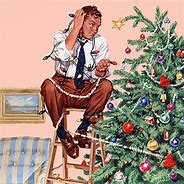
As I got older I began to appreciate his work even more. I moved from admiring the technique of Rockwell’s work to the subject matter behind it. His portrayals resonated with me. The magic of Christmas…


Rockwell always brings me back to a time when Christmas was about family and neighbors. The one time of year when everyone was always nice to each other. When people Caroled, drank Eggnog and a gift was appreciated, be it a hand made pasta sculpture from a small child or a simple card. We weren’t valued by the extravagance of our gift.

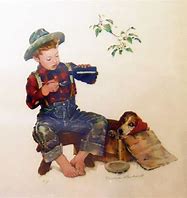
Rockwell was most famous for his Christmas works but so many other of his recurring themes impacted me. The fun, and difficulties of being a child (and remember that his was a much simpler time…

young love
a boy and his dog
the runaway

He didn’t shy away from controversial subjects either and he took heat about it but remained unfazed…

He was once told that his depictions of racial relations would get him banned. He insisted to the Post that if he was censored he would walk away. He was allowed to continue. He was a man of conviction.

I was raised with his values of post-Depression, post-war frugality and conservatism. Waste not, want not was a daily mantra. My parents and grandparents fixed things when they broke, they didn’t throw them away. They “darned” socks with holes, they didn’t buy new ones. In a time of burgeoning rampant consumerism and pursuit of the next “new” thing, they were firmly planted in the “old times”; a simpler way of life that simply made sense. I truly loved that mentality, to this day I reject the “new is better” mindset.

Rockwell, during those times, stuck faithfully to the old ways, he continued too portray the America that he knew and likely sensed that he was to be a curator of them lest they be forgotten. When a horse drawn wagon rode alongside a new-fangled “car”. When children played in the street without fear of boogeymen. When people knew, respected and loved their neighbors.

I often muse that I was born in the wrong era. I would have loved to have grown up in Rockwell’s ’20’s.
Baseball was played for the love of the game, not massive contracts.
A time when men and women dressed in suits and dresses when going out in public.
A time when families ate dinner together every night.
A time when children played safely outside, in a neighborhood where people knew, cared about and supported each other.
A time when Doctor’s made House calls.
When civility and manners ruled the land.

I long for a return to these days but I know they will never return. That is why I have the Rockwell’s Coffee Table Books at the ready. As far as I’m concerned they have never been more relevant.

if you could turn back time

Today we turn back time, or turn forward, you get my point. Daylight Savings Time, a wonderful notion given us by Benjamin Franklin to make life and winter a bit more burdensome and confusing twice a year. You can quote me if you want to on Turn Back Time, even Cher it if you want. Sorry, that was bad. But so is she. Ah, I ramble.

Time travel has always fascinated me. If I owned a DeLorean I would use it from Time to Time (Bazinga). As I changed the clocks this morning, the notion again bounced around my tiny cerebellum. I was reminded of a very serious line from one of my favorite movies, Stephen King’s The Dead Zone. If you haven’t seen it I highly recommend it.

In the movie, a man, played by a young Christopher Walken, suffers a terrible car accident. Confined to a coma for years, when he comes out he finds that he has the ability to predict the future by merely holding the hand of a person. In particular, he could predict terrible events and ultimately alter the course of history through his gift.

His Doctor, a Holocaust survivor, recognizes the awesome power of his gift and asks him the pivotal question, one that has intrigued me since the day I saw the movie.
“Knowing what you know, do you think that if you could go back in time and alter history, would you?”

On September 28, 1919, Private Henry Tandey, a British soldier serving near the French Village of Marcoing encounters a wounded German Lance Corporal. His rifle aimed at the wounded soldier, Tandey chose to spare the young man’s life. He could not bring himself to shoot a wounded man. That German Soldier was named Adolf Hitler and he went on to become the third most murderous tyrant in recorded history. Had that soldier fired, Nazi Germany would have never existed. Do you think that Henry Tandey would want a re-do after that?

Hitler is but one example. There are so many.

So I ask you, on this lazy Sunday morning, if you could turn back time and reverse a major Historical event that forever impacted World History, or even a small one in your personal life, would you?

Keep in mind the Butterfly Effect as you ponder this. And that, in order to truly alter our/your world as we know it you may be required to murder someone. Could you do it?

Food for thought. I’m curious about your answers.