
Dinner with My Dad: A Reflection on Life Lessons

I recently came across a writing prompt that interested me.
“If you could have dinner with anyone past or present, who would you choose?”

To pick just one person that I would want to have dinner with, alive or dead, is a challenge. Most people might choose a celebrity, a poet, a musician, or a politician. I can surmise that this is the point of the exercise for them. How would I begin to pick the one person whose contribution, ideas, heroic deed, etc. inspired me to select them over any other? Another question, would it be considered trite or a wasted opportunity to choose a family member, such as my Dad?

Well, I am picking my Dad.

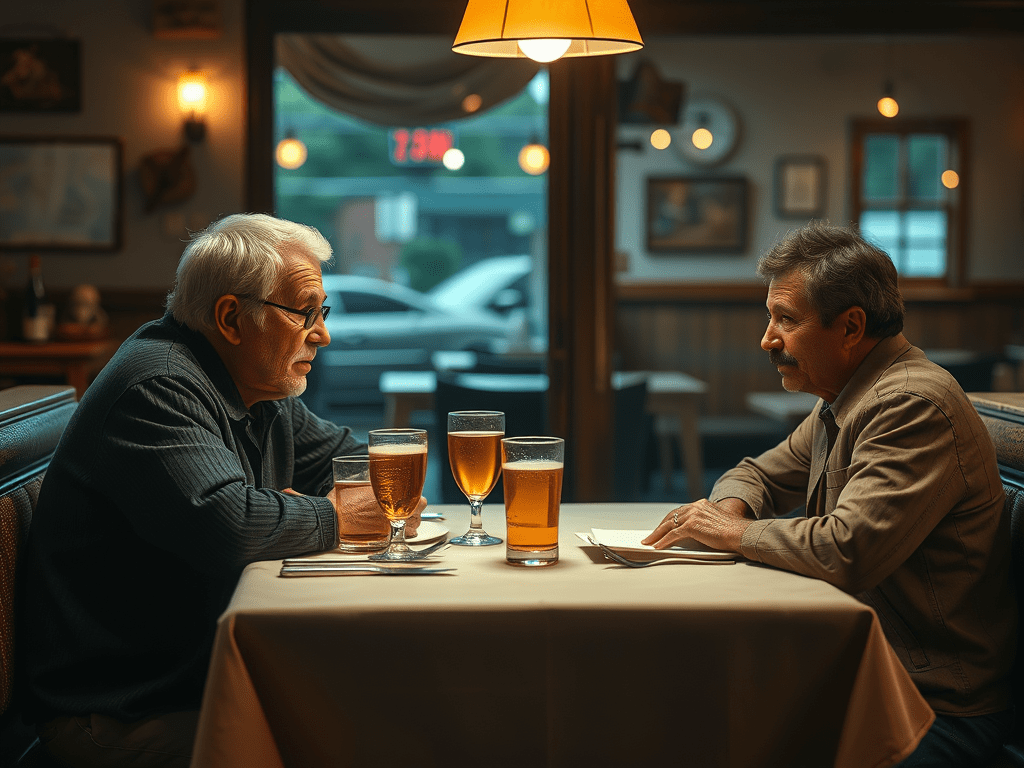
Dinner with my Dad would be a very particular scenario. It would be a recreation of a lunch I once had with him when I was 23 years old. I can remember only one time as a young man when he and I ever went out as just guys. We had a beer. It was special in many ways. Obviously, spending time with my dad was special in its own right. But it was also one of the first times he stopped being in “dad mode.” He was just a regular guy. As an aside, I call this the dad hat. It’s my nickname for Dad’s tendency to act based on his perception of ‘Dad’ as a role. This happens rather than him acting as a person. I admired his dedication to it. Often, though, I wished he could have just been a friend when I needed it. That day, he was just that.

I remember that I was really struggling with some heavy shit that day. He was very helpful in listening intently. He only offered advice when asked. Of all of the conversations that day, I fondly remember him saying his famous line to me. He truly believed in that line. One that I never came around to until after he died. He said, “ Bill, believe it or not, everything will work out.”

Today, if I were to sit across from him at the same restaurant, I would struggle. I wouldn’t know what to tell him first. I mean, where do I even begin? He has been gone 12 years now, and I have spent so much time talking to his headstone. I would tell him that I miss him more than words can describe. I would tell him that the world makes less sense without him around. That men like him are a dying breed. I would apologize for so many things. I would save the best for last. I survived some mind-blowing shit. I would tell him that sitting across from him is a miracle in itself. I have come around to his trademark saying. Everything, in fact, will, does, and did work out. That in no way means that my life is what I wanted it to be. It means that I understand, and that it worked out a helluva lot better than it could have.

I realize that I have described a very one-sided conversation. It’s because I have so much to tell him. I want to honor him. I will tell him how much he was right about. I have come to value his simple yet poignant take on the complexities of life. I remember the quiet disappointment in his eyes as he dispensed valuable wisdom to deaf ears. It would mean everything to me to set the record straight. I want to see the satisfied, redeemed, look on his face. A humble man, who, like his dedicated son, only wants to know that he made a difference by sharing the wisdom accrued over a too-short, hard-scrabble life.

Finally, the check would come. He would try to pay, as expected. But I would insist. It would be one more payment towards the inequity of all that he gave me, which would be frittered away. He would insist on paying the tip. At that moment, I would remind him that he has also given enough tips in his time on earth. All of this is a feeble effort. I want to show him that his generosity of spirit and wisdom are not lost on me after all. He never knew just how much his sage advice has guided me through life. It has helped me face the most difficult challenges posthumously.

Finally, we will walk out to the parking lot and walk towards the setting sun. I extend my right arm and place it on his shoulder as we walk. I say, tears welling up despite my strict no-cry policy, “I love you Dad. Thank you for everything you didn’t know you gave me.”

Suddenly, my arm was resting in the air. The persistent force of gravity pulled my arm to my side again. It is a calm evening, still and warm. I realize that he is gone, back to where he came. Disappointed at the sudden conclusion of our visit, I walk to my car. A brisk breeze breaks the stillness, blowing my trademark scally cap off my head. I laugh, pick it up and smile broadly. He never liked scally caps. He was a ball cap guy.

200 miles

To survive is to be alive, long after the reason to live has died.
Author unknown

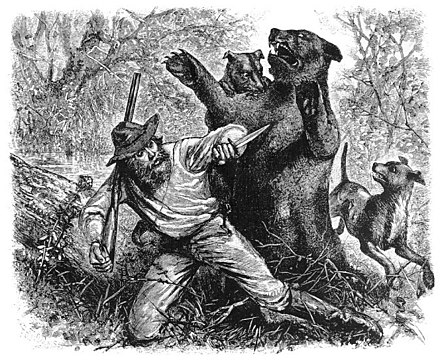
I was thinking recently about Hugh Glass. In 1823, Hugh Glass survived a Grizzly Bear attack. Then he crawled over 200 miles before he finally reached help in South Dakota. It took him weeks. He was the inspiration for the movie The Revenant. Upon reading it, I asked myself if I was capable of such a feat. The answer required little contemplation. No.
I was troubled by what I came up with.

The story of Hugh Glass caused me to explore something I think about frequently, the Will to Live. Late at night, when the demons come, my thoughts turn dark. I debate some horrible shit when I go down the Rabbit hole. When I was sick and on Dialysis, I did my best work. I thought about suicide most seriously. While in this state, I had no regard for anything at all. My life, except for the support of my family and friends, had little to no meaning. The only thing that kept me from doing it was the thought of what it would do to my family. I had ceased to live a purposeful life. I was merely existing. Surviving through my greatest trait. Stubbornness.
I was “surviving to be alive, long after the reason to live had died.”

The above phrase is attributed to the concept developed by German philosopher Arthur Schoppenhaur, supported and furthered by Viktor Frankl. It reflects the concept of an irrational, blind, incessant impulse without knowledge that drives instinctive behaviors. It further suggests that even when life feels meaningless, the act of surviving itself is a form of survival.
Viktor Frankl brilliantly explored this concept through the context of Holocaust survivors in Nazi Germany in Man’s search for Meaning. He observed that survivors often find hope and purpose in their experiences, which can lead to personal growth and resilience.

It’s a powerful thing to ponder. Sadly, I know many people who ponder it as well. I hear them say such things as, “I have no future”, or
“What’s the point?”
“There’s nothing left for me here”,
“I just don’t want to do it anymore.”
Wait, that last one was mine.
It pains me to remember. At the height of my illness, in the darkest of the dark nights, my mind journeyed to hidden places. I can still recall the state I was in. Awash in despair, devoid of interest in the future, desperate for sleep. In those moments, relief was all I could think about. Curled in the fetal position, cocooned in a blanket, I often found myself muttering to noone in particular, “I just don’t want to do it anymore.”
More than once, I said it while sitting on the edge of my bed, .38 Special balanced on my right thigh.
Those were dark days indeed.

My situation has improved since then. I received the gift of an organ transplant 4 years ago. I have made great strides in reclaiming my health, recovering my finances, and rebuilding my life. I have wonderful relationships with family and friends. I am an active Mason, and it is hugely important to me and an integral part of my life. I have a fulfilling social life. I say YES to almost every opportunity now. Having stared down my own mortality, I live like there is no tomorrow. I have a great life.
Still, incredulously, I sometimes go down the Rabbit Hole. I have learned a lot about myself recently, and I am aware that I suffer from depression. It’s not constant or consistent. I just have my moments.
Despite all of the good in my life, my dark half renders me helpless when the darkness comes. I take the negatives in my life and give them more status than they deserve. I find myself emphasizing the significant but manageable negatives in my life to the point of crisis. I then find myself overwhelmed, distraught, and looking for a way out. Which is, of course, just ending it already.
The terror is palpable. As is the frustration when I come out of it. Fortunately.

Here it is. I don’t want to die. I like my life. I may even love it; it depends largely on the day. I am living a purposeful life. The negatives of my life are manageable. Sure, I wish I were better off financially. But good things always happen to me, so why worry about it? I really do desire to have a female companion on this journey. But who knows if I’ll meet her tomorrow? And amazingly, I am doing fine without one. I have a lot to be grateful for, and I am living a blessed life.

So, back to the above quote, and the man who crawled 200 miles to survive, and the question of whether I was capable of such a feat.
I have changed my answer to a firm, resolute MAYBE. What I do know with certainty is that I would never just lie down and die. I would try. My mental health would determine how hard I tried. It would, consequently, decide how many miles I would be able to crawl. If it happens to me on a day when I feel good about myself. A day when I am at peace with who I am. Or a day that I am not consumed by self-deprecating and self-sabotaging behaviors. A day in which I feel in harmony with my resilience. A day when I knowingly wield the sword of inner strength that allowed me overcome two life-threatening diseases. This strength has also helped me face many transformational obstacles.
On those days, 201.
When the darkness comes? I would have leaned against the nearest tree. I would have sighed with relief. I welcomed the inevitable with one last “I can’t do it anymore.”

My mission in life going ahead must be to vanquish the “me” that would give up that easily. But that’s the thing about the darkness. It comes whether I want it to or not. The key for me is to always focus on the purposeful aspects of my life. I want to stay on track with my hope to die a good man. I aim to be a man who left the world a little better than he found it. At the very least, I hope not to make it worse off. I have to learn to consistently look at the good in my life.

Then, and only then, will I end the dichotomy of Living with Meaning vs. merely existing.

The Feast

What a roller coaster ride it must be to read my blog. One day I say I’m doing great. Another day I am bombarding the reader with tales of isolation, depression, and woe. Good God, I’m a mess. All I can say is, hey, at least I’m working on myself.

Post Christmas Eve, which was as good an evening that could be had with Family, I did not leave my house for 3 days. I would like to tell you that I was productive, but that would be a lie. There are days when I stay in that I am productive. I write blogs, I read, I watch movies, and I work on the Masonic tasks at hand. I would like to tell you that, but in this case, I cannot. They were wasted days. I wasn’t depressed, but motivation in any form escaped me. To make matters worse, I beat the snot out of myself for my lack of productivity.
There is a positive to this. Such episodes create awareness that I have areas for improvement, and I hope that my shortcomings will motivate me to do better. But I must say, this journey of constant improvement, while promising on paper, requires a significant amount of effort. Frankly, it’s exhausting.

I wrote quite extensively about my episode over the weekend. It consumed me for most of the weekend. I feared a prolonged spiral over it, but something good and timely occurred Sunday night. The Master of my lodge called me and told me that he was unable to attend the Feast of St. John at Grand Lodge in Boston on Monday and offered me his ticket. I was happy to accept for two reasons. First, it was a second chance after I initially declined to attend because of the cost and missed the deadline. I perceived the event as stressful since it is quite eventful and long. But I regretted this decision when it sold out. The last minute ticket was a nice and welcome second chance.
Second, I recognized the need to leave the house. I wanted to prevent myself from falling into a full-blown mental crisis.
I knew many of my close Brothers would be in attendance. I immediately looked for someone to go with me into Boston.

I am so very glad that I ended up going. It was nothing less than a wonderful day.

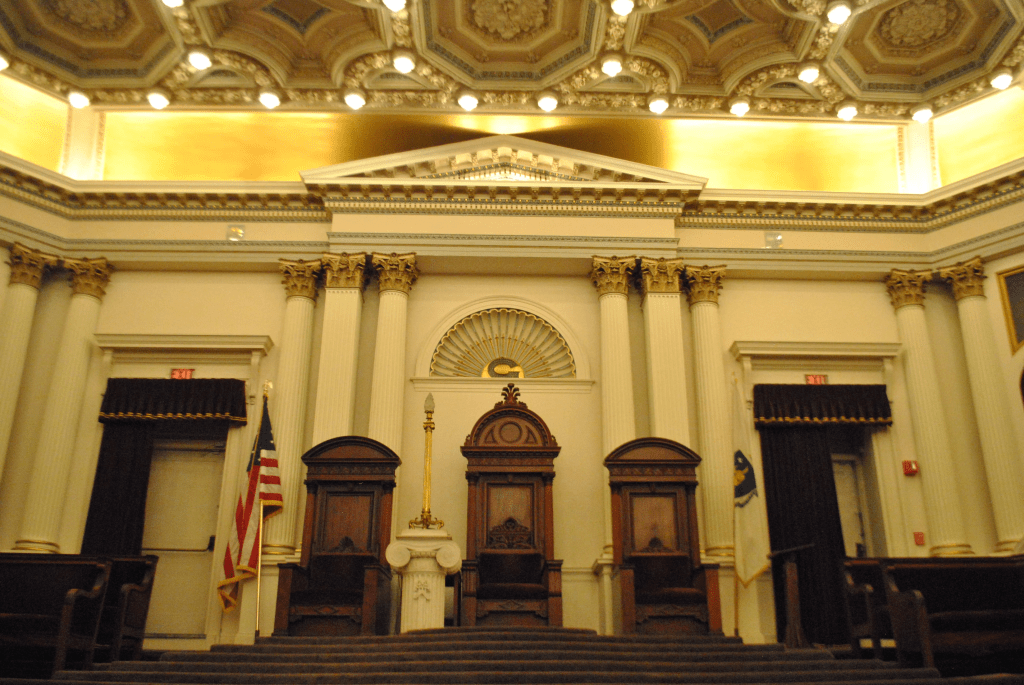
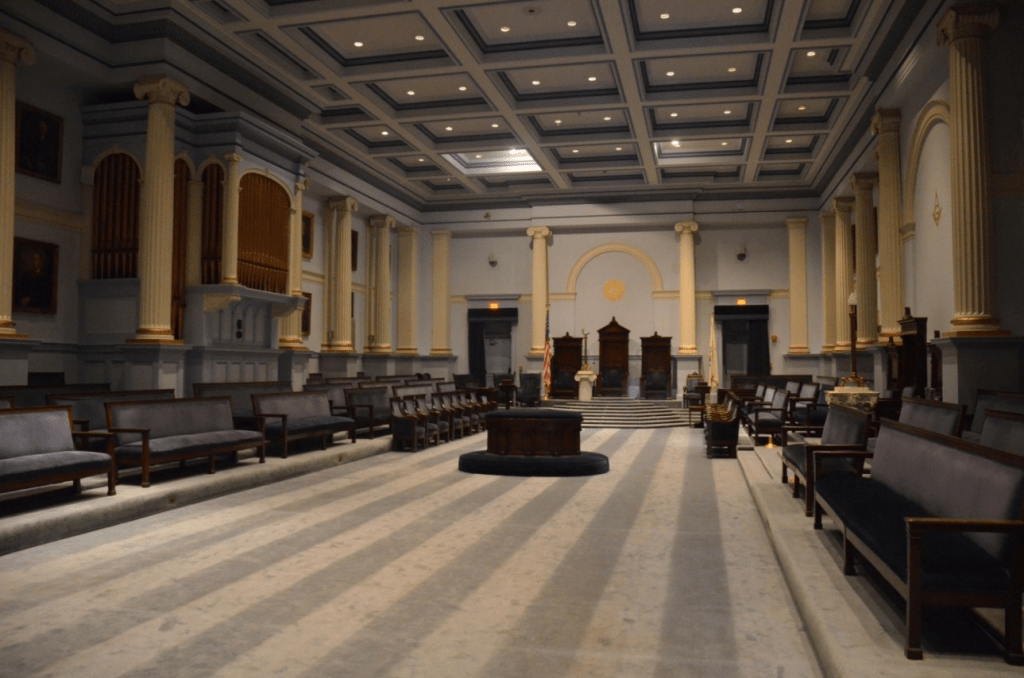
The Feast of Saint John is a vital event in the Masonic calendar, celebrated with respect around the globe. The Feast of Saint John is held every year, typically on December 27th. This year in Boston was an installation event. Every two years, we install a new Grand Master and new Grand Lodge Officers. The ceremony is archaic and elaborate. It demonstrates the ancient traditions of our Fraternity. The Grand Lodge of Boston was founded in 1733. It is the 3rd-oldest jurisdiction in the world. Only England and Ireland are older. The architecture and decor are nothing short of magnificent. It feels like a time capsule. These ceremonies have been performed the same way for almost 300 years. Great men such as Paul Revere and General Joseph Warren witnessed them exactly as we do now.
I had a front-row seat, thanks to a buddy, for the entire event. It was indeed a privilege to witness the ceremony. It is a remarkable sight to see these ceremonies performed in that very ornate room.
Many friends were being installed into important offices. I was grateful to be there to support them. I was honored to watch them advance in their Masonic labors.
The ceremony was followed by a sumptuous, multi-course meal presided over by the New Grand Master, Grand Lodge officers, and esteemed Dignitaries. They came from multiple countries and jurisdictions around the world. How do I describe having dinner with 300+ Brothers? Some are close, and others are merely pending because I have not yet had the pleasure of meeting them.

It was a long night but it was just what I needed. I fall into intermittent episodes of depression. Why isn’t my first instinct to immerse myself in the company of my Masonic Brothers? I am at a point in my life where I can almost break it into two categories; before I took my obligation, and everything after. Becoming a Freemason has changed almost every part of me for the better. And there is no big secret, despite the world endlessly clamoring for one, to the appeal. It’s the connection. The friendships. The bonds we create as we unite in our tasks at hand. It has been one of the greatest undertakings of my life and I plan to go as far as it takes me.

That’s the big picture. The smaller one, today in my living room, is that it saved this wretched soul yesterday.

The Fall of Rome

Hell is empty, and all the Devils are here“.
William Shakespeare

I’ll say this, Ole Billy Shakespeare had no idea how prescient a statement it was. We don’t need to do a deep dive into religion or philosophy to understand evil. It is everywhere we look and walks among us. Our very civilization is collapsing around us.

I don’t know if I’m more angry or sad at the state of the world, especially in our country.
We used to be a nation of laws and ideas. We established this country on Western Christian-Judaeo values. Those values permeated the ideas behind the vision the founding fathers had for the United States. The founders envisioned a Utopian society; one free from religious persecution, outdated monarchies, stifled thought, and oppression. To support this, they created the fairest legal system in the world.
Yet we are bordering on being a lawless nation. Violent crime is more prevalent, as well as increasingly savage, every day. Theft, from looting and shoplifting to embezzling and large-scale financial scams are constant. I can safely say that when we think we have seen the most shocking acts ever, it can be topped. And it will be.

If we studied history, we would understand that mankind has always been savage. Humans have consistently engaged in slaughter. We need look no further than the Middle Ages. The torture methods from the period show that man has always had the capacity to inflict unimaginable pain on others. Seemingly with pleasure.
But we are supposed to have evolved since then. Particularly in the Western World, where we profess to have decency, morality, and compassion. We even tried to engineer such values through our Declaration of Independence. The Constitution also acknowledges inalienable human rights granted by God. To enforce these ideas, we created the best legal system in the world.
But a declining value system makes such laws merely academic.

I am not the biggest fan of religion in its broadest sense. However, I believe strict adherence to morality is crucial. It needs to be supported by those who keep it at the forefront of their actions and behaviors. This is the glue that keeps society together. People largely played by those rules, and we policed ourselves. Is it a coincidence? As the number of people who claim to be of faith declines, the crime rate goes up.
I don’t believe so.

The world I grew up in had a clear definition of right and wrong. The rules by which today’s society functions are Grey at best. I was also raised to be tolerant and accepting of others, particularly regarding their beliefs. In matters of Politics and Religion, it was to each his own. Today, we vilify, mock, taunt, seek to destroy, and even kill those with whom we disagree. It is a sad state of affairs.

There is a term that I picked up on not long ago that, once I heard it, I never forgot. The veneer of civilization. The term “veneer of civilization” refers to a thin layer of societal norms. These norms and moral codes protect and maintain order in society. It suggests that while civilization provides a framework for behavior, it is fragile. The veneer theory was coined by Frans de Waal. It critiques the idea that human morality is merely a cultural overlay. That morality is not ingrained directly in human nature.

If we are to understand Frans de Waal, adherence to a moral code is a learned behavior. It is not a dominant or durable trait. So, for the sake of conversation, despite humankind’s predilection for savage and inhumane behavior, let’s say that we have been able to maintain that veneer to date. I would offer that it’s thin and stretched to its limit. We are at a period in time in which every great mind throughout history had postulated that society would be advanced in both technology, thinking, and behavior.
Yet here we are.
Killings as a political tool (not a new concept).
Shouting and berating vs. respectful dialogue.
Violence as a means to an end and not as a last resort.
Disinformation, including outright lies, is blindly accepted as truth.
Soundbites accepted as reality vs. research and education.
Selfish, self-absorbed behavior vs. a community mindset.
Overly sexualized, offensive behavior with no regard for children or decency in general.

I could go on, but I won’t. I am getting a headache just thinking about all of it. I’m not angry about what I see all around me. I’m disgusted and sad. Can we come back from the precipice, or will we fall off the edge? At what point will we recognize that civilized behavior is essential to maintain a society that is comfortable going out in public, without fear of meaningless, random violence?

Or is it the Grand Plan that all of this break down? Without being political, we know that there is an element of society, traditionally known as leftists. Leftists have always had an agenda of anarchy. Of a New World Order in which the system as we know it collapses. By this mindset, a centralized government is targeted for destruction. As is a strong moral system driven by religious and philosophical doctrine. Additionally, a robust and fair legal system and a strong economy are under threat. We have fended these forces off to date, through institutions of education and religious belief. We emphasized education as an alternative to “lower” behavior, and we taught religion as a system of values to govern our thoughts and actions.
Is it really a surprise that education is now indoctrination and religion is declining in popularity and influence? I think not.

Behavior is all that separates us from the lower animals. As humans, we are blessed with the abilities of reason, rationality, and empathy. We also profess to have humanity, a most unique aspect of Homo Sapiens. So are we losing our ability to apply and utilize these gifts, or are we choosing to ignore them?

We had better figure out the answer to this soon. Or we as a society will follow the example of Rome. It was a society that achieved greatness in every way. However, they lost the interest and motivation to maintain their achievements. Consequently, they watched as it slowly burned to the ash heap of history.

Explain yourself

I realized something recently. I don’t have to explain myself to anyone.

This is quite a departure for me. I feel quite liberated.

It was Thursday night. I had plans to attend a Masonic function, my third one in a week. December is a busy month in MA Freemasonry, I won’t bore you with specifics. Let’s just say that active guys like me are invited to, and expected to show up at, many events. Thursday’s event was one that I wanted to go to, but I wasn’t expected to be.
I worked on Thursday during the day. I allowed myself time to get home and change and relax for a few before heading out again. I made the mistake of sitting in my recliner. I always do that, it never fails to make it hard to get up and get in the shower. My apartment is cold, I was under a blanket, and the weather was picking up outside. 40 MPH winds and snow squalls. I made a “game day decision”. I was staying home. I texted a friend that I had discussed going with to the event. I explained my decision to stay home. I then ruminated for hours over not going.
Why? Do I really owe anyone an explanation why I didn’t go?

While I am at it, do I owe my Shriners Motorcycle unit an explanation for not making any parades lately? Do I owe my friends an explanation for why I didn’t go out for drinks last week? I regretted it, do I tell them that also? Hell, why did I feel obligated to explain to my family why I missed Christmas Eve last year? I think COVID explains itself. Yet I explained myself over and over and then quietly beat the shit out of myself.
At some point, I need to stop doing that. I think now is a good time.

I don’t know for sure if it is a trauma response. As I wrote recently, I’m the only Trauma survivor who can’t specify the exact trauma. If it’s not that, it’s my anxiety. If it’s not that, then I have no explanation for why I have so many of the traits. Explaining oneself can stem from a fear of judgment. Also, a need for validation and a lack of self-confidence. There is also a need for understanding and a pressure to perform or conform. It’s all part of being a People-Pleaser. If I don’t please people around me by conforming to the current dynamic, it reveals my insecurity. It shows that I feel I am not good enough.

Pardon the dated reference, but this ^^^ is quite appropriate. If I complete just one item on my bucket list, it must be the “Know your worth” item.

Many of us were taught—explicitly or implicitly—that being understood equals being safe. We think that if we can just express ourselves clearly enough, others will finally understand us. They might then treat us better. So we explain. We clarify. We soften. We give far more context than anyone asked for. I am so guilty of that.
Understood doesn’t equal safe. Understood equals peace. To me, peace is the state of being comfortable with today, reconciled with yesterday and not worried about tomorrow. I can achieve that by simply not lowering myself to explain every decision I make or word I say.

There are days when it is all I can do is put on my mask and go out into the world. I dutifully complete tasks that, inside, send me into a spiral of anxiety. I venture out when I don’t feel well. I work when my body is screaming at me to stay in. I take on responsibilities and new projects, knowing full well that I barely have the time to fulfill them. Yet I always do. I deliberately make my life challenging. Because I am trying to lead a fulfilling life. People might have their own opinions about my station in life. However, maintaining it is more difficult than they will ever understand. What may come easy to some is a real challenge to me.
It takes everything I have to get through my day. If I overschedule myself and fail to see it through, I need to start giving myself a break. I think I’ve earned it. If I make a social faux pas, then I need to move past it. If I make a total fool of myself…Well, I don’t need to explain myself to anyone. For any of it.

Nobody owes anyone anything, and I don’t owe anyone an explanation.

I’m fine

Lives are like rivers; eventually, they go where they must. Not where we want them to.” Not original, I caught that while re-watching one of my favorite HBO miniseries, Empire Falls. But poignant nonetheless.

Empire Falls is a bleak but engrossing take of a down-and-out town full of down-and-out people struggling with life in a once great Textile town in Maine. The people struggle with the decay of their beloved hometown. The misery is only exacerbated when life carelessly and cruelly gives it a glimmer of hope. It’s a tough watch when you are feeling down. When it showed up in my feed I immediately clicked on it. Knowing that it will affect me, and still choosing to watch, says something about my current situation.
The river of my life has chosen its own course. I have no choice but to go with it and see where it takes me. The logical next sentence would be to observe that it is in violation of my plan. But truth be told, I never had a plan for my life.

I have never been future-minded. In High School I didn’t think that much about College. I had the grades, but again, no plan. When I started College, I did it because that’s what people did. I never gave much thought to what I wanted to do with my degree. I did get a quality Liberal Arts education that I’m proud of. I am well-read and widely considered a good conversationalist, with a strong foundation in many subjects. I’m a frickin’ blast at Cocktail parties, but that’s about it.

I took a few years off after H.S. I attended a local University as a commuter and wandered academically for 2 years, and dropped out. I worked menial jobs, drank, and fucked around a lot. I would finish, 7 years after I started. Largely because my Father gave me a legendary guilt trip over not graduating. Nothing motivates me quite like being told that I can’t or won’t do something.

I would get some decent jobs eventually. They required a degree, but I never used it. My minimal career success was due to my personality and ability to talk to people genuinely. But even in my career, if I can call it that, it was a winding road and lacked a plan.

Once I got sick, it no longer mattered that I didn’t have a plan. My new plan was to survive. When first diagnosed, my condition could have gone several directions. It went in the worst one. At my lowest point, my plan became one of making some type of life for myself. I can honestly say that I have done that. But to further utilize the River metaphor, I’m not charting the path. The path is dragging like an undertow.

I don’t know what I thought my life would be at 60. I never dreamed of riches but I thought that I would be in a good place. At the moment I am most certainly not. I have always been happy with enough. I’m not materialistic or greedy and if I had a lot I would probably donate it. I don’t even have enough. I’m struggling financially. I wish with all my might that for once in my life I didn’t have to worry about money. But here I sit, the walls closing around me still.

I thought that I would be happy, or at least content. While happiness has always eluded me, with the exception of fleeting moments, I have been content. I am so far from content now. I’m restless. I’m scared for my future. I want to be anywhere but where I am.

The one thing that I thought I was was healthy. I have given everything I have to reclaim my health, and I beat the odds in so many ways. Or have I? Next month, I go in for a second Prostate Biopsy this year. 2 MRIs in 1 year and a scary high PSA have deemed another biopsy “advisable.” I’m not saying I have Prostate Cancer, but all the signs are pointing to it. It’s at the forefront of my mind almost all the time. Occasionally, I forget about it and something future-related comes to mind, and there it is. The voice that says, “Uh, dude, you may want to see if you have a future first.”

For now I will continue to be good ol’ “Smiling Bill.” I can keep up the back slapping, the glad handing, the thinly veiled lie of “I’m fine” when asked. I am still an optimist, and I can play that role better than anyone I know. But I really am anything but fine. I’m not broken, but I am perched precariously on the edge of the counter just waiting to get knocked off. When I hit the floor…the pieces are going to be all over the damn place.

Deflection

Saw this on my FB feed today.
Nobody grinds harder than the man who’s tasted failure, pain, rejection, loss, disrespect, loneliness, and heartbreak at a young age.
Use all the pain as fuel
.”
Author unknown.

I was at a function recently and was presented with an award by my peers. It was an amazing gesture of thanks for an event that I had sponsored for a distressed brother. I was honored, but visibly uncomfortable with the public accolades. After the dust had settled, I was talking to a Brother whom I respect greatly. He said, “It’s okay to be recognized, Bill. You do a lot for people.”
I replied that I don’t do things for acknowledgment, I do them because I can.
“It’s because you’ve been through some shit, and you know how it is to be down.”I suppose it’s true. My past comes through when an opportunity to help someone arises.

I know how this sounds. As I write this, I am painfully aware that I am opening myself up to charges of hubris. I swear on all that matters to me that I am not about that. I have reached a unique point in my life. I am really not about me anymore. I like my life as it is, but I’ve gone as far as I can. I’m in a acceptable rut. I have my routine and the things that make me happy. The rest of my time is for my fellow man.

My old life was marked by constant errors in judgment, poor decisions, and struggles in interpersonal relationships. Then came the illness. At the culmination of my illness, I hit the ultimate place of learning: Rock Bottom. From the depths of that pit, I experienced despair and loneliness. I felt hopelessness, dependency, and isolation. I also faced failure, pain, and rejection. The loss and heartbreak were overwhelming. The prospect of an early conclusion to an unfulfilled life terrified me.

My friend Eric recently started dialysis. He told me, “Situations such as this reveal to you who your friends really are.” That resonated with me profoundly. While I did have some very solid support while sick, I dealt with my situation mostly alone. I learned some hard life lessons. I discovered a great deal about who I was. I also realized what I wanted out of life. I vowed that if I were to get better, I would do better. In particular, to channel my own experiences to help others.
Then I got better.

For a few years, I talked about my experience. Maybe too much. I was so happy to be on the right side of the dirt. I shared my story with anyone who wanted to hear it. I believe that everyone has something to offer. Different perspectives inspire new attitudes. Sometimes it only takes a reminder that, no matter how bad you have it, someone has it worse. I utilize the charitable nature of Freemasonry as a tool to help people. Masonic charity is true charity; often done anonymously, and always done without expectation of accolades or anything in return.

Now, in this phase of life, I rarely even talk about my illness. I’m not the sick guy anymore. But I walk with all of the memories of him. The lessons of my past life have changed my perspective. When someone catches my attention, my mind turns to the adage “Be kind. Everyone is fighting a battle you know nothing about.” It keeps me grounded. It’s what causes me to deflect compliments and accolades.

My oldest daughter wrote the following in my Birthday card in July. “Dad, you are the most selfless person I know.” I have been very clear in stating that I don’t like or need compliments. But that one I’ll take as fuel to grind even harder.

Dream drinking

I dreamed that I drank alcohol last night. It’s one of several times that I have done that. I want to make nothing out of it, yet I remember it vividly. That is unusual for my dreams of late.

I go through phases where I remember my dreams, but for the most part, I usually don’t. I always remember the ones in which I dream that I slipped up. I have a strong inclination to do better. I don’t want to fall back into old patterns. It seems this desire has permeated my subconscious as well.

The unusual aspect of last night’s nocturnal revelation, and the others, is that I didn’t consciously decide to drink alcohol. This realization came after the fact. Instead, I realized this after the fact. I don’t need to apply much psychoanalysis. That realization merely illustrates how familiar my relationship with alcohol was. It’s no secret. And realizing that just increases my resolve.

There is no question that I have thoughts about drinking. Not to resume my former pace, but to have the “casual” drink. For example, my oldest son asked if I would make an exception and have a Toast at his recent wedding. I chose not to. It was a non-issue. I suppose I could have, because I really don’t believe that I am an Alcoholic, have one or two. I was never really a fall-down drunk, so the likelihood of devolving into dangerous behavior is unlikely. I’ve said before that my drinking never took me to levels that many Alcoholics have. I had a habit, a troubling dependency. But not an addiction.

I have just completed 10 months alcohol-free. I avoid the word Sober because I indulge in weed, medicinally and occasionally recreationally. That is known in AA circles as “California Sober,” and it is a hot issue in the Recovery community. People in Recovery can be a bit militant in their approach. We do not see eye to eye on the matter. I don’t ask their opinion on it, and they can shove theirs in the orifice of their choice. The goal of AA, and my goal in particular, was to stop consuming alcohol. I did that. That’s why I rarely go to a meeting.

I feel good. I’m lighter. I’m physically fit. I’m happier and healthier in mind, body and spirit. My life has done nothing but improve since I started this journey. So I may continue to slip up and accidentally order a drink in my dreams. But in reality, I am past the cravings, temptations, and associations. Why fuck it up now? Even I can’t self-sabotage this.

Or are those famous last words?

Genuine

genu·ine
[ˈdʒɛnjʊɪn]

genuine (adjective)
truly what something is said to be; authentic:“genuine 24-carat gold”

I hear it a lot. “You’re one of a kind”. I know it’s not always a compliment, if it is it’s meant as a backhanded one at best. But I take it for what it’s worth. We’re all unique in one way or another. For better or worse, I suppose. Even the extreme conformists have unique qualities. Sheeple, as I like to refer to them, have something that separates them from the pack. We all have interests, passions, and guilty pleasures. Unfortunately, you have to dig a little harder on some people to find out what makes them different. Personally, I value the differences in people.
I only ask that the world do the same for me. Because for all of my faults, at least I’m genuine. I’m real.

I’ve spent an inordinate amount of my life fighting the compulsion to be what I think the world wants me to be. It’s exhausting. And it’s not for me anymore. I realized recently that I do something embarrassing every day. To be clear, I may be the only one who is embarrassed by it. However, that’s all it takes to send me into a spiral. Those spirals have been devastating to me. A typical fall down the rabbit hole has me questioning my self-worth. It also has me doubting my cognitive abilities for days or even weeks. It has crushed my self-esteem and has often left me wondering how people perceive me. I think it has a little to do with my nightly weed consumption. It is a depressant after all, and what I have described are all symptoms of depression. That’s an easy fix.
But the self-flagellation has to stop.

The answer to how to stop is actually quite simple. Just as one should always accept responsibility and embrace accountability, we should also “Own” our shortcomings. Is it really that simple? Just “Own it”?
Maybe it is.

This is who I am. I am awkward. I say the wrong thing or say too much in general. I sometimes don’t know how to act in situations. My anxiety causes a massive “Murphy’s Law” scenario in which fearing gaffes causes me to do just that. So what would it be like if I removed the worry about the gaffes as a self-fulfilling prophecy?
Bill 2.0. That’s what.

I’m going to lean into it. I am who I am, and I insist on being the genuine me. Social gaffes, saying the wrong thing, the list of things that have made me self-conscious are part of the package. If people don’t get me, I guess it will have to be their problem. If they don’t like me, then they’re missing out on some good stuff. Because, despite all of my awkwardness, I have a lot of good qualities to offer. I need to learn how to showcase them to the world. I’ve always said that you need to look deep to find what makes someone special. Well, then people will have to do the same with me. As my beloved fraternity of Freemasonry espouses, every man needs to shine his light. I live by that credo. So that’s my new philosophy.

Talk about an epiphany.

    Breaking Free from Self-Criticism: A Journey to Self-Acceptance

    I’ve been called a lot of things; heck, I’ve even called myself a few choice terms. When in the throes of self-flagellation, I can be harder on myself than anyone could ever be on me. Unfortunately, I indulge in self-flagellation quite often. Oddly, I have a hard time concluding what I’m upset with myself about. It’s quite confounding.

    I often chalk it up to my anxiety. I have intense Social Anxiety, and the symptoms can closely resemble what we commonly call “neurotic”. Neurotic people overthink. They play back conversations in their head to see if they said something regrettable. They read too much into everything. They think that people are mad at them. Also, they tend to worry about “measuring up”. I am, at times, guilty of all of these.

    Then there are those moments when I know that I’ve done nothing wrong. Overthinkers know things because they have spent an inordinate amount of time thinking about them. Yet I will still feel self-critical in those moments. I recognize that while my conduct wasn’t perfect, I also acknowledge that nobody is. Yet I continue to have this tired conversation over and over with myself. I don’t just hold myself to a high standard; I hold myself to an impossible one. There’s a term for it.
    Moral Perfectionism.
    Moral Perfectionism involves pursuing high ethical standards and moral excellence. This pursuit often leads to anxiety and dissatisfaction. The cause is unrealistic expectations. It can have both positive and negative effects on mental health. A drawback is the fear of making ethical mistakes, which leads to anxiety and avoidance of risks. On the positive side, it can motivate individuals to strive for excellence and ethical behavior.

    I need to be clear. I have no expectations of perfection. There is no such thing as a perfect person. As a Freemason, my objective as a person is to be a little better than I was yesterday. It is NOT about being better than other people. That is my goal. What I am trying to do is make up for my past. I believe that I was, in my past life, a wandering, unaccomplished, and purposeless individual. I regret to add that I have had moments in which I displayed bad character as well. Most people would chalk up the incidents that I am alluding to as “being human”. I am not that kind to myself. I am still beating myself up for everything that a better-adjusted person would have already forgiven themselves for.

    Later in life, I became concerned about my legacy. Along the crooked path of my life, I began to adopt a particular lifestyle. I like to refer to this lifestyle as “the fly on the wall of your funeral” lifestyle. Will the attendees of my funeral remember me well or not? See, I have made my peace with God. I believe my soul is heading North, not South. I have embraced religion and the notion of an afterlife. However, I believe our legacy is of paramount importance. What others remember about us matters. Applying the “fly on your wall” mentality, I live my life with the hope of leaving a positive impression. I aim to do this with everyone I interact with. I aim to ensure they have a good impression of me. Even a one-time interaction should leave them with a positive impression of me in some way. I am quite diligent about this; I actually look for opportunities to be of help or offer kindness. Alas, it is not enough sometimes.

    It’s maddening to know that your expectations are unattainable, but you continue with the charade. The charade lacks parity. Even if I positively affected 20 people, I would still dwell on one less positive incident. It’s truly maddening. It’s known as “Perpetual dissatisfaction”. This is the feeling of inadequacy or dissatisfaction when I feel I haven’t reached my moral goals.

    Even seeing the words “Moral goals” causes me to reassess. I may sync with the characteristics of Moral Perfectionists in some ways. Okay, in many ways. All I’m trying to do is lead a good life. Why isn’t that enough for me? I wake up with a positive attitude. I go out into the world. I capitalize on any opportunities to be an instrument of good. That should be enough. I wake up with a positive attitude. I go out into the world. I capitalize on any opportunities to be an instrument of good. That should be enough.
    But somehow it’s not.

    I need to stop wanting to be perfect. There is no such thing. As I said, it’s maddening. In the world we live in, it is an enormous achievement to simply not be an asshole.

    I should just strive for that.