
Bedside manner and the birth of a blog

Here’s the scene. A renowned oncologist has a stage 4 Melanoma patient as a guest at one of his lectures. She stands before the class. A veritable sea of solemn faces sits behind the life-sucking glow of the laptops before them. The Dr. wants the students to ask his patient the hard questions. In the hopes of improving their future “bedside manner.”
The questions commence. The students are unenthusiastic. They speak in clinical terms. Their faces offer no glimpse of empathy, sympathy, or understanding. They view her with the same enthusiasm as a cadaver. After the third emotionless, flat question the patient turns on them. She challenges their affect. She challenges their humanity. She implores them to see a person, not a patient. In response to her impassioned words, a student flatly asked her how she’s feeling. She then goes off on them as the Dr. watches on in silent agreement.
“How am I feeling?” How are we feeling?” “We’re dying, that’s how we feel!”
“And another thing”, she implored. “When you talk to us try to stop looking so fucking terrified!”
End scene.

The Big C. My kind of show.
Due to my medical history, I cannot help but be very aware of death. I’m not obsessed morbidly. I don’t plan to go anytime soon. Nor, and most important, am I afraid of it. It’s quite simple, actually. I spent so much time sick that it was always there in front of me. So I got to know it.
There are positive takeaways from being mindful of death. It changes how you live, for starters. Facing your own mortality opens the door between “someday I will die” and “when I die”. Suddenly, it becomes a part of your thought process. I think about it from every angle, and I’ve made peace with almost all scenarios. I live with a legacy mindset, always conscious of how I will be remembered. I’m at peace with all of it.
With the exception of a Cancer diagnosis.

That is the appeal of The Big C. It is a brave, unflinching, and honest look at life while facing death. It has it all. Bucket lists, difficult conversations, clinical trials, and experimental medications. Emotions range wildly as we watch Cathy Jamison, played by the always delightful Laura Linney, endure the highs of small victories and the crushing depths of disappointments and setbacks. At the center of it all, she is simply trying to live a normal life, with some mortality-related improvements. I believe it beautifully portrays a loving family dealing with loss. They are slightly dysfunctional and are coping with losing a mother and wife. The true beauty is that the show gives equal treatment to the concerns of both the survivors and the patient.
For the sake of this post, I want to shift focus to the medical aspect. In particular, the challenges of maintaining patient dignity in treatment. That is why I led the story as I did.

I’m very familiar with the patient/Doctor dynamic. In particular, I am very in tune with tone-deaf doctors and Nurses. My experiences have been mostly positive. However, many patients feel like a number or a statistic. They don’t feel like people because Bedside manner isn’t stressed as it once was. How do I know? I was told this by one of my own Doctors.

While hospitalized in 2016 for excessive water retention due to a failed transplant, I was approached by my Nephrologist. He said,
“Bill, you’re going to be here for a few days. If you have the energy, would you do a favor for me?”
“Sure, I’ve got nothing else to do.”
He went on to explain that he had a team of students. By his assessment, they had poor bedside manner. He made quotation fingers as he said “Bedside manner”, so I pressed. He explained that they were very bright and gifted clinically. Still, he was very concerned about their lack of empathy when dealing with patients. I admired that he cared about this, but I was not surprised. After all, he was very good with me.
I asked him what he wanted from me. He explained that he wanted me to tell them my story. Which he knew all about, of course. He said I should not volunteer everything. He wanted me to let them “pull it out of me” due to my natural tendency to overshare. In return, he would give me a certificate for helping out. I was glad to do it.
2 hours later, my hospital bed was surrounded by Medical students. I made it hard on them. I made them pull out of me the things not on their chart. The challenges of being sick for years on end. The financial, marital, parental, and occupational challenges of Chronic illness. I told them as only I could. One of them was in tears at the end, and others were visibly shaken.
My Doctor would later tell me that I was the perfect choice for such a lesson.

Soon after, I was visited by friends. They immediately noticed the new Certificate of Appreciation on my table and asked about it. I shared the story. One of them said, “Brother, you need to start documenting this shit. Write a book, man.” I mentioned that I used to have a blog, maybe it was time to start a new one? The name of it hit me instantly.
Superman can’t find a phone booth. The meaning was simple. I had fight left in me, but I was too weak to find the strength to change into my bullet-proof costume.

This is the same blog, just renamed because eventually I did indeed find my Phone Booth.

People over patients. Bedside manner is everything.


Cynicism and Faith: A Journey of Belief

I was recently asked if I believed in Miracles. 20 years ago, I would have answered this question with a flat, fast NO. Now, after several incidents that defy logical explanation, it’s a firm and steadfast maybe.

A miracle is a powerful thing that defies the physical world and all of the laws of probability. There’s a reason that it requires a panel of very stodgy and high-ranking Catholics to classify anything as a miracle. In that light nothing I’ve witnessed in my life fits the mold.

Perhaps it’s the religious implication of the word. Miracles are largely attributed to a Divine entity. I believe in a higher power, but in the most undefined of ways. I struggle with the notion of an interactive deity. Instead, I chalk belief in such things as miracles up to the human need to explain the unexplainable.

I’m a cynic. I question everything.

I was always uncomfortable owning that. Being a cynic is often mistaken for being challenging or disagreeable. It may be aligned with my trust issues. My favorite saying is, “Trust but verify.” My distrust of people is surely related to my need for proof in matters of belief. Despite having Faith, Hope, and Charity on my right forearm, faith is very elusive to me. The tattoo merely represents hope. With Faith being the struggle that it is, Deity is a constant challenge. Consequently, miracles don’t exist in my world.

Did I mention that I am a fair cynic? I admit to being a quasi-believer at best. I also don’t presume that everything needs an answer. I’ve already admitted my belief. I think that religion is man’s way of explaining what his mind cannot grasp. Prayer plays a particular role in this. I’m not of the same school. I am okay with not knowing the answers to the great mysteries in life. I will continue to question the very meaning of life until my last breath. I will be okay if I never truly understand. I am insignificant, a grain of sand on an eternal beach. I am perfectly content with the possibility that I am not expected to know. Maybe I am supposed to trust the process, as everyone is so fond of saying these days.

As an aside, I constantly question the larger questions in life. I do this not to dismiss the notion of a God, but to come to peace with it. I want, more than anything, to believe. I’m just not there. In the spirit of an inquisitive being, I seek to be wrong. Almost everyone else will retreat to be right in their own minds.

If anyone should believe in miracles, it is me. I have come out on the other side of tragedy and death more than a few times. I have been in a coma, had sepsis, severe accidents, and chronic disease. More than once, I entered a hospital that most thought I wouldn’t leave without a toe tag. I’m still here. Maybe it’s a miracle. But I don’t think I’m important enough, in the grand scheme of things, to warrant one. My life is good and well-intentioned. But the ripples of my actions don’t cross even a duck pond. Instead, I look at my continued presence as the result of good Karma. Everything is energy, after all, and I know I put out good energy into the world. My reward was getting to stick around a little longer.

The veneer of civilization


Then you see kids, good kids from good families. Back home, these kids would help little old ladies across the street. They would also go to Bible study. Yet, they do these horrible things. They’re in the country for a little bit, and it’s like the veneer of civilization peels right off of them.”

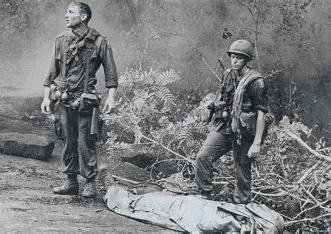
The quote above is from a Vietnam Veteran. He was interviewed for the 10-part documentary The Vietnam War by Ken Burns. He was talking about “acts of war”. In particular, the acts of savagery committed by some American soldiers while serving in Vietnam.

At an average of 90 minutes per episode, completing the series was challenging. But I did, and I have a lot of takeaways. There are hours of battle footage, commentary, and interviews. All the players are involved, including politicians and soldiers from South and North Vietnam, and the enemy. It covers all of the geopolitics involved in Cold War Southeast Asia. Per usual, Burns provides an honest, balanced and unflinching look at one of the darkest chapters in recent history.

The veterans interviewed did the unusual. They talked openly about their experience. They ranged from the reluctant draftee to the hardened veteran. There was also the wide-eyed, eager recruit seeking the honor and glory his father achieved. Finally, there was the everyday guy from Anytown, USA, who felt the call of Patriotism. They all went to the same place, but all came back very different. It wasn’t like the last war, their Dad’s war. And glory was not in the cards.

A lot of men did and saw things that would haunt them. When villages were razed, livestock slaughtered, suspected enemies gunned down, and food supplies destroyed, part of following orders, a lot of soldiers found their moral compass in danger. Some made “deals with the devil” to rationalize their acts. One soldier said, “I will never kill another human, but there’s no limit to how many Vietcong I will waste.” If they are no longer people, then it becomes easier. They are the enemy; they do not matter.

Then some stretched the thin red line even further. Rapes, mass killings of civilians, and excess brutality sometimes occurred. As it says above, it was as if the veneer of civilization had worn off of them.”

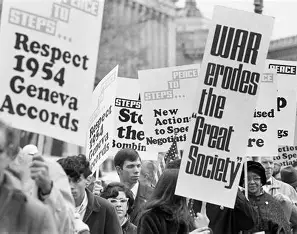
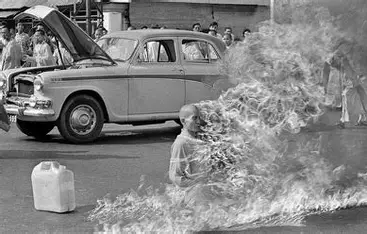
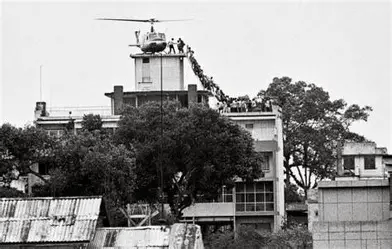
At home, the war had changed people as well. The escalating campaign was enormously controversial. Young people broke ranks with their parents’ beliefs. Students took to the streets and challenged authority figures. Peaceful protest morphed into violence as frustration with a growing conflict grew. Pictures of bombing campaigns and burned children were finding their way into American living rooms, and people were outraged. Some activists decided that violence was justified, and riots and bombings occurred. It culminated when the National Guard opened fire on a crowd at Kent State and killed four. One veteran lamented, “It has gotten so bad we are killing our own at home”. Even after the Saigon airlift of ’73, this country was divided and forever damaged.

When the soldiers returned, there was no ticker tape parade. The hostility towards the war had been directed towards those who had been charged with fighting it. The brave men and women who fought the unpopular war returned from planes and boats. They were unjustly called “baby killers” and were spit upon. These people are still owed the Welcome Home they deserved. But as I have said. Everyone and everything had changed.

What are the rules of civilization? Are they inherent? Are we born to act rationally and be decent to each other? Is it the job of parents to instill the concept of society in us? Is the veneer of civilization so thin that it can be easily worn down? Can we easily descend into barbarism and savagery?

You may not know what it was like to see the political climate of the late 60’s and early 70’s. It isn’t too late. You can still see it. Just turn on your TV. Because it’s still happening, only the target of the outrage is different. Riots, Nazi flags, death threats, mass shootings, shouting, fighting, people just being ugly to each other. So I have to ask; if the veneer of civilization is but a thin covering, what’s underneath?

Embracing the ‘Enough’ Mindset for Happiness

It’s a tired bit from movies and sitcoms.
A character, when faced with losing a friend to marriage, or moving, or some other life-changing event, says something to try to make them change their mind.
“But what about our plans to hike the Appalachian Trail?”
“Who will I travel Europe with?”
“We were going to make that movie.”
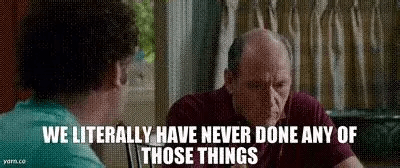
The response would be, to great audience applause, “Dude, we have literally never done any of those things.”

I always get a chuckle out of those gags because there is some truth to them. We do often envision ourselves doing something different, something exciting, something completely out of our comfort zone. Some are goals. Others are pure fantasy. Some are doable if one can overcome the logistic or emotional challenges that hold us back. Logistical challenges such as having a job, or being married with children could make hiking the Appalachian Trail a challenge. Emotional challenges, such as fear of flying, make traveling in Europe unlikely. Then there is the fear of change, a likely crippling yet common emotional challenge.

I have indulged in such yearnings myself. However, I failed to capitalize on the opportunities provided by youth. When I was young and free and unencumbered, I could go and do anything, anywhere. Elements of my life always forced me to push those yearnings to the back burner. I worked and made money, but I didn’t save any. I lived on what I made. Before I knew it, I was living to work and not working to live. Unfortunately, that never changed. Still, I had things that I wanted to do someday.

“Someday” is a wonderful notion. It is the carrot at the end of the stick. The mechanical rabbit at the dog track. It is the want of future “stuff” and “experiences.” This occurs when we have all of our shit together, are financially secure, and are emotionally and physically able. We consider the “want-to’s” that call to us through open windows as we toil through the “have-to’s” of life. As we age, or sink further into the harsh requirements of survival, they seem farther from our reach. Many, through planning, good decisions, or good fortune, reach that point. They successfully raise their kids and manage their careers and finances. Eventually, they buy the boat, RV, or Beach House. Some travel to Europe or spend the winter in Florida. I applaud them. They recognized, worked towards, and then achieved their someday.

That’s not me. At my current station in life, a continuously meager existence appears to be my new reality. Any “somedays” I have will be modest for sure. As an accountable person, I can reconcile that. The more mature version of me knows that we are a product of our decisions. My decisions have led me to where I am. I need not look elsewhere for blame; it is of my own doing.

Fortunately, I am a simple man who has never aspired to or envied wealth. You can ask anyone who knows me. They will tell you I wouldn’t be much different if I had a billion dollars. I am all about enough. I hope to have enough to eat every day. Enough money in my bank account so I don’t ever worry about money. To have enough friends surrounding me in good times and bad. Enough physical and mental ability to enjoy the activities that I love. I’m not extravagant at all, nor do I envy those who have the means to do so. I have learned to appreciate the simplicity of life, and I think my “enough” approach fits well within it.

Sure, the “somedays” still beckon me. There are still things that I want to do, only they have shifted in focus. I no longer hope for travel, adventure, and excitement. Now, I wish for peace of mind. I also hope for an extended period of good health and to be free of worry. I know that it is unreasonable to expect out of life an easy existence. That’s not what I want. I want manageable. There is a saying, “God doesn’t give us more than we can handle.” Well, the big guy must think I’m a real badass. Sorry, God, surely I have proven to you that I can handle it by now. I want to dial it down a bit. I don’t know what else to tell you.

There was a time when I would say that life had beaten me down. The “enough” mindset comes from a new realization. It is an understanding that my focus has shifted to what constitutes luxury and happiness. Sorry to be cliche’. I learned the hard way the old adage. “It’s not about having what you want. It’s wanting what you have.” I have a great life now. It is full of amazing people and meaningful activities. I have chosen to be with the people I want. I have crafted my life around the activities I enjoy. I have come to peace with my past. I am ready to face my future with the tools I have gained through the adversity of my life. I am prepared, however long I have.
I have enough of everything I need and no tears over what I don’t have. Oh yes, I also have a Motorcycle. That sure helps! I just need enough GAS MONEY.