
Bedside manner and the birth of a blog

Here’s the scene. A renowned oncologist has a stage 4 Melanoma patient as a guest at one of his lectures. She stands before the class. A veritable sea of solemn faces sits behind the life-sucking glow of the laptops before them. The Dr. wants the students to ask his patient the hard questions. In the hopes of improving their future “bedside manner.”
The questions commence. The students are unenthusiastic. They speak in clinical terms. Their faces offer no glimpse of empathy, sympathy, or understanding. They view her with the same enthusiasm as a cadaver. After the third emotionless, flat question the patient turns on them. She challenges their affect. She challenges their humanity. She implores them to see a person, not a patient. In response to her impassioned words, a student flatly asked her how she’s feeling. She then goes off on them as the Dr. watches on in silent agreement.
“How am I feeling?” How are we feeling?” “We’re dying, that’s how we feel!”
“And another thing”, she implored. “When you talk to us try to stop looking so fucking terrified!”
End scene.

The Big C. My kind of show.
Due to my medical history, I cannot help but be very aware of death. I’m not obsessed morbidly. I don’t plan to go anytime soon. Nor, and most important, am I afraid of it. It’s quite simple, actually. I spent so much time sick that it was always there in front of me. So I got to know it.
There are positive takeaways from being mindful of death. It changes how you live, for starters. Facing your own mortality opens the door between “someday I will die” and “when I die”. Suddenly, it becomes a part of your thought process. I think about it from every angle, and I’ve made peace with almost all scenarios. I live with a legacy mindset, always conscious of how I will be remembered. I’m at peace with all of it.
With the exception of a Cancer diagnosis.

That is the appeal of The Big C. It is a brave, unflinching, and honest look at life while facing death. It has it all. Bucket lists, difficult conversations, clinical trials, and experimental medications. Emotions range wildly as we watch Cathy Jamison, played by the always delightful Laura Linney, endure the highs of small victories and the crushing depths of disappointments and setbacks. At the center of it all, she is simply trying to live a normal life, with some mortality-related improvements. I believe it beautifully portrays a loving family dealing with loss. They are slightly dysfunctional and are coping with losing a mother and wife. The true beauty is that the show gives equal treatment to the concerns of both the survivors and the patient.
For the sake of this post, I want to shift focus to the medical aspect. In particular, the challenges of maintaining patient dignity in treatment. That is why I led the story as I did.

I’m very familiar with the patient/Doctor dynamic. In particular, I am very in tune with tone-deaf doctors and Nurses. My experiences have been mostly positive. However, many patients feel like a number or a statistic. They don’t feel like people because Bedside manner isn’t stressed as it once was. How do I know? I was told this by one of my own Doctors.

While hospitalized in 2016 for excessive water retention due to a failed transplant, I was approached by my Nephrologist. He said,
“Bill, you’re going to be here for a few days. If you have the energy, would you do a favor for me?”
“Sure, I’ve got nothing else to do.”
He went on to explain that he had a team of students. By his assessment, they had poor bedside manner. He made quotation fingers as he said “Bedside manner”, so I pressed. He explained that they were very bright and gifted clinically. Still, he was very concerned about their lack of empathy when dealing with patients. I admired that he cared about this, but I was not surprised. After all, he was very good with me.
I asked him what he wanted from me. He explained that he wanted me to tell them my story. Which he knew all about, of course. He said I should not volunteer everything. He wanted me to let them “pull it out of me” due to my natural tendency to overshare. In return, he would give me a certificate for helping out. I was glad to do it.
2 hours later, my hospital bed was surrounded by Medical students. I made it hard on them. I made them pull out of me the things not on their chart. The challenges of being sick for years on end. The financial, marital, parental, and occupational challenges of Chronic illness. I told them as only I could. One of them was in tears at the end, and others were visibly shaken.
My Doctor would later tell me that I was the perfect choice for such a lesson.

Soon after, I was visited by friends. They immediately noticed the new Certificate of Appreciation on my table and asked about it. I shared the story. One of them said, “Brother, you need to start documenting this shit. Write a book, man.” I mentioned that I used to have a blog, maybe it was time to start a new one? The name of it hit me instantly.
Superman can’t find a phone booth. The meaning was simple. I had fight left in me, but I was too weak to find the strength to change into my bullet-proof costume.

This is the same blog, just renamed because eventually I did indeed find my Phone Booth.

People over patients. Bedside manner is everything.

Winter Nostalgia: Childhood Memories and Change

Stopping by Woods on a Snowy Evening

By Robert Frost

Whose woods these are I think I know.   

His house is in the village though;   

He will not see me stopping here   

To watch his woods fill up with snow.   

My little horse must think it queer   

To stop without a farmhouse near   

Between the woods and frozen lake   

The darkest evening of the year.   

He gives his harness bells a shake   

To ask if there is some mistake.   

The only other sound’s the sweep   

Of easy wind and downy flake.   

The woods are lovely, dark and deep,   

But I have promises to keep,   

And miles to go before I sleep,   

And miles to go before I sleep.

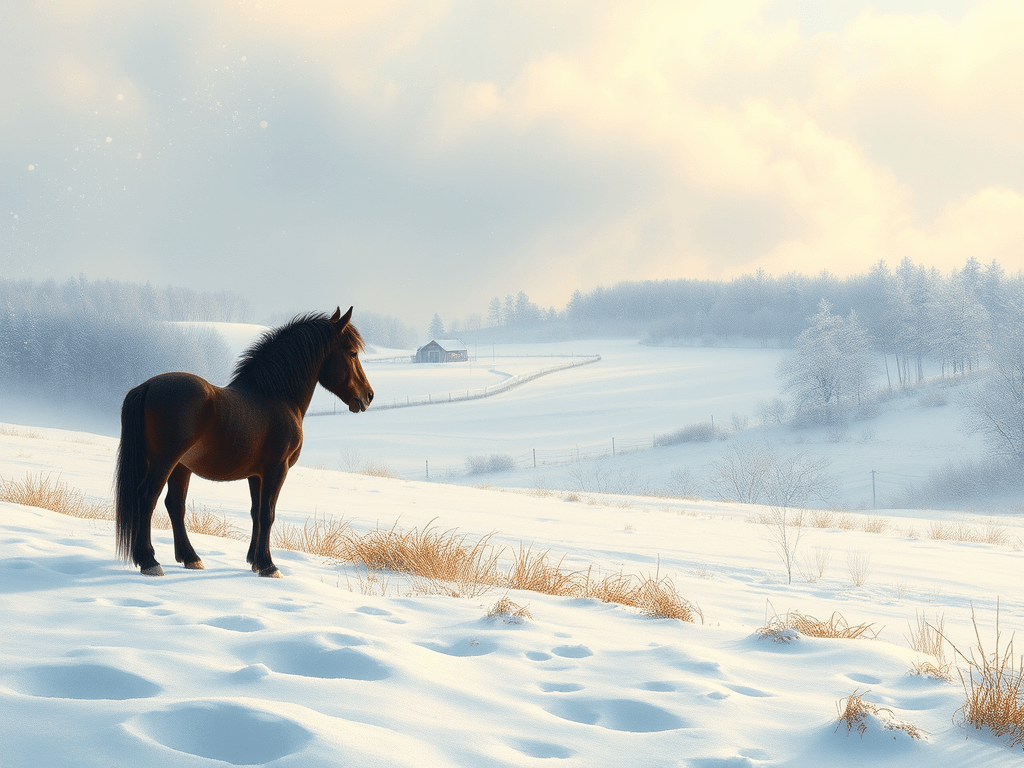
Snow drifts as far as the eye can see. Entire windblown fields are smooth, perfectly white and devoid of any tracks, human or otherwise. The wind beats the side of my apartment building and the smell of wood stoves fills the air. The rumble of plows interrupts the serenity. Soon, the landscape, as fresh as off the pages of a Robert Frost poem, will change. It will be tarnished brown by the taint of people again. We’re getting a “real” winter in New England. By “real”, I mean this is how every winter used to be when I was a kid.

For whatever reason, Winters aren’t what they used to be. Yes, I know this sounds like the musings of an old man, one who starts with, “Back in my day”. But I’m only 60, and there is no question that winters are not what they were. With rare exception, Winters for the last 20 or so years in New England have been hit or miss. Snowfall levels, despite some large storms each year, have consistently fallen. Despite some periods of extreme cold, average temperatures have risen consistently. Here in NH, snow amounts vary. They increase the farther North you go. However, even the Granite State doesn’t get what it used to. Massachusetts can go entire winters without any significant snowfall.

I hate snow now. I’m old, and I get cold easily. Shoveling kills my back. I hate driving in it. It just makes me want to go to Florida with the snowbirds. The years have changed my love of winter. As a kid, I loved it.

The first thing I think of when I think of snow as a kid was the Snow Day. They were a treat. In the late 60’s and early 70’s, canceling school was not what it is today. Today, the mere threat of a storm will close schools. Then, the school system did everything they could not to. Snow coming? Maybe we’ll let them out early. Snowed overnight? Better put the chains on the tires and wear your boots. My school was on a hill. If the Bus feasibly climbed that hill, then school was on.
One of the most nerve-wracking experiences then was waking up to snow. We waited patiently for the local TV channel or the radio station to call off school. Even when surrounding towns closed, often my town didn’t. Sometimes I would get up and wait with my Mother for the announcement. Other times, I would listen to the radio with fingers crossed. More often than not, I would end up going to school in the snow. Trudging up the hill to school was a nightmare. I would fall constantly in the really bad stuff. The insult was added to injury. The kids on the bus mocked me as the bus struggled up the steep hill to school.
I was bullied, did I mention that?

The days when school was called? That was the best feeling ever. I would go back to bed for a while. Alternatively, I would get up and watch some daytime TV on one of the 5 available channels. Then, I would load up on sugary cereal. If the snow had stopped already, I would shovel our driveway. Our driveway was very wide and long. Looking back, it was a hell of a big job. My young body could take it, but I would be sore after. But I had no time for pain. There was money to be made.

I had several neighbors that were loyal to me. One thing you don’t see after a snow storm today is kids with shovels over their shoulders. They used to knock on doors. When I was a kid, I had competition for my driveways. So, I had to be prompt. I also had to demand loyalty from my customers. These were the same people whose lawns I mowed in the summer and whose leaves I raked in the fall. I took good care of my neighbors. I was actually quite enterprising in those days. I would revel in making $ 6, maybe $ 10, a driveway!
The shoveling would sometimes take all day. But if I was done early, there was sledding and tobogganing to do. My hometown had several great hills within walking distance. My friends and I would try to hit them all. Looking back, what I wouldn’t do for the energy that I once had! Going downhill at breakneck speed is thrilling. Walking back up that hill several times took quite a toll on us. Despite being tired, we kept going. Fitness was stressed back then, we didn’t sit in front of screens all day. We were outside doing things. We only stopped for candy cigarettes, PB&Js, and hot chocolate in the winter. In the summer, we drank water from the hose.
Many kids today won’t understand being outside all of the time. Our parents knew that by being outside, we would not only be active, but bonds were created. Good habits were formed. An appreciation of Nature was obtained. As a child, I fondly remember the ethereal silence of the woods after a fresh snowfall. It was only interrupted by a falling branch or the movement of wildlife. I remember those rare moments when I felt warm despite the harsh cold. I felt incredibly at peace with the space around me. The sweat under my jacket was warm and comforting. The world was at peace. The blanket of snow had somehow muted the ugliness of the world. It was just for a moment.

I sometimes experience that same peace when I shovel. I find myself looking around. I am keenly aware of how uncomfortable the weather has made my old body. Yet, I marvel at the tranquility of a major snowfall and find peace in it. I wish that I loved winter as I used to. My youthful enthusiasm has been replaced by cynicism. I forget about the beauty and dread the cleanup. I fret over upcoming heating bills instead of appreciating one of New England’s most beautiful seasons.

I think of going to Florida, where it’s everything I hate: hot, flat, and full of bugs. I don’t think I can ever leave New England, the land of the true 4 seasons. Instead of running from winter, maybe it’s time to embrace it. I’m confronting everything else in my life right now, maybe I can challenge my hatred of winter. After all, isn’t the dark of winter metaphorical to the approach of death? By challenging the cold, and in particular my disdain for it, maybe I’m challenging my aging mindset.

Cynicism and Faith: A Journey of Belief

I was recently asked if I believed in Miracles. 20 years ago, I would have answered this question with a flat, fast NO. Now, after several incidents that defy logical explanation, it’s a firm and steadfast maybe.

A miracle is a powerful thing that defies the physical world and all of the laws of probability. There’s a reason that it requires a panel of very stodgy and high-ranking Catholics to classify anything as a miracle. In that light nothing I’ve witnessed in my life fits the mold.

Perhaps it’s the religious implication of the word. Miracles are largely attributed to a Divine entity. I believe in a higher power, but in the most undefined of ways. I struggle with the notion of an interactive deity. Instead, I chalk belief in such things as miracles up to the human need to explain the unexplainable.

I’m a cynic. I question everything.

I was always uncomfortable owning that. Being a cynic is often mistaken for being challenging or disagreeable. It may be aligned with my trust issues. My favorite saying is, “Trust but verify.” My distrust of people is surely related to my need for proof in matters of belief. Despite having Faith, Hope, and Charity on my right forearm, faith is very elusive to me. The tattoo merely represents hope. With Faith being the struggle that it is, Deity is a constant challenge. Consequently, miracles don’t exist in my world.

Did I mention that I am a fair cynic? I admit to being a quasi-believer at best. I also don’t presume that everything needs an answer. I’ve already admitted my belief. I think that religion is man’s way of explaining what his mind cannot grasp. Prayer plays a particular role in this. I’m not of the same school. I am okay with not knowing the answers to the great mysteries in life. I will continue to question the very meaning of life until my last breath. I will be okay if I never truly understand. I am insignificant, a grain of sand on an eternal beach. I am perfectly content with the possibility that I am not expected to know. Maybe I am supposed to trust the process, as everyone is so fond of saying these days.

As an aside, I constantly question the larger questions in life. I do this not to dismiss the notion of a God, but to come to peace with it. I want, more than anything, to believe. I’m just not there. In the spirit of an inquisitive being, I seek to be wrong. Almost everyone else will retreat to be right in their own minds.

If anyone should believe in miracles, it is me. I have come out on the other side of tragedy and death more than a few times. I have been in a coma, had sepsis, severe accidents, and chronic disease. More than once, I entered a hospital that most thought I wouldn’t leave without a toe tag. I’m still here. Maybe it’s a miracle. But I don’t think I’m important enough, in the grand scheme of things, to warrant one. My life is good and well-intentioned. But the ripples of my actions don’t cross even a duck pond. Instead, I look at my continued presence as the result of good Karma. Everything is energy, after all, and I know I put out good energy into the world. My reward was getting to stick around a little longer.