
Bedside manner and the birth of a blog

Here’s the scene. A renowned oncologist has a stage 4 Melanoma patient as a guest at one of his lectures. She stands before the class. A veritable sea of solemn faces sits behind the life-sucking glow of the laptops before them. The Dr. wants the students to ask his patient the hard questions. In the hopes of improving their future “bedside manner.”
The questions commence. The students are unenthusiastic. They speak in clinical terms. Their faces offer no glimpse of empathy, sympathy, or understanding. They view her with the same enthusiasm as a cadaver. After the third emotionless, flat question the patient turns on them. She challenges their affect. She challenges their humanity. She implores them to see a person, not a patient. In response to her impassioned words, a student flatly asked her how she’s feeling. She then goes off on them as the Dr. watches on in silent agreement.
“How am I feeling?” How are we feeling?” “We’re dying, that’s how we feel!”
“And another thing”, she implored. “When you talk to us try to stop looking so fucking terrified!”
End scene.

The Big C. My kind of show.
Due to my medical history, I cannot help but be very aware of death. I’m not obsessed morbidly. I don’t plan to go anytime soon. Nor, and most important, am I afraid of it. It’s quite simple, actually. I spent so much time sick that it was always there in front of me. So I got to know it.
There are positive takeaways from being mindful of death. It changes how you live, for starters. Facing your own mortality opens the door between “someday I will die” and “when I die”. Suddenly, it becomes a part of your thought process. I think about it from every angle, and I’ve made peace with almost all scenarios. I live with a legacy mindset, always conscious of how I will be remembered. I’m at peace with all of it.
With the exception of a Cancer diagnosis.

That is the appeal of The Big C. It is a brave, unflinching, and honest look at life while facing death. It has it all. Bucket lists, difficult conversations, clinical trials, and experimental medications. Emotions range wildly as we watch Cathy Jamison, played by the always delightful Laura Linney, endure the highs of small victories and the crushing depths of disappointments and setbacks. At the center of it all, she is simply trying to live a normal life, with some mortality-related improvements. I believe it beautifully portrays a loving family dealing with loss. They are slightly dysfunctional and are coping with losing a mother and wife. The true beauty is that the show gives equal treatment to the concerns of both the survivors and the patient.
For the sake of this post, I want to shift focus to the medical aspect. In particular, the challenges of maintaining patient dignity in treatment. That is why I led the story as I did.

I’m very familiar with the patient/Doctor dynamic. In particular, I am very in tune with tone-deaf doctors and Nurses. My experiences have been mostly positive. However, many patients feel like a number or a statistic. They don’t feel like people because Bedside manner isn’t stressed as it once was. How do I know? I was told this by one of my own Doctors.

While hospitalized in 2016 for excessive water retention due to a failed transplant, I was approached by my Nephrologist. He said,
“Bill, you’re going to be here for a few days. If you have the energy, would you do a favor for me?”
“Sure, I’ve got nothing else to do.”
He went on to explain that he had a team of students. By his assessment, they had poor bedside manner. He made quotation fingers as he said “Bedside manner”, so I pressed. He explained that they were very bright and gifted clinically. Still, he was very concerned about their lack of empathy when dealing with patients. I admired that he cared about this, but I was not surprised. After all, he was very good with me.
I asked him what he wanted from me. He explained that he wanted me to tell them my story. Which he knew all about, of course. He said I should not volunteer everything. He wanted me to let them “pull it out of me” due to my natural tendency to overshare. In return, he would give me a certificate for helping out. I was glad to do it.
2 hours later, my hospital bed was surrounded by Medical students. I made it hard on them. I made them pull out of me the things not on their chart. The challenges of being sick for years on end. The financial, marital, parental, and occupational challenges of Chronic illness. I told them as only I could. One of them was in tears at the end, and others were visibly shaken.
My Doctor would later tell me that I was the perfect choice for such a lesson.

Soon after, I was visited by friends. They immediately noticed the new Certificate of Appreciation on my table and asked about it. I shared the story. One of them said, “Brother, you need to start documenting this shit. Write a book, man.” I mentioned that I used to have a blog, maybe it was time to start a new one? The name of it hit me instantly.
Superman can’t find a phone booth. The meaning was simple. I had fight left in me, but I was too weak to find the strength to change into my bullet-proof costume.

This is the same blog, just renamed because eventually I did indeed find my Phone Booth.

People over patients. Bedside manner is everything.

Winter Nostalgia: Childhood Memories and Change

Stopping by Woods on a Snowy Evening

By Robert Frost

Whose woods these are I think I know.   

His house is in the village though;   

He will not see me stopping here   

To watch his woods fill up with snow.   

My little horse must think it queer   

To stop without a farmhouse near   

Between the woods and frozen lake   

The darkest evening of the year.   

He gives his harness bells a shake   

To ask if there is some mistake.   

The only other sound’s the sweep   

Of easy wind and downy flake.   

The woods are lovely, dark and deep,   

But I have promises to keep,   

And miles to go before I sleep,   

And miles to go before I sleep.

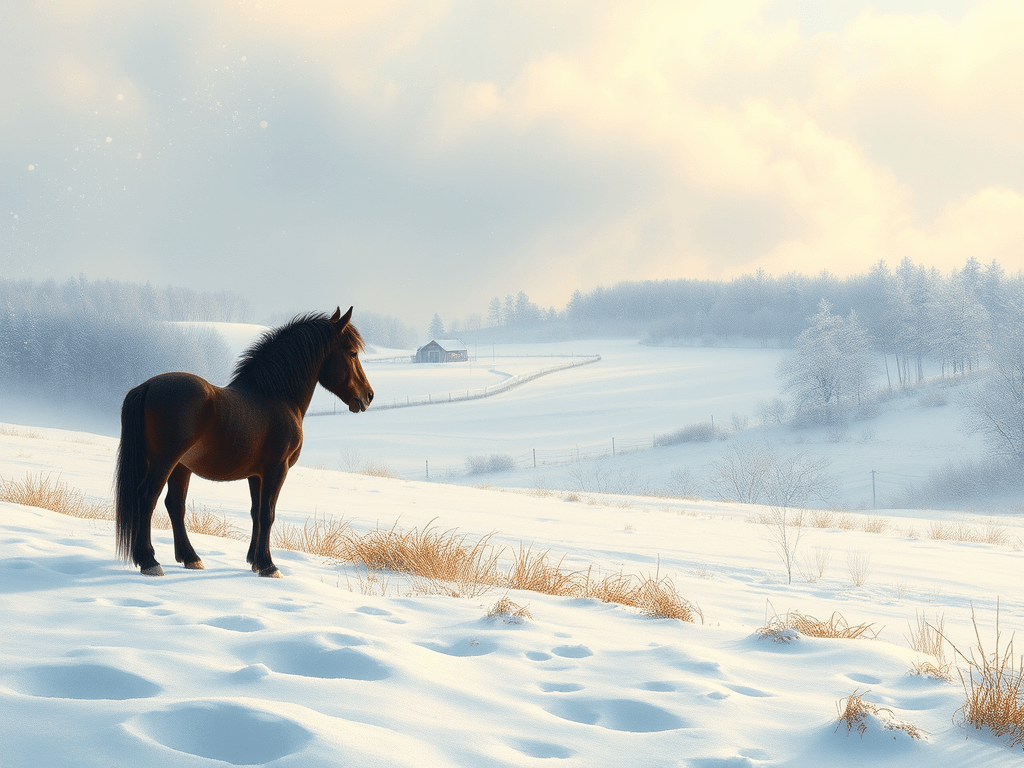
Snow drifts as far as the eye can see. Entire windblown fields are smooth, perfectly white and devoid of any tracks, human or otherwise. The wind beats the side of my apartment building and the smell of wood stoves fills the air. The rumble of plows interrupts the serenity. Soon, the landscape, as fresh as off the pages of a Robert Frost poem, will change. It will be tarnished brown by the taint of people again. We’re getting a “real” winter in New England. By “real”, I mean this is how every winter used to be when I was a kid.

For whatever reason, Winters aren’t what they used to be. Yes, I know this sounds like the musings of an old man, one who starts with, “Back in my day”. But I’m only 60, and there is no question that winters are not what they were. With rare exception, Winters for the last 20 or so years in New England have been hit or miss. Snowfall levels, despite some large storms each year, have consistently fallen. Despite some periods of extreme cold, average temperatures have risen consistently. Here in NH, snow amounts vary. They increase the farther North you go. However, even the Granite State doesn’t get what it used to. Massachusetts can go entire winters without any significant snowfall.

I hate snow now. I’m old, and I get cold easily. Shoveling kills my back. I hate driving in it. It just makes me want to go to Florida with the snowbirds. The years have changed my love of winter. As a kid, I loved it.

The first thing I think of when I think of snow as a kid was the Snow Day. They were a treat. In the late 60’s and early 70’s, canceling school was not what it is today. Today, the mere threat of a storm will close schools. Then, the school system did everything they could not to. Snow coming? Maybe we’ll let them out early. Snowed overnight? Better put the chains on the tires and wear your boots. My school was on a hill. If the Bus feasibly climbed that hill, then school was on.
One of the most nerve-wracking experiences then was waking up to snow. We waited patiently for the local TV channel or the radio station to call off school. Even when surrounding towns closed, often my town didn’t. Sometimes I would get up and wait with my Mother for the announcement. Other times, I would listen to the radio with fingers crossed. More often than not, I would end up going to school in the snow. Trudging up the hill to school was a nightmare. I would fall constantly in the really bad stuff. The insult was added to injury. The kids on the bus mocked me as the bus struggled up the steep hill to school.
I was bullied, did I mention that?

The days when school was called? That was the best feeling ever. I would go back to bed for a while. Alternatively, I would get up and watch some daytime TV on one of the 5 available channels. Then, I would load up on sugary cereal. If the snow had stopped already, I would shovel our driveway. Our driveway was very wide and long. Looking back, it was a hell of a big job. My young body could take it, but I would be sore after. But I had no time for pain. There was money to be made.

I had several neighbors that were loyal to me. One thing you don’t see after a snow storm today is kids with shovels over their shoulders. They used to knock on doors. When I was a kid, I had competition for my driveways. So, I had to be prompt. I also had to demand loyalty from my customers. These were the same people whose lawns I mowed in the summer and whose leaves I raked in the fall. I took good care of my neighbors. I was actually quite enterprising in those days. I would revel in making $ 6, maybe $ 10, a driveway!
The shoveling would sometimes take all day. But if I was done early, there was sledding and tobogganing to do. My hometown had several great hills within walking distance. My friends and I would try to hit them all. Looking back, what I wouldn’t do for the energy that I once had! Going downhill at breakneck speed is thrilling. Walking back up that hill several times took quite a toll on us. Despite being tired, we kept going. Fitness was stressed back then, we didn’t sit in front of screens all day. We were outside doing things. We only stopped for candy cigarettes, PB&Js, and hot chocolate in the winter. In the summer, we drank water from the hose.
Many kids today won’t understand being outside all of the time. Our parents knew that by being outside, we would not only be active, but bonds were created. Good habits were formed. An appreciation of Nature was obtained. As a child, I fondly remember the ethereal silence of the woods after a fresh snowfall. It was only interrupted by a falling branch or the movement of wildlife. I remember those rare moments when I felt warm despite the harsh cold. I felt incredibly at peace with the space around me. The sweat under my jacket was warm and comforting. The world was at peace. The blanket of snow had somehow muted the ugliness of the world. It was just for a moment.

I sometimes experience that same peace when I shovel. I find myself looking around. I am keenly aware of how uncomfortable the weather has made my old body. Yet, I marvel at the tranquility of a major snowfall and find peace in it. I wish that I loved winter as I used to. My youthful enthusiasm has been replaced by cynicism. I forget about the beauty and dread the cleanup. I fret over upcoming heating bills instead of appreciating one of New England’s most beautiful seasons.

I think of going to Florida, where it’s everything I hate: hot, flat, and full of bugs. I don’t think I can ever leave New England, the land of the true 4 seasons. Instead of running from winter, maybe it’s time to embrace it. I’m confronting everything else in my life right now, maybe I can challenge my hatred of winter. After all, isn’t the dark of winter metaphorical to the approach of death? By challenging the cold, and in particular my disdain for it, maybe I’m challenging my aging mindset.

Living Life Beyond Complaints: A Stoic Perspective

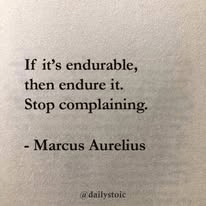
Marcus Aurelius Antoninus, Roman Emperor and Stoic, wrote the above quote over 1800 years ago. Who knew that “Suck it up, buttercup” was a thing so long ago? Are we to surmise that the great Toga-clad Roman society was no more free from complainers than we are today? I suppose this oversimplification fails to do the quote justice. It’s not about complaining, it’s about strength. Marcus Aurelius, as a Stoic Philosopher, believed that the quality of life is determined by how well you face adversity. In short, not everything requires action or a response.

Still, it is refreshing that, as early as 180 A,D complaining was a thing. It tells me it’s not a lovely side effect of a population growing less resilient.

I’m particularly familiar with this quote because I live it. To be clear, I am not special, nor do I want a cookie for having a challenging life. I don’t know anyone whose life isn’t. We all have problems, and it’s not a contest. One may view another’s issues as insignificant compared to one’s own. Still, that does not change the fact that everyone’s problems matter a lot to them. People need to understand this. Some choose to talk about it. Others keep it to themselves, comfortable in the age-old notion that nobody really cares. Or out of not wanting to burden others. And then others, well, they complain.
Not me.

As a person who has consistently dealt with setback after setback, I don’t talk much about my challenges. I was reluctantly “the sick guy” for a long time. Whenever I encountered anyone I knew, there was an inevitable, “How are you feeling?” coming. Please don’t take this as unappreciative. Good words are not guaranteed from everyone. Take them when you can. I simply struggled with the fact that my illness was the most definable aspect of my persona.
The most positive trait I can offer is that I am not a complainer.
I would rather be known as the opposite of a complainer.
Content. Stoic. Strong. Positive. Optimistic.

Have you ever heard someone refer to another as a survivor? “Oh, he/she’s been through so much. What a survivor. I can’t stand that. We are one of 2 things. We are alive, or we are not. Being present enough to be called a survivor means that you are alive. Logic thereby dictates that you have survived. My attitude is that while above the dirt, go out and live while you can.
Life is to be endured.

The mistake we make is to expect life to be fair or happy. The Declaration of Independence offers us the right to pursue happiness, but there is no guarantee of it. Yet many think that happiness itself is guaranteed, and any other outcome is thereby a disappointment. My attitude is that life is a series of obstacles, challenges, disappointments, and pivotal moments. Mixed in with everything entailed in surviving, we have moments of happiness. Brief periods of joy. Those are to be looked forward to because they justify the struggle. Strong people find something to be happy about. Others complain. They fail to recognize that the very breath they use to complain is something for which they should be grateful.

The choice is simple. Endure in silence, or find something in your particular situation to be grateful for. I’m facing another health challenge after only 4 years of relatively good health (my second longest streak). I’m sure that I could find many things to complain about. But I never will. Not only do people not care, but they also don’t like it. They appreciate someone who makes the best out of their situation.

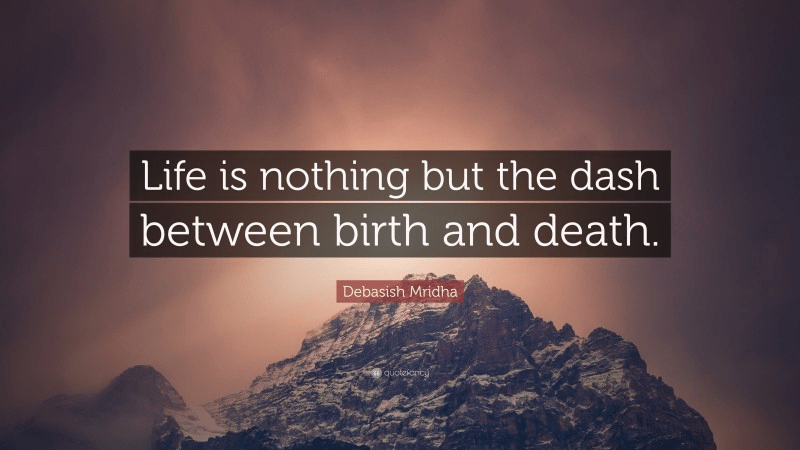
I have a great life. To focus on what I can’t control is just the wrong way to live. Instead, concentrate on what I have in front of me and what lies ahead. Your stone will someday display a date of birth and a date of expiration. The dash, well, that’s everything in between. Live for that.

The veneer of civilization


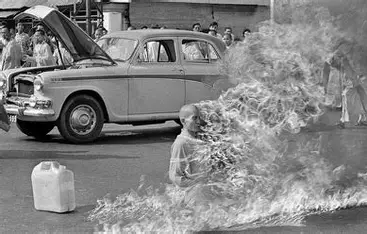
Then you see kids, good kids from good families. Back home, these kids would help little old ladies across the street. They would also go to Bible study. Yet, they do these horrible things. They’re in the country for a little bit, and it’s like the veneer of civilization peels right off of them.”

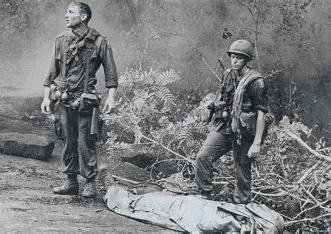
The quote above is from a Vietnam Veteran. He was interviewed for the 10-part documentary The Vietnam War by Ken Burns. He was talking about “acts of war”. In particular, the acts of savagery committed by some American soldiers while serving in Vietnam.

At an average of 90 minutes per episode, completing the series was challenging. But I did, and I have a lot of takeaways. There are hours of battle footage, commentary, and interviews. All the players are involved, including politicians and soldiers from South and North Vietnam, and the enemy. It covers all of the geopolitics involved in Cold War Southeast Asia. Per usual, Burns provides an honest, balanced and unflinching look at one of the darkest chapters in recent history.

The veterans interviewed did the unusual. They talked openly about their experience. They ranged from the reluctant draftee to the hardened veteran. There was also the wide-eyed, eager recruit seeking the honor and glory his father achieved. Finally, there was the everyday guy from Anytown, USA, who felt the call of Patriotism. They all went to the same place, but all came back very different. It wasn’t like the last war, their Dad’s war. And glory was not in the cards.

A lot of men did and saw things that would haunt them. When villages were razed, livestock slaughtered, suspected enemies gunned down, and food supplies destroyed, part of following orders, a lot of soldiers found their moral compass in danger. Some made “deals with the devil” to rationalize their acts. One soldier said, “I will never kill another human, but there’s no limit to how many Vietcong I will waste.” If they are no longer people, then it becomes easier. They are the enemy; they do not matter.

Then some stretched the thin red line even further. Rapes, mass killings of civilians, and excess brutality sometimes occurred. As it says above, it was as if the veneer of civilization had worn off of them.”

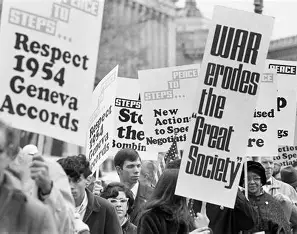
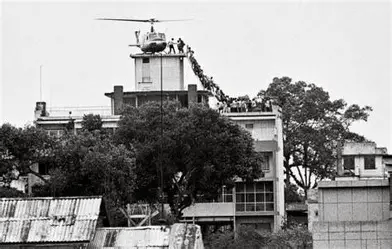
At home, the war had changed people as well. The escalating campaign was enormously controversial. Young people broke ranks with their parents’ beliefs. Students took to the streets and challenged authority figures. Peaceful protest morphed into violence as frustration with a growing conflict grew. Pictures of bombing campaigns and burned children were finding their way into American living rooms, and people were outraged. Some activists decided that violence was justified, and riots and bombings occurred. It culminated when the National Guard opened fire on a crowd at Kent State and killed four. One veteran lamented, “It has gotten so bad we are killing our own at home”. Even after the Saigon airlift of ’73, this country was divided and forever damaged.

When the soldiers returned, there was no ticker tape parade. The hostility towards the war had been directed towards those who had been charged with fighting it. The brave men and women who fought the unpopular war returned from planes and boats. They were unjustly called “baby killers” and were spit upon. These people are still owed the Welcome Home they deserved. But as I have said. Everyone and everything had changed.

What are the rules of civilization? Are they inherent? Are we born to act rationally and be decent to each other? Is it the job of parents to instill the concept of society in us? Is the veneer of civilization so thin that it can be easily worn down? Can we easily descend into barbarism and savagery?

You may not know what it was like to see the political climate of the late 60’s and early 70’s. It isn’t too late. You can still see it. Just turn on your TV. Because it’s still happening, only the target of the outrage is different. Riots, Nazi flags, death threats, mass shootings, shouting, fighting, people just being ugly to each other. So I have to ask; if the veneer of civilization is but a thin covering, what’s underneath?

Understanding Quotes: Beyond the Surface Interpretations

Americans embody a lot of things to a lot of people. One of particular interest to me is the unfinished quote. Is it a testament to laziness? Can I charitably call it brevity? We don’t even care to use complete quotes. We bother to dig into the archives for historical quotes, yet we only use half of it.
A few examples:
The early bird gets the worm“. It means to strive to be early, ahead of others, it speaks to ambition. Yet, that is only half of the quote. The remainder is, “but the second mouse gets the cheese.” It’s actually not a positive, motivational quote at all; it’s a cautionary tale about the downfalls of ambition.
Rome wasn’t built in a day“. On its face, it tells us that great things take time. Sadly, the oft-unused other part is, “but it burned in one.” Suddenly, the lesson becomes a cautionary tale of the temporary nature of things.
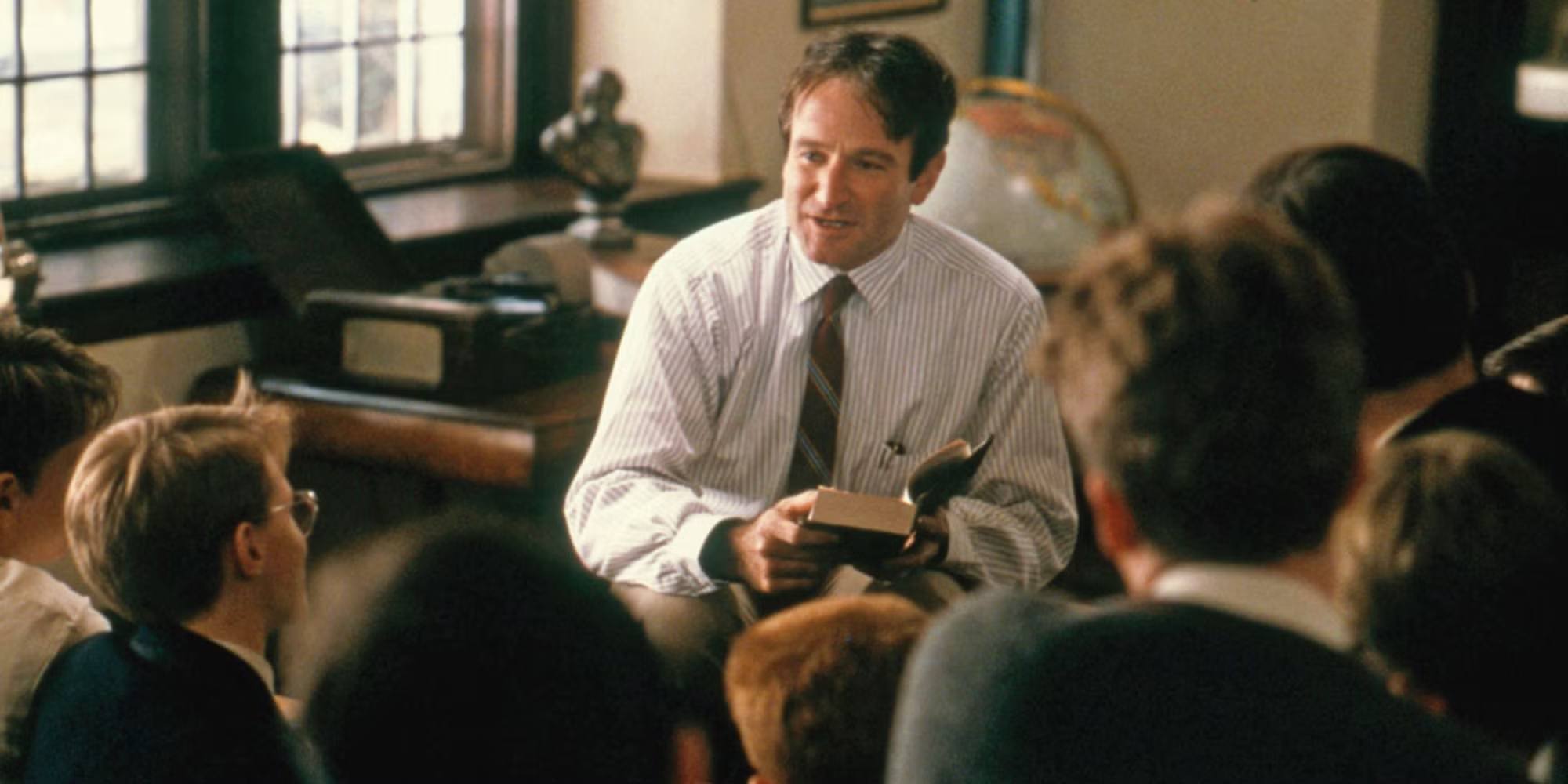
Carpe Diem“. Seize the day, right? I can see Robin Williams in Dead Poets Society, imploring his young, eager pledges to charge forward.

But the full quote is, Carpe diem quam minimum credula postero. “Seize the day, put very little trust in tomorrow”. We use the phrase “Carpe Diem” as a call to go YOLO. However, the phrase actually means to focus on getting things done today. You don’t know what tomorrow will bring.

An eye for an eye.” A call for justice, revenge, an evening of the playing field, right? No, the remainder is, “Only makes the world go blind.” Suddenly, it’s a contradiction to its typical interpretation. Reject vengeance, for it will bring terrible results. Not a call to arms, but a plea for reason and restraint.

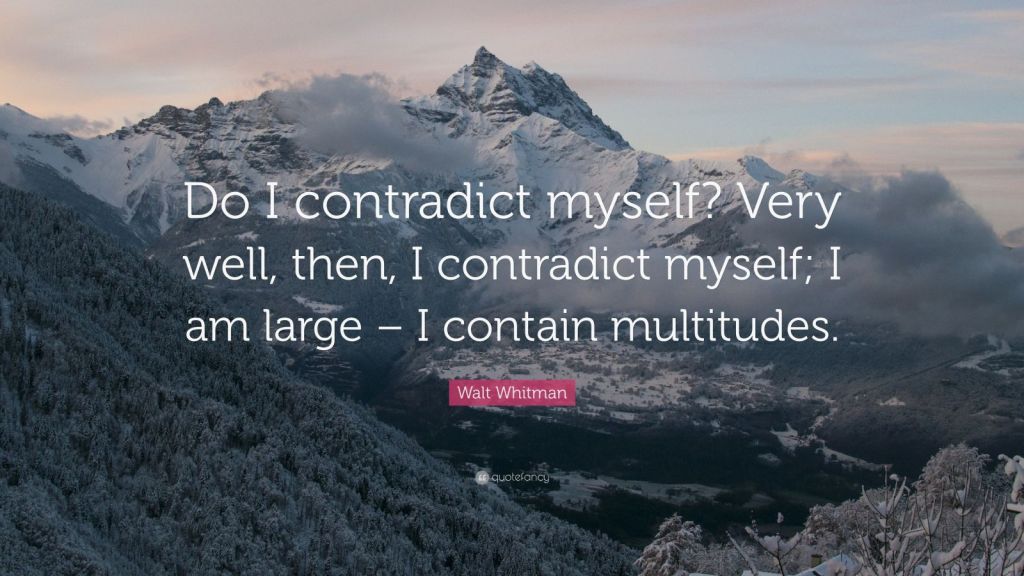
And, the topic dujour, how about “I am large, I contain multitudes“. This is a fragment of a very popular, oft-quoted Walt Whitman quote. It is from his 1855 edition of Leaves of Grass. You will see it on many a Hipster’s tattoo or someone’s FB page. Bob Dylan even named an album after it. Brands, mental health campaigns, and diversity initiatives frequently borrow the phrase to signal the exclusivity of all human complexity. It captures the essence of embracing contradictions and the multifaceted nature of identity.
But the full quote is actually, “Do I contradict myself? Well then,I contradict myself. (I am large/I contain multitudes.) It may be the most quoted line of poetry ever. Some variations:
I am large, I contain multitudes, and every part of me is worthy.”
My contradictions do not weaken me; they make me whole.”
There is room in me for every version of myself.
Consistency is the hobgoblin of little minds; I prefer multitudes.”
I am the poetry of paradox.”

There are more than 30 such valid interpretations, but let’s return to the concept of the incomplete quote. On its face, to say, “I contain multitudes,” implies complexity. A testament to the multifaceted human personality. A testament to the great mind. It is also the tool of a fool. A fool quotes it to project more depth than he actually possesses. When you recognize the hypocrisy of the statement, “Do I contradict myself/ Well then I contradict myself,” you can acknowledge it as a statement of defiance. You can see it not only as hypocrisy but as defiance. This is a rejection, at the time, of the European construct of the infallible, resolute, and focused man. Whitman boldly rejects that anachronism and admits the unpopular and controversial. Man is ultimately fallible and can not only make mistakes. He can change his mind occasionally, even reverse a position if faced with a challenge to his mindset. He is capable of Self-acceptance in the face of inconsistency, and the rejection of binary thinking (good/evil, body/soul, individual/society).

Here are my two cents.
A man can be more than one version of himself.
Being a paradox is not the same as being indecisive as to your position. Is it better to “dig in” when he might be wrong? It’s conducive to growth.
Every part of a man’s being deserves a chance to shine, for every aspect of a man’s personality is worthy.

This subject is of particular importance to me. I have suffered with the consistency of identity forever. I often feel that I present the safest version of myself, that the world can’t take me at Factory Settings. I have deprived myself of true identity by allowing this. At some point, my persona morphed from that of an artist to that of a fake tough guy. I used to draw, paint, read philosophy, and embrace intellectualism through tolerance. One day, or at least it seemed as if it happened in one day, I went the path more traveled. I tried to fit in. I became what I thought the people I was with at the time wanted me to be. I still held on to the artist in me, but he was not shown to many.

At some point, I realized that I had gone too far from my roots. I lost myself in the process. I struggled with it. With my insecurities, I feared exactly what Whitman embraced: hypocrisy. I never considered three facts that, once embraced, would change my life.
1)Within me live a thousand voices, each one is true at one time.
2)Embrace the multitude of personality traits; my true friends will accept me.
3)To deny my opposing character traits is to deny myself and the world of what I have to offer.

I am proud to say that in recent months I have undergone many significant changes. I have come to understand and hold in check the less desirable aspects of myself. I have shifted my negative thinking to being more accepting and loving of myself in all of my weird glory. I have gained confidence that I never knew I had. I care much less what others think of me, I care more now about what I think of me.

I contain multitudes as well. The difference is that I plan to embrace them. Not everyone will be able to handle it. But those I call friends will not only embrace it, but they will welcome it.


MINSKY: The Journey of an Unfulfilled Android

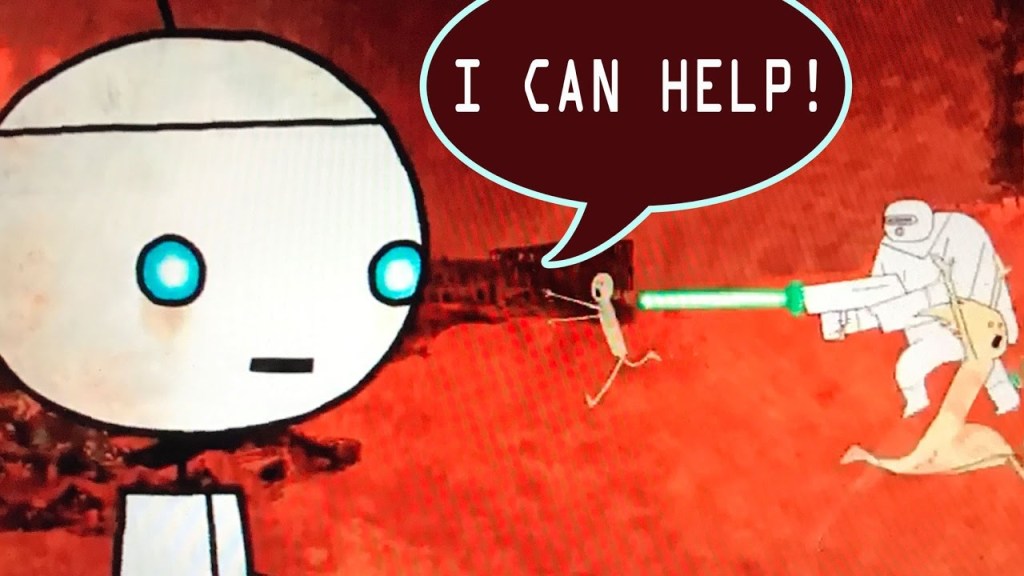
This is my retelling of Fargo, Season 3, Episode 3, in which the backstory of a dead character is examined. Unit MNSKY, or MINSKY, is the creation of a once-promising Science Fiction writer. His career abruptly ended after a publisher took advantage of him. The book, The Planet WYH, was a promising entry in what would be a successful series. It was relegated to obscurity in a box in the floor. The daughter found it after his death and read it. The producers of the show made a bold and brilliant choice. They told the story of MINSKY, the dutiful Robot, through an animated sequence. It is summarized above.
I am so glad they did.

My name is MINSKY, also known as Unit MNSKY. I am a small robot. I exist only in the memories of the readers of my long-forgotten author,and within the pages of a book, carefully tucked away in this tin box under the floorboards of an old house. Forgotten is my story. I’m out of service. My massive quantities of data have been mined, my metal harvested, my work complete.

My spaceship crashed here on planet WYH 2 million years ago. My pilot and friend died soon after impact. I stood over his fading lifeforce, only able to offer my one sentence, “I can help.” As I would painfully discover, I can’t help. All I have are good intentions. In this new world, I hope that is enough. My mission is to walk the earth. I aim to document all that I see.
Alone, I witnessed the creation of matter, the birth of life, the rise and fall of civilizations, and so much more.
As I walked, slowly and deliberately, the path of discovery, I was a mere spectator to the wonders before me. Water creatures left the surf to breathe air and walk. Giant creatures battled for dominance in a world that extinguished them, without acknowledgment for their conquest, with a single asteroid. I wandered through centuries of Ice and barren terrain. I saw villages morph into cities, cities become countries . I witnessed rises and descents, hopeful building of civilizations, and the wanton destruction that followed. I was witness to the creation of remarkable, benevolent scientific inventions that advanced civilization, as well as the destruction of entire civilizations at the hands of terrible weapons created by the same beings. I wandered for almost 2 million years as a mere spectator. The only time beings interacted with me was when I was an unwilling participant. See, I had to stop every century to recharge. While doing so, I was quite vulnerable. Some creatures took the opportunity to attempt to harm me. Once, one of my upper body appendages was torn off as I sat helplessly. I wasn’t offered assistance or kindness; I was taunted and berated. As an Android, I don’t experience emotions such as sadness. But I know what it is; my database prepared me for all things. My intelligence tells me that what I experienced was cruelty, a base emotion displayed by the non-evolved. Cruelty’s antithesis, kindness, was rarely offered and seemed to be in short supply.
That’s not to say that I am not programmed to offer simulated versions of “emotions”, despite being a rational Android. I occasionally extended an appendage, in its literal sense, to beings I encountered in my travels. If I saw someone struggling, I offered an “I can help”. Only to be reminded that, other than being able to enunciate the words, I am unable to act on them. One being was angry at me, upon my failing to help, calling me “useless” and “worthless”. It pleases me that as an Android I am not susceptible to verbal attacks. Besides, I am only an observer here to document and gather intelligence. A one-armed Android tasked with wandering for eternity until my mission is deemed complete.

One day, as I emerged from my recharge slumber, I experienced my first contact with extraterrestrial life since the crash landing as I found myself before several very distinguished members of the Federation of United Planets. After being recognized as the oldest sentient being in the universe I was commended for my longevity and thanked for the massive amounts of information I recorded. I was then told that it was time for me to shut myself down. I nodded in agreement, reached for my head appendage, opened it, located the switch, and shut myself down. My service was done.
I had wandered 2.38 million years. In that vast amount of elapsed time, I had observed and reported as programmed. I had done nothing else.


I traveled, but I did not enjoy.
I observed without the benefit of awe or curiosity.
I wanted to help, but I wasn’t able to.
I recorded my observations, but I didn’t learn from them.
I was done with my mission, but I hadn’t accomplished anything.
I was able to enunciate my desire to help, but I wasn’t able to help.
I existed, but I did not live.
I didn’t retire; I was shut down.
I have no legacy, just an off switch.
I had a long experience, but I didn’t have a life.
I am a sympathetic character, but I have no understanding of what that means.


Jesus, how sad is that?

I love this episode and animated short so much. The art is minimalist yet enthralling. It is both simplistic and maddeningly beautiful. It is poignant yet heartbreaking. It beautifully saddened me. I find myself affected, which is not an easy feat. MINSKY’s journey parallels so many aspects of life that it morphs into an existential meditation on the tragedy of an unfulfilled life.

Life as an observer will never be fulfilling. If you feel like you were put here for a reason, go and pursue it. If you feel like you have a job to do on this planet, take action. Don’t end up like MINSKY.


The Quiet Strength of Resilience in Tough Times

Resilience isn’t dramatic.
It’s choosing life repeatedly,
even when joy feels borrowed,
And tomorrow feels unsure.

Anonymous

I saw this the other day while doom scrolling FB reels. There are a lot of gems of wisdom, tailored to your particular crisis on social media. In my case, the FB algorithm stepped it up to Yoda mode. Who am I to fight it?
I watch those reels because no matter the topic at hand. I never fail to glean some wisdom or useful nuggets that inspire me. By inspire me, I mean it gives me some general validation. It affirms the troubled traits bothering me at that moment.
This week’s troubling trait is Resilience. I’ve been thinking about it constantly.

If you have been reading, you know that I have been faced with yet another health challenge. Upon initial diagnosis, I was very concerned. The surgery is extensive and is followed by a long recovery. I wasn’t sure that I was up for it. While it goes against every fiber of my being, I thought my good run may be over. Consistent with the theme of “going against every fiber of my being”, I also did something I rarely do. I shared my dilemma with my close friends. I rarely share my struggles. I grew up figuring out shit all on my own. Upon hearing the news of my upcoming surgery, my friends were amazing, as to be expected. They were supportive in offering help in any way, and many shoulders were offered to lean on. I appreciated such offers.
The true takeaway was how many people commented on my past resilience, encouraging me to take inspiration from that. Then it occurred to me that that is what I am known for. I’m the guy known for never giving up and rewriting the narrative. Where was that guy?

Why wasn’t my initial reaction what it was when I’ve faced a health challenge before? I had to meditate on that for a few days. I had more questions than answers. That is why the above quote grabbed me so.
Here’s what I came up with. The choice to fight isn’t always out of vim and vigor or enthusiastic tenacity. Sometimes it is merely a choice. Not dramatic but instead pragmatic. The choice is, of course, living or ending it. A choice I have contemplated so very often of late.

I am not suicidal. I am merely dancing with the notion of being done. “Done” is a common topic of thought for many people in my situation. What situation is that?
Older. Plagued by physical maladies. Not financially secure. Finding myself not needed as I once was, and unwilling to insert myself into situations in order to change it. Having maximized my usefulness and in need of a purpose. Life has become a chore, and hope for it changing fades with each passing year. The ensuing tragedy of feeling this way is that suicide becomes less about being incapable of dealing with life. And instead, it becomes more about how willing you are to continue dealing.

Resilience isn’t dramatic. No, it’s a character trait. One that fades over time.
It’s choosing life repeatedly. Yes, because the alternative is less desirable. Not to mention the damage it does to those you leave behind.
Even when joy feels borrowed. There are moments when the only happy moments in my life are vicarious.
And tomorrow feels unsure. What makes me choose life is the hope that my future will be brighter, despite all indications to the contrary.

So I will fight this in my usual manner. I will reclaim my tenacity and beat this latest challenge. Not because I have a particular desire to achieve another victory over a medical foe. I want to stick around for a while to see what happens. I’ve been to enough parties to know that if you leave too soon, you will miss the good stuff. That will have to be a good enough reason to fight this battle. Being an enthusiastic participant in my own life is something I need to get back to as it is. I miss that guy.
That guy has been conspicuously absent for too long.

How do I overcome this stretch of existing and get back to my love of living?

Quiet victories

I am 1 year free of alcohol. I am somewhat impressed with myself that I took this long to mention it. Conversely, I am annoyed with myself that I feel the need to tell anyone. Confused? So am I, and I’m the one writing this.

For context, allow me to introduce one of the most poignant sayings ever stated regarding sharing.
“Keep it to yourself because at the end of the day nobody gives a shit.”

Those who care about what’s going on in my life can always check in here. My friends, they can ask me. But overall, I have found that staying under the radar is the way I want to go forward.

Perhaps it’s callous to say what I said above about nobody caring. It’s not entirely fair. People care, but they have their own lives to contend with. I firmly believe that everyone is going through something right now. Even the ones we think have it all together. There is only one certainty in life and that is life is hard for everyone. With regards to sharing, it’s not going to mean to them what it means to you.
Additionally, I am now a convert to the notion of disappearing. You see it everywhere on social media: “disappear for 30,60,90 days and reappear stronger.” It calls upon people to work on themselves, without the benefit or distraction of the advice of others. To not be visible during the trifling changes, but to seclude until you rise like a Phoenix, visibly and decidedly better and stronger.

I bought into that mindset a while back. I desperately wanted to immerse myself completely in the idea. I daydreamed of no contact, no worries, no obligations other than what is essential, and just working on myself. But my life doesn’t allow for it. I have commitments that I need to uphold as a man. I have a family and friends who will worry about me if I’m not heard from. When I decided to tackle my drinking problem a year ago, I decided to do it relatively quietly.

Normally, when I attempt self-improvement, I put it out there for reasons of accountability. It’s a bold, risky, and potentially problematic approach unless you are truly serious. But I only do so when I am truly serious. When I decided on January 1st,2025 to stop drinking, I avoided telling everyone. Not that I didn’t have plenty of confidence that I could do it. That’s how I am wired. I get to the point where I am completely done with something, and I summon the will to vanquish it. I didn’t need to tell people because I was doing it for myself, not for them. I could care less what they thought if I failed, my own disappointment would be enough to deal with. I told family and a few friends. I then disappeared as much as I was able. I wanted to rebuild. I wanted to accomplish something I have wanted for a very long time. To regain control of my life from those things that were controlling me. It’s a logical progression after all: conquer that which makes my mental health unstable, and then conquer the mental health.
One year later, I am leaps and bounds closer to conquering my demons. The cessation of alcohol has made a tremendous difference. It was a wonderful decision all around.

I would never say this in an AA meeting because I feel that it would minimize the struggle many are going through. But I really didn’t need the program. I went to a meeting a day for the first 30 days. After the first month, my attendance was sporadic. I had learned to value the celebration of the sober life, and that’s what meetings did for me. As for the steps, despite my background in Recovery Case Management, they just didn’t apply. I know the alcoholic min,d and I know the commonalities in alcoholics. I also know that I am not like them. I was never a “blackout” drinker. I suffered a few embarrassments, but didn’t destroy my life as others have. I didn’t have any resentments to work through. I only resented the power that alcohol was gaining over my life, so the control freak in me reasserted dominance.
It wasn’t that hard for me to stop drinking because I was done with all of it. Done with arguing with myself. Done with thinking about my next drink. Tired of the inevitable self-loathing that followed.
And it’s been the best decision I have made in some time. The blessings continue to manifest.

My health has improved dramatically. My blood work is stellar. All of the inconsistencies in my labs were alcohol related. I tipped the scale at 199 this morning, which I haven’t seen since I was sick. I am down 35 pounds. I have a spring in my step and can do things once lost on me, like touching my toes. Was I surprised that I could do that! Other major concerns, such as stomach and skin issues, simply disappeared. And dare I say it, I look much better. While I can’t say that it’s the only source of good things in my life, it was the catalyst. I showed myself that I was not too old or too far gone to improve myself. That’s what is at the center of everything that I do. Self-improvement.
In a quiet, non-public manner, I disappeared while in front of everyone and came back a better, stronger me.

So when January 1st 2026 arrived, I resisted the urge to go on social media. I did not tell people of my accomplishment. The one ones that I reached out to were a Brother who is 20 years sober and my youngest son. My Masonic Brother confirmed in a single text that he, as predicted, didn’t really give a shit. My son, well he gets me well enough to know what this accomplishment means to me and why. I was fine with that.

I overshare. It’s one of the things that I have learned about myself. Keeping this milestone between just us is both new and good for me. That is who I am working towards being. Not silent but not loud. Self-assured but not cocky. Available but not transparent. I want to leave a little mystery. The world fears a quiet man. The quiet man strikes fear in the petty and inspires the rest. This milestone is my accomplishment. Done by me and for me.

So here I am, 4 days late telling you that I completed one year of Sobriety. If you give a shit, great. If not, that’s also great. Because at the end of the day, we all have ourselves to take care of before we can be any good to others.

The Feast

What a roller coaster ride it must be to read my blog. One day I say I’m doing great. Another day I am bombarding the reader with tales of isolation, depression, and woe. Good God, I’m a mess. All I can say is, hey, at least I’m working on myself.

Post Christmas Eve, which was as good an evening that could be had with Family, I did not leave my house for 3 days. I would like to tell you that I was productive, but that would be a lie. There are days when I stay in that I am productive. I write blogs, I read, I watch movies, and I work on the Masonic tasks at hand. I would like to tell you that, but in this case, I cannot. They were wasted days. I wasn’t depressed, but motivation in any form escaped me. To make matters worse, I beat the snot out of myself for my lack of productivity.
There is a positive to this. Such episodes create awareness that I have areas for improvement, and I hope that my shortcomings will motivate me to do better. But I must say, this journey of constant improvement, while promising on paper, requires a significant amount of effort. Frankly, it’s exhausting.

I wrote quite extensively about my episode over the weekend. It consumed me for most of the weekend. I feared a prolonged spiral over it, but something good and timely occurred Sunday night. The Master of my lodge called me and told me that he was unable to attend the Feast of St. John at Grand Lodge in Boston on Monday and offered me his ticket. I was happy to accept for two reasons. First, it was a second chance after I initially declined to attend because of the cost and missed the deadline. I perceived the event as stressful since it is quite eventful and long. But I regretted this decision when it sold out. The last minute ticket was a nice and welcome second chance.
Second, I recognized the need to leave the house. I wanted to prevent myself from falling into a full-blown mental crisis.
I knew many of my close Brothers would be in attendance. I immediately looked for someone to go with me into Boston.

I am so very glad that I ended up going. It was nothing less than a wonderful day.

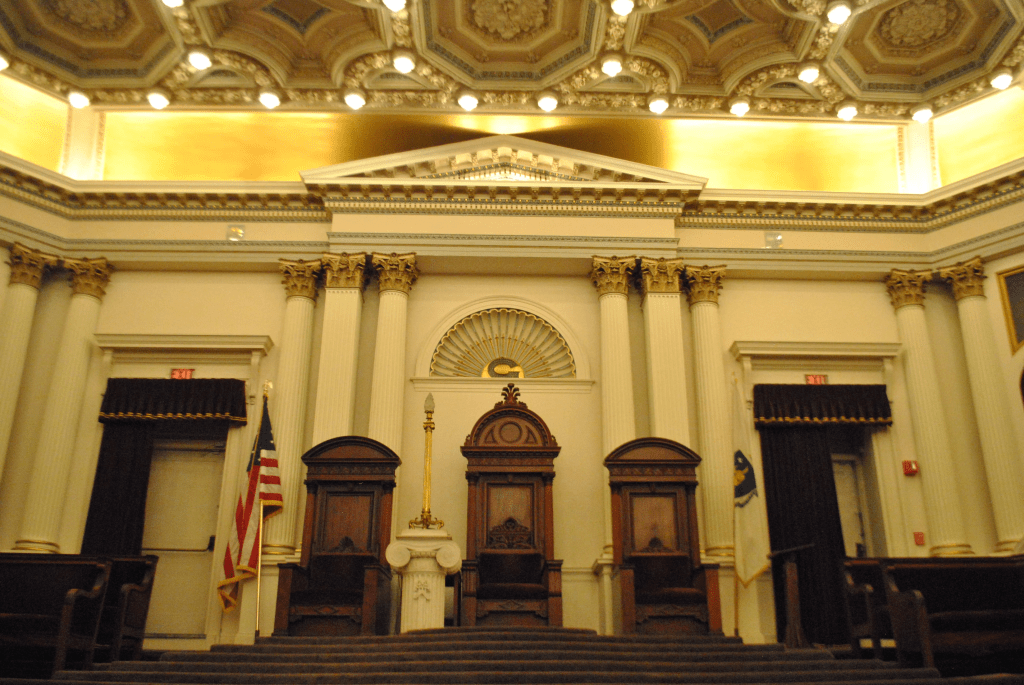
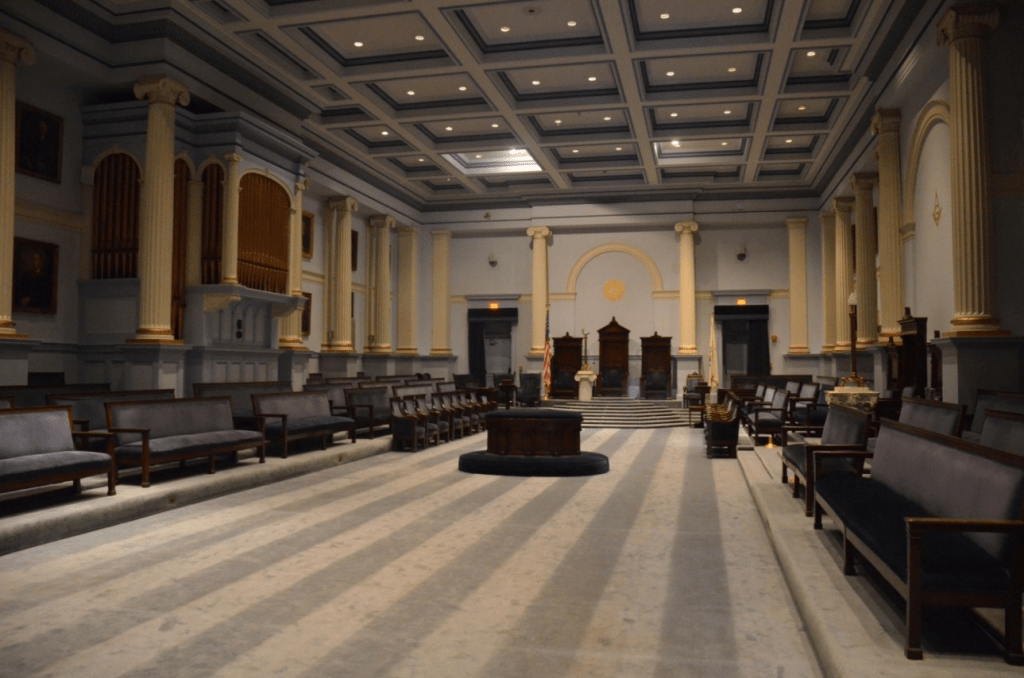
The Feast of Saint John is a vital event in the Masonic calendar, celebrated with respect around the globe. The Feast of Saint John is held every year, typically on December 27th. This year in Boston was an installation event. Every two years, we install a new Grand Master and new Grand Lodge Officers. The ceremony is archaic and elaborate. It demonstrates the ancient traditions of our Fraternity. The Grand Lodge of Boston was founded in 1733. It is the 3rd-oldest jurisdiction in the world. Only England and Ireland are older. The architecture and decor are nothing short of magnificent. It feels like a time capsule. These ceremonies have been performed the same way for almost 300 years. Great men such as Paul Revere and General Joseph Warren witnessed them exactly as we do now.
I had a front-row seat, thanks to a buddy, for the entire event. It was indeed a privilege to witness the ceremony. It is a remarkable sight to see these ceremonies performed in that very ornate room.
Many friends were being installed into important offices. I was grateful to be there to support them. I was honored to watch them advance in their Masonic labors.
The ceremony was followed by a sumptuous, multi-course meal presided over by the New Grand Master, Grand Lodge officers, and esteemed Dignitaries. They came from multiple countries and jurisdictions around the world. How do I describe having dinner with 300+ Brothers? Some are close, and others are merely pending because I have not yet had the pleasure of meeting them.

It was a long night but it was just what I needed. I fall into intermittent episodes of depression. Why isn’t my first instinct to immerse myself in the company of my Masonic Brothers? I am at a point in my life where I can almost break it into two categories; before I took my obligation, and everything after. Becoming a Freemason has changed almost every part of me for the better. And there is no big secret, despite the world endlessly clamoring for one, to the appeal. It’s the connection. The friendships. The bonds we create as we unite in our tasks at hand. It has been one of the greatest undertakings of my life and I plan to go as far as it takes me.

That’s the big picture. The smaller one, today in my living room, is that it saved this wretched soul yesterday.

The Fall of Rome

Hell is empty, and all the Devils are here“.
William Shakespeare

I’ll say this, Ole Billy Shakespeare had no idea how prescient a statement it was. We don’t need to do a deep dive into religion or philosophy to understand evil. It is everywhere we look and walks among us. Our very civilization is collapsing around us.

I don’t know if I’m more angry or sad at the state of the world, especially in our country.
We used to be a nation of laws and ideas. We established this country on Western Christian-Judaeo values. Those values permeated the ideas behind the vision the founding fathers had for the United States. The founders envisioned a Utopian society; one free from religious persecution, outdated monarchies, stifled thought, and oppression. To support this, they created the fairest legal system in the world.
Yet we are bordering on being a lawless nation. Violent crime is more prevalent, as well as increasingly savage, every day. Theft, from looting and shoplifting to embezzling and large-scale financial scams are constant. I can safely say that when we think we have seen the most shocking acts ever, it can be topped. And it will be.

If we studied history, we would understand that mankind has always been savage. Humans have consistently engaged in slaughter. We need look no further than the Middle Ages. The torture methods from the period show that man has always had the capacity to inflict unimaginable pain on others. Seemingly with pleasure.
But we are supposed to have evolved since then. Particularly in the Western World, where we profess to have decency, morality, and compassion. We even tried to engineer such values through our Declaration of Independence. The Constitution also acknowledges inalienable human rights granted by God. To enforce these ideas, we created the best legal system in the world.
But a declining value system makes such laws merely academic.

I am not the biggest fan of religion in its broadest sense. However, I believe strict adherence to morality is crucial. It needs to be supported by those who keep it at the forefront of their actions and behaviors. This is the glue that keeps society together. People largely played by those rules, and we policed ourselves. Is it a coincidence? As the number of people who claim to be of faith declines, the crime rate goes up.
I don’t believe so.

The world I grew up in had a clear definition of right and wrong. The rules by which today’s society functions are Grey at best. I was also raised to be tolerant and accepting of others, particularly regarding their beliefs. In matters of Politics and Religion, it was to each his own. Today, we vilify, mock, taunt, seek to destroy, and even kill those with whom we disagree. It is a sad state of affairs.

There is a term that I picked up on not long ago that, once I heard it, I never forgot. The veneer of civilization. The term “veneer of civilization” refers to a thin layer of societal norms. These norms and moral codes protect and maintain order in society. It suggests that while civilization provides a framework for behavior, it is fragile. The veneer theory was coined by Frans de Waal. It critiques the idea that human morality is merely a cultural overlay. That morality is not ingrained directly in human nature.

If we are to understand Frans de Waal, adherence to a moral code is a learned behavior. It is not a dominant or durable trait. So, for the sake of conversation, despite humankind’s predilection for savage and inhumane behavior, let’s say that we have been able to maintain that veneer to date. I would offer that it’s thin and stretched to its limit. We are at a period in time in which every great mind throughout history had postulated that society would be advanced in both technology, thinking, and behavior.
Yet here we are.
Killings as a political tool (not a new concept).
Shouting and berating vs. respectful dialogue.
Violence as a means to an end and not as a last resort.
Disinformation, including outright lies, is blindly accepted as truth.
Soundbites accepted as reality vs. research and education.
Selfish, self-absorbed behavior vs. a community mindset.
Overly sexualized, offensive behavior with no regard for children or decency in general.

I could go on, but I won’t. I am getting a headache just thinking about all of it. I’m not angry about what I see all around me. I’m disgusted and sad. Can we come back from the precipice, or will we fall off the edge? At what point will we recognize that civilized behavior is essential to maintain a society that is comfortable going out in public, without fear of meaningless, random violence?

Or is it the Grand Plan that all of this break down? Without being political, we know that there is an element of society, traditionally known as leftists. Leftists have always had an agenda of anarchy. Of a New World Order in which the system as we know it collapses. By this mindset, a centralized government is targeted for destruction. As is a strong moral system driven by religious and philosophical doctrine. Additionally, a robust and fair legal system and a strong economy are under threat. We have fended these forces off to date, through institutions of education and religious belief. We emphasized education as an alternative to “lower” behavior, and we taught religion as a system of values to govern our thoughts and actions.
Is it really a surprise that education is now indoctrination and religion is declining in popularity and influence? I think not.

Behavior is all that separates us from the lower animals. As humans, we are blessed with the abilities of reason, rationality, and empathy. We also profess to have humanity, a most unique aspect of Homo Sapiens. So are we losing our ability to apply and utilize these gifts, or are we choosing to ignore them?

We had better figure out the answer to this soon. Or we as a society will follow the example of Rome. It was a society that achieved greatness in every way. However, they lost the interest and motivation to maintain their achievements. Consequently, they watched as it slowly burned to the ash heap of history.