The veneer of civilization


Then you see kids, good kids from good families. Back home, these kids would help little old ladies across the street. They would also go to Bible study. Yet, they do these horrible things. They’re in the country for a little bit, and it’s like the veneer of civilization peels right off of them.”

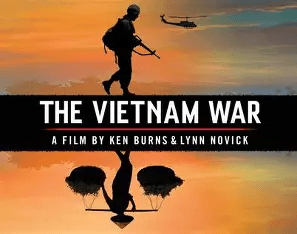
The quote above is from a Vietnam Veteran. He was interviewed for the 10-part documentary The Vietnam War by Ken Burns. He was talking about “acts of war”. In particular, the acts of savagery committed by some American soldiers while serving in Vietnam.

At an average of 90 minutes per episode, completing the series was challenging. But I did, and I have a lot of takeaways. There are hours of battle footage, commentary, and interviews. All the players are involved, including politicians and soldiers from South and North Vietnam, and the enemy. It covers all of the geopolitics involved in Cold War Southeast Asia. Per usual, Burns provides an honest, balanced and unflinching look at one of the darkest chapters in recent history.
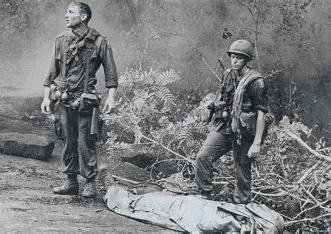
The veterans interviewed did the unusual. They talked openly about their experience. They ranged from the reluctant draftee to the hardened veteran. There was also the wide-eyed, eager recruit seeking the honor and glory his father achieved. Finally, there was the everyday guy from Anytown, USA, who felt the call of Patriotism. They all went to the same place, but all came back very different. It wasn’t like the last war, their Dad’s war. And glory was not in the cards.
A lot of men did and saw things that would haunt them. When villages were razed, livestock slaughtered, suspected enemies gunned down, and food supplies destroyed, part of following orders, a lot of soldiers found their moral compass in danger. Some made “deals with the devil” to rationalize their acts. One soldier said, “I will never kill another human, but there’s no limit to how many Vietcong I will waste.” If they are no longer people, then it becomes easier. They are the enemy; they do not matter.
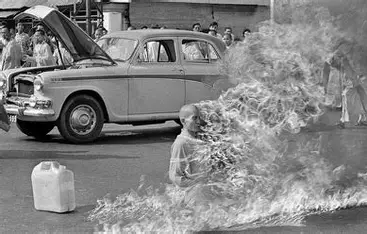
Then some stretched the thin red line even further. Rapes, mass killings of civilians, and excess brutality sometimes occurred. As it says above, it was as if the veneer of civilization had worn off of them.”

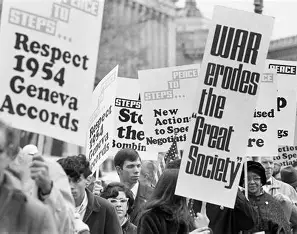
At home, the war had changed people as well. The escalating campaign was enormously controversial. Young people broke ranks with their parents’ beliefs. Students took to the streets and challenged authority figures. Peaceful protest morphed into violence as frustration with a growing conflict grew. Pictures of bombing campaigns and burned children were finding their way into American living rooms, and people were outraged. Some activists decided that violence was justified, and riots and bombings occurred. It culminated when the National Guard opened fire on a crowd at Kent State and killed four. One veteran lamented, “It has gotten so bad we are killing our own at home”. Even after the Saigon airlift of ’73, this country was divided and forever damaged.
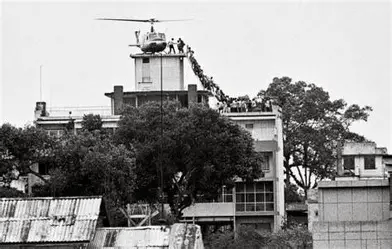
When the soldiers returned, there was no ticker tape parade. The hostility towards the war had been directed towards those who had been charged with fighting it. The brave men and women who fought the unpopular war returned from planes and boats. They were unjustly called “baby killers” and were spit upon. These people are still owed the Welcome Home they deserved. But as I have said. Everyone and everything had changed.

What are the rules of civilization? Are they inherent? Are we born to act rationally and be decent to each other? Is it the job of parents to instill the concept of society in us? Is the veneer of civilization so thin that it can be easily worn down? Can we easily descend into barbarism and savagery?

You may not know what it was like to see the political climate of the late 60’s and early 70’s. It isn’t too late. You can still see it. Just turn on your TV. Because it’s still happening, only the target of the outrage is different. Riots, Nazi flags, death threats, mass shootings, shouting, fighting, people just being ugly to each other. So I have to ask; if the veneer of civilization is but a thin covering, what’s underneath?
On Service

In 1985 I joined ROTC in college. It was an impulsive decision and to this day I can’t list my reasons for doing so in proper order. The world was relatively peaceful in Reagan’s America and we weren’t in a particularly Nationalistic phase. I think I was inspired by a good friend that I had seen positive changes in due to ROTC and wanted them as well. I had seen him acquire a purpose in his step, a determination in his gaze, and a confidence I had never seen in him. I think I wanted that. So in August 1985 I was off to Fort Knox, Kentucky.

I liked it and I didn’t. I enjoyed the physical aspect of it and cruised through that aspect of the training. I didn’t like the prospect of being an Officer. I was uncomfortable with my ability to lead and make decisions that may cost lives of my fellow soldiers. I was also a free thinker and rejected the simplicity of calling every target “Ivan”. 8 weeks later, I stepped off the plane at Logan Airport 25 pounds lighter, with a more purposeful step and 2 weeks to make the decision to continue. I would choose not to and I will always regret it.

I am the son and grandson of Veterans. My grandfather served as a SeaBee in the Navy in WWII and exemplified in every way the Greatest Generation. He returned home, made no conversation or complaints about the war, and began to rebuild a life. My father was called to Vietnam but when I was born he was restationed stateside. I beam with pride when I think of either of them. In addition, I have many friends who served, and some are still on active duty. I met some of them while living in an apartment complex 10 years ago. There was a group of 5 soldiers and their families, and I became close to them, despite being much older. I heard their stories, from the ones that were comfortable talking about it, and I shared more than one moment of tears and frustrations over drinks as they recalled experiences they endured as part of their jobs. I heard some things that I will never forget, nor will I minimize the importance of being trusted to hear them.

When the US entered WWII men and women flocked to the recruiting station to enlist. Young men lied about their age to fight for a righteous cause they believed in. Those at home all pitched in. People bought war bonds and curbed their own lifestyle to preserve resources for the war effort. Rosie the Riveter went to work in the factories. When the soldiers returned home, they were greeted as heroes. This country will never have a generation like that ever again.

In Vietnam, the cause was less righteous and appealing to people, and, while there were still many civic-minded young people, not enough volunteered, and a “draft” was created. The draft deeply divided this country and a generational culture war divided society. In stark contrast to the WWII generation, the unpopularity of the war extended to a terrible and unjust treatment of the soldiers returning home. After fighting with valor and a deep love of country, instead of being called heroes, they were spit upon and called “baby killers”. This in no way eased the return to society for a generation of soldiers who had seen a new, horrific side of warfare. It was a shameful time for this country.

Veterans of recent conflicts in Iraq and Afghanistan are facing the most critical lack of support ever. This is not to say that the good citizens of the USA don’t overtly support them proudly in spirit. The lack of support lies in benefits and resources both medically and in mental health. The Iraq/Afghanistan era veteran engaged in warfare unlike any other generation. There was no clear and defined enemy. Once Saddam’s Revolutionary Guard was defeated the war became borderless and the enemy unclear. In Afghanistan, brutal terrain and tribal loyalties and betrayals further complicated warfare. Traditional warfare, already out the window after Vietnam, was taken to an entirely new level as our soldiers were forced to deal with roadside bombs, mothers sacrificing babies to kill soldiers, vague and restrictive rules of engagement, a lack of equipment and recruits, and extended tours. These brave men and women have been subjected to evils that most reasonable people would have difficulty believing even exist only to return to society and be expected to be able to put everything they have seen aside and just function. Very few of us, perhaps only one who has been in that situation. I only know what I hear.

I hear of a hatred for the people that they were fighting and for those that they were supposed to be protected. A hatred that never subsides and will never go away.
I hear of resentment of officers who put soldiers in danger to advance their careers.
I hear of rules of engagement that are vague, ineffective and subject to constant change.
I hear of seeing comrades mutilated or decimated in a “red mist” right in front of them.
I hear of sleepless nights, drug and alcohol abuse and decimated families due to inability to compartmentalize and handle haunting memories.
I hear of a convoluted, overwhelmed and inefficient VA.

Veterans deal with all of this with as much dignity as they are able to muster every day. They don’t expect us to understand but they would appreciate our appreciation and respect. They still love their country and believe in something that a dwindling number of Americans subscribe to, the concept of Service.

I didn’t have that sense of service when I joined. I want to regret that but there’s nothing I can do about it. I now have a respect, dedication and commitment to service as I serve any way I can. In my Masonic endeavors, by volunteering, by helping strangers, and by always thanking a Veteran. To them, military service is not a career. It is a calling, a duty, a responsibility with a job description. They write a blank check to their country that may include up to their very life and they do it with pride.

Don’t pretend that you understand what they’ve seen and done in the name of service. Just appreciate that they were willing to do it. Remember that regardless of whether you agree with the assignment, the American soldier doesn’t question the orders, they do what they were trained for and do what they can to get themselves and their comrades home.

I cannot begin to say how much I appreciate that.